06 October 2026 · Customer’s own material
Your fabric.
The right application.
A clearer instruction.
What to confirm before outdoor upholstery production
Go to the COM Release Record ↓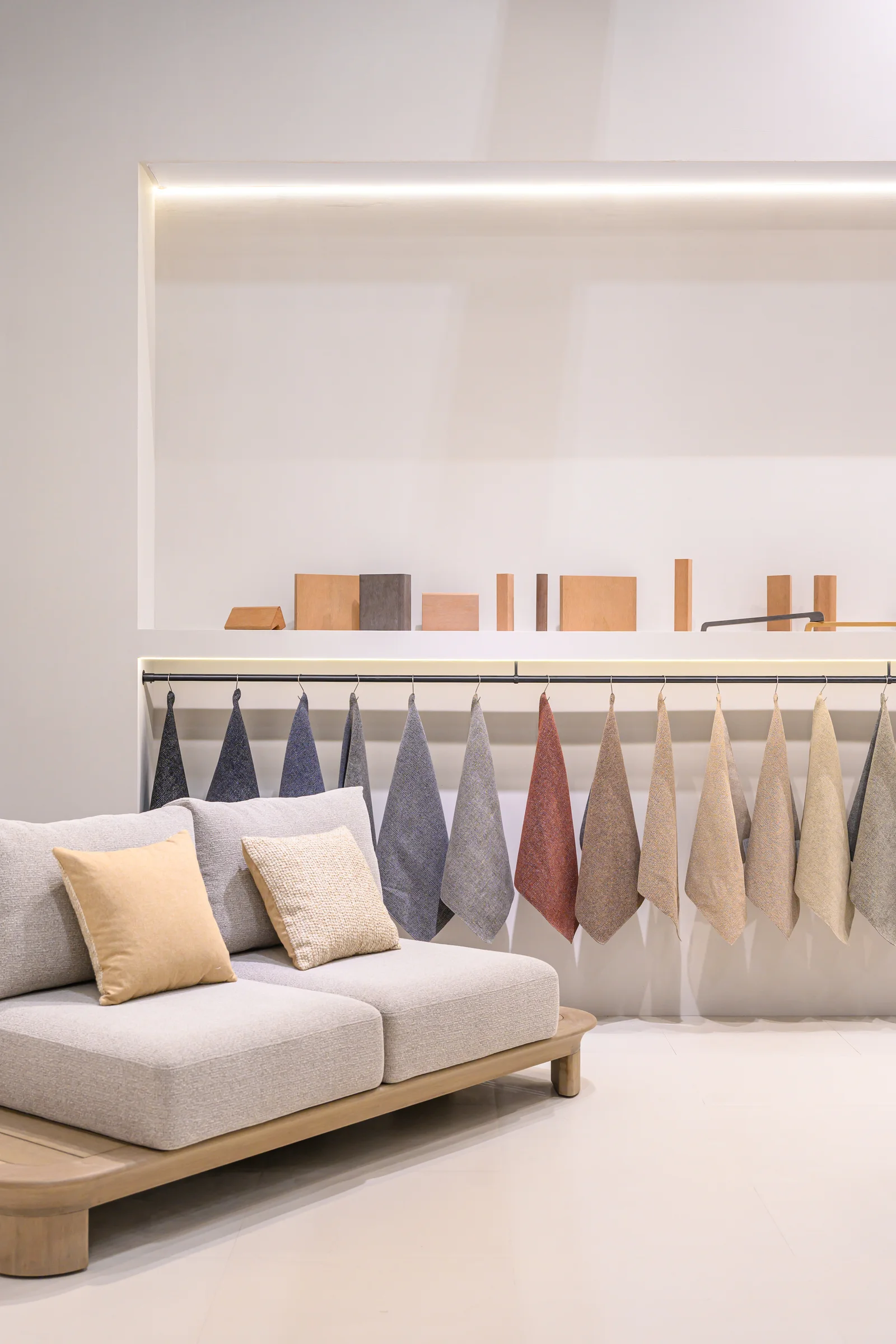
Before buying or cutting a client-selected fabric for outdoor furniture, confirm the exact textile, the furniture component, its placement and direction, the required quantity, and the maker’s acceptance. A favourite swatch is a design choice. It is not yet a complete production instruction.
This is the useful pause in a customer’s own material, or COM, project. The aim is not more paperwork. It is a short, shared record that lets the designer, purchaser and maker see the same decision. Keep selection, application review and permission to proceed separate until each has an owner.
Start with the furniture, not only the swatch
Imagine a design team selecting a pale woven textile for a terrace seating collection. The seat looks right on the mood board. The purchaser is ready to order. But the drawing also shows an upholstered back and two loose pillows. Does the selection cover all three, or only the seat? This is a hypothetical coordination problem, not a customer case.
Begin with a furniture reference and a marked drawing. Name each upholstered part in ordinary language. “Seat cushion, front face” is clearer than “main fabric” when the same item has several visible surfaces. Give a contrasting pillow its own reference. If the furniture design changes, make the changed drawing visible before someone orders against the earlier version.
An existing product needing a new cover is a different starting point. In that situation, first establish the identity of the furniture and cushion using our replacement-cover ordering guide. A new-project COM brief should not be treated as a shortcut to a replacement pattern.
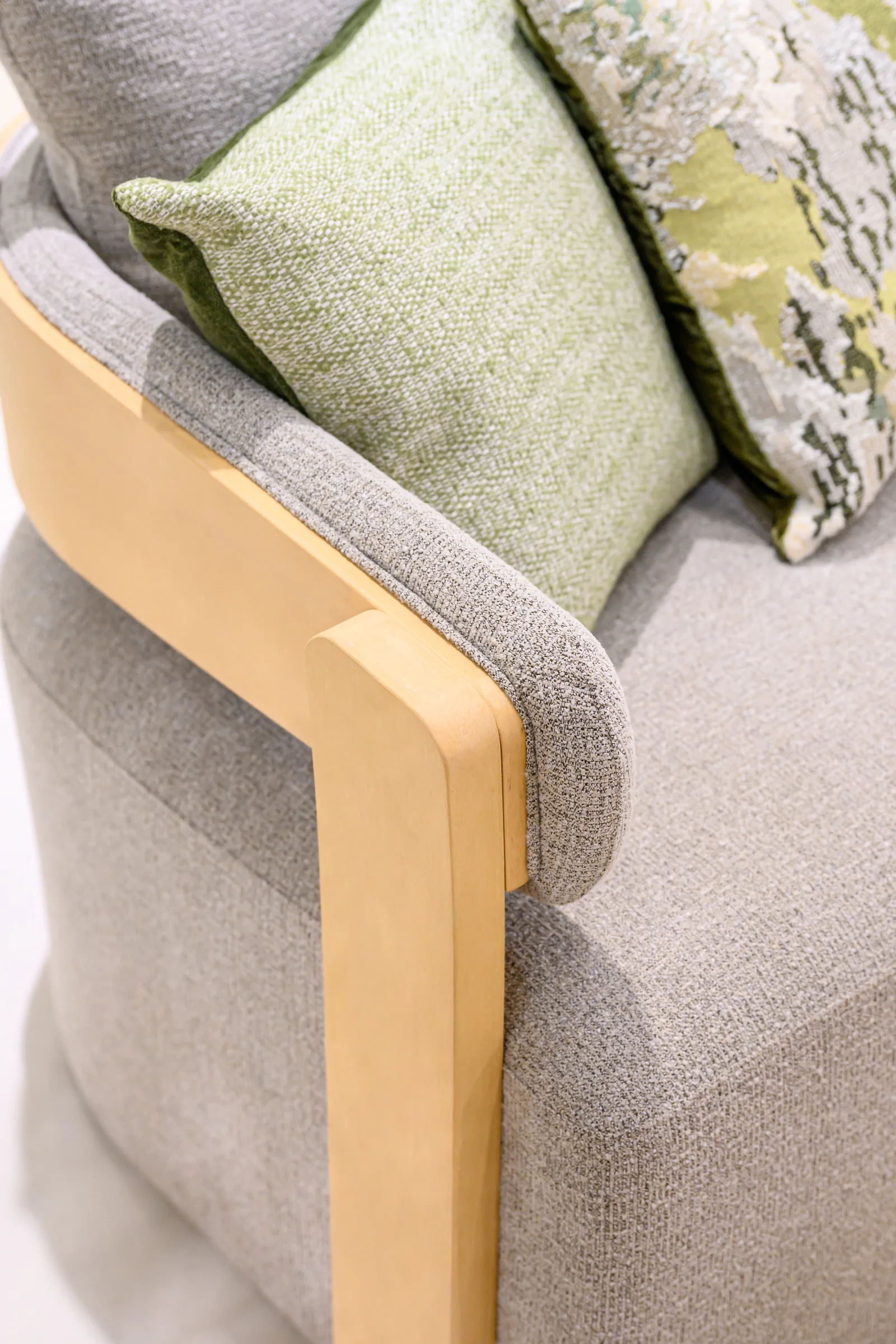
Selection and acceptance are different decisions
COM describes a material choice outside a maker’s usual offering. Herman Miller’s published programme, for example, distinguishes pre-approved textiles from textiles submitted for evaluation. That is a helpful illustration of the difference between liking a textile and having it accepted for an application. It is a manufacturer-specific process, not a universal outdoor furniture rule. Herman Miller COM programme
For your project, ask the maker what they need to review and what their reply will cover. A response about the seat does not automatically settle the pillow. A request for a sample is not approval. Keep outstanding questions beside the selection, rather than leaving them in an older email that the purchaser may never see.
Use explicit status words in your own record: selected, under review, accepted for the stated application, or unresolved. These are proposed working labels, not a certification system. Record who gave the answer and which drawing or sample it refers to. Avoid a bare “approved” that leaves the object of approval unclear.
Identify the exact textile and its evidence
Record the supplier, collection, colour name and exact reference code. Attach the relevant technical information and identify the physical sample being reviewed. A photograph helps people locate a reference; it should not replace the code or become a promise of an exact screen-to-fabric colour match.
Sunbrella’s support information separates its fabric supply from independently made finished products and directs users towards fabric information. Keep that distinction in your brief: the textile supplier describes the textile, while the furniture maker reviews the proposed application. Neither role should be silently substituted for the other. Sunbrella support
For an outdoor project, describe the intended setting and ask which evidence is relevant to the selected textile and furniture assembly. Do not infer suitability from a beach photograph, a texture, or a generic “outdoor” description. Our guide to reading outdoor upholstery fabric test reports explains why the named specimen and the question being tested matter.
Keep the supplied documents dated or versioned. If a supplier proposes another reference, mark it as a change requiring review, not a spelling correction. The team should be able to tell whether the current sample, current document and purchase reference still describe the same selection.
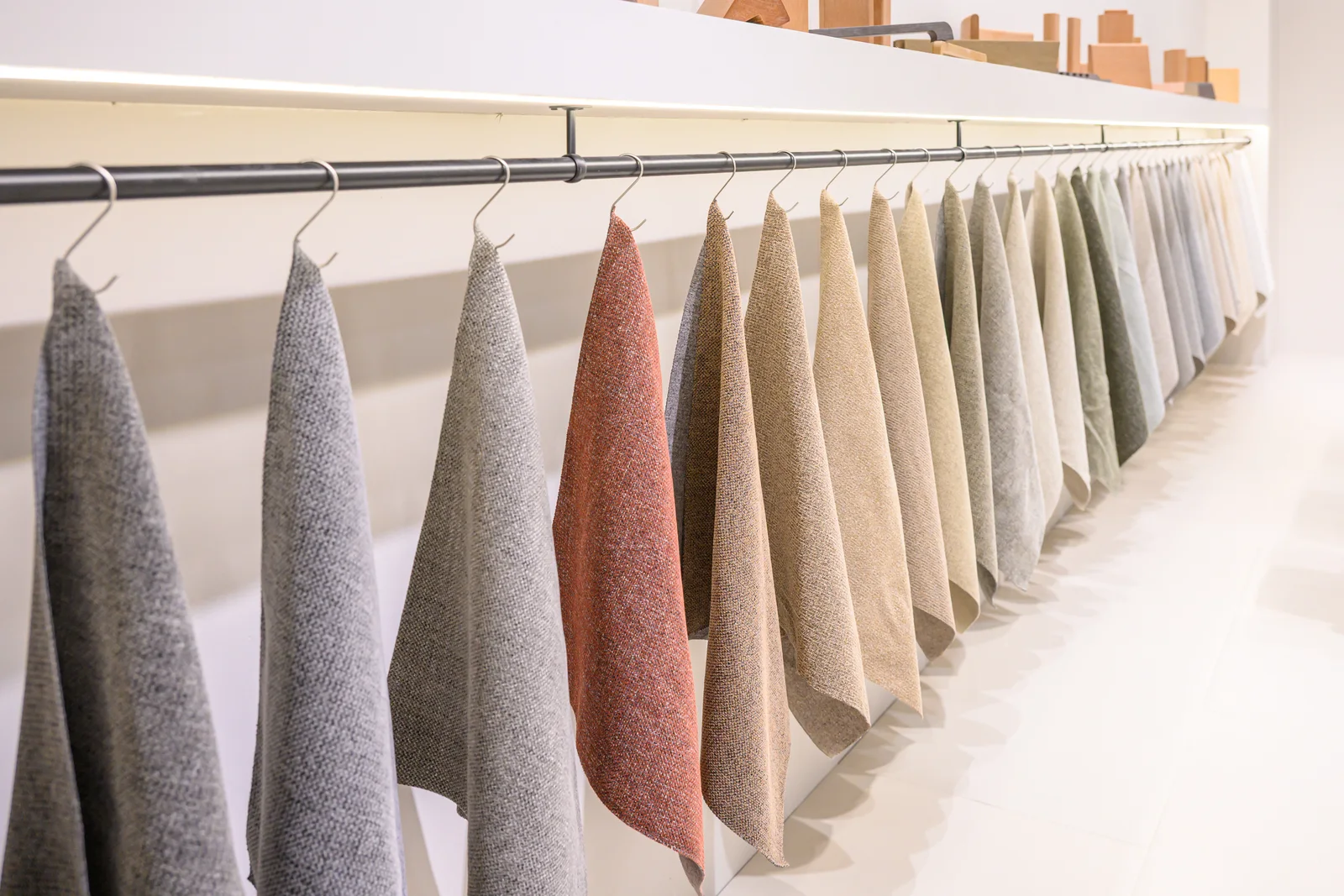
Make placement and direction visible
Put a small placement map beside the drawing. Identify the seat, back and pillows, then connect each to its textile reference. If a stripe or other visible pattern is involved, show the intended visual direction on each part. Use arrows and plain labels, not an uncaptioned swatch that everyone can rotate differently.
Herman Miller’s Swatch Reference tool explicitly addresses applying fabric in the correct orientation, including COM textiles. It offers a concrete example of orientation being recorded as production information. It does not establish that your chosen textile can be turned in any direction or used on a particular outdoor component. Swatch Reference
A design arrow communicates appearance; it is not a cutting instruction. Ask the maker to reconcile the intended appearance with the proposed construction before the drawing is released. Where alignment between adjacent parts matters, name the relationship. “Stripe centred on each back cushion” asks a more answerable question than “make the pattern look consistent.”
Plain textiles also deserve a clear face and direction reference when the maker requests one. Do not invent a visible repeat where none exists, or add technical labels that the supplier has not provided. The aim is to make the design intention readable without pretending to supply the maker’s method.
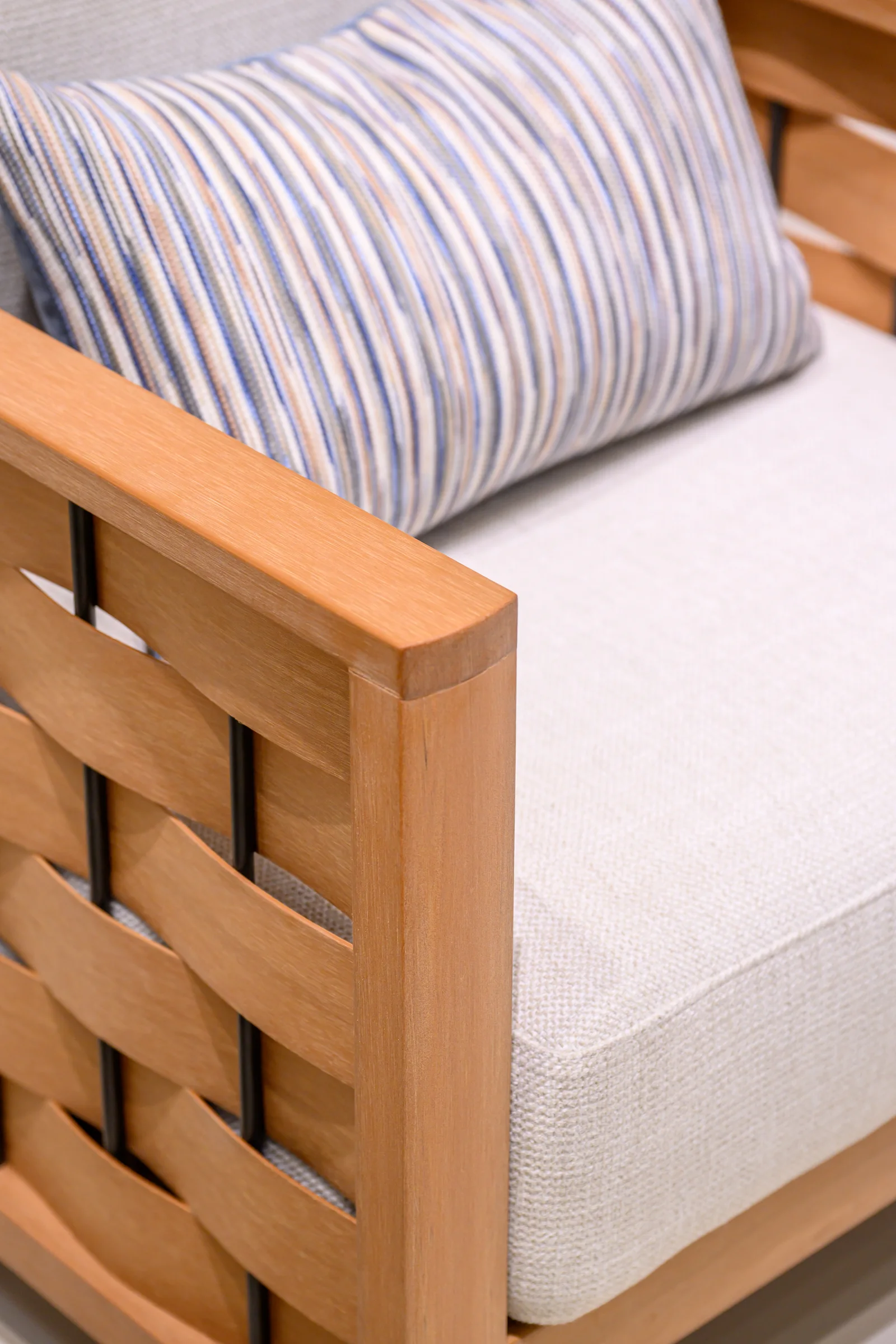
Confirm quantity after the application is understood
Ask the fabricator to confirm the amount needed for the identified parts and item count. Keep the unit explicit. An estimate for a single cushion is not a purchase quantity for a complete seating group, and a rounded purchasing total should not hide the basis on which it was calculated.
Sunbrella’s Fabric Estimator presents guidance rather than a project cutting plan; it advises checking yardage with an upholsterer and notes pattern matching. Use it as a reminder to obtain application-specific confirmation, not as a universal allowance or a replacement for the fabricator’s calculation. Sunbrella Fabric Estimator, November 2022
Request the assumptions with the quantity: which components are included, how many furniture items, which textile reference, and what placement decision was used. If the design team changes those inputs, send the changed brief back for confirmation. Do not quietly retain a number calculated for a different version.
Keep commercial questions visible but separate. Who buys the fabric? Where should it be delivered? Who confirms receipt against the reference? The parties should answer these for the actual project. This article does not assign purchasing responsibility, set a delivery promise, or prescribe warranty terms.
Separate the sample review from the next instruction
A review can end with agreement on appearance while other questions remain open. Write that limited outcome accurately. For example, a team may accept the proposed visual direction but still need the maker’s quantity confirmation. That is a useful decision, provided nobody mistakes it for permission to cut.
Use one current record that names the next action and the person responsible. A dated instruction should identify whether it releases purchasing, sample-making or production cutting. Do not compress these into a single green tick. If a question is unresolved, state what answer is needed and who is expected to provide it.
Construction access deserves its own discussion. Whether upholstery is fixed or removable affects the development conversation; a picture alone does not settle it. Read fixed versus removable outdoor upholstery when the team is still deciding how the soft surface will connect to the furniture.
The COM Release Record
Use these seven fields as an original working aid. They are not a test certificate or a manufacturer’s standard form. Keep the record short enough to read beside the drawing, but specific enough that another colleague can identify the same textile and the same next step.
- Furniture and component. Record the item reference, drawing version and each part receiving the textile. Include the number of furniture items covered by this instruction.
- Exact textile. Name the supplier, collection, colour and reference code. List contrasting selections separately so one code cannot accidentally stand for several fabrics.
- Review references. Identify the physical sample and technical documents supplied. Record their dates or versions and any outstanding request for information.
- Placement and direction. Attach the component map. State the intended face, pattern position or relationship between parts where relevant, subject to the maker’s review.
- Confirmed quantity. Record the fabricator’s quantity, its unit and the assumptions behind it. Link it to the item count and current application.
- Acceptance or open question. Keep the maker’s response for the named application. Record any limits and the exact unresolved question without broadening the reply.
- Owner and next action. Name the responsible person and date. State whether purchasing, sample-making or cutting is released, or remains on hold pending a named answer.
If these fields disagree, pause the affected instruction and reconcile the references. The record is useful because it exposes differences early, not because filling every box guarantees a successful finished product.
Three questions worth asking early
Is an outdoor-labelled textile automatically right for any chair?
No blanket conclusion follows from that label. Identify the exact textile and intended application, then ask the supplier and maker for the information relevant to their respective roles. This article makes no performance finding about a pictured fabric or furniture item.
Does acceptance settle the required quantity?
Not by itself. Ask the fabricator to confirm the amount against the actual parts, item count and placement. Keep the application decision and quantity confirmation separately visible, even if the same person provides both answers.
Who decides pattern direction?
The design team should make its intended appearance clear; the maker should review how that intention relates to the proposed upholstery construction. Record the agreed outcome. Do not expect an unmarked sample or a mood-board image to carry the whole instruction.
Bring a clear brief into the conversation
The strongest starting point is not a large folder of disconnected fabric images. It is a named furniture item, a marked drawing, an exact textile reference and a small list of open questions. That gives each participant something concrete to answer.
For a new Sumparwood development discussion, bring those references alongside the intended frame finish and furniture concept. Explore custom outdoor furniture design development or request the material Sample Box. The box introduces Sumparwood material finishes; it is not presented as a textile swatch service. Any proposed fabric application still needs its own project-specific review.