23 October 2026
Outdoor upholstery pattern direction: agree the layout before cutting.
A named fabric reference. A named furniture view. One layout decision that everyone can read.
A striped cushion can use the right fabric and still surprise the person who selected it. The colour code matches. The texture is familiar. The stripe simply travels across the seat when the design team expected it to run towards the back. The missing decision was the layout, not the textile name.
Before cutting outdoor upholstery, agree how the chosen fabric will appear on each visible part of the furniture. Connect the supplier's fabric direction to a clearly named furniture view. Record which panel matters most, how neighbouring panels should relate and which physical reference shows the agreed result. This guide proposes a layout review for that conversation. The fabricator still determines how the approved intention can be made in the actual construction.
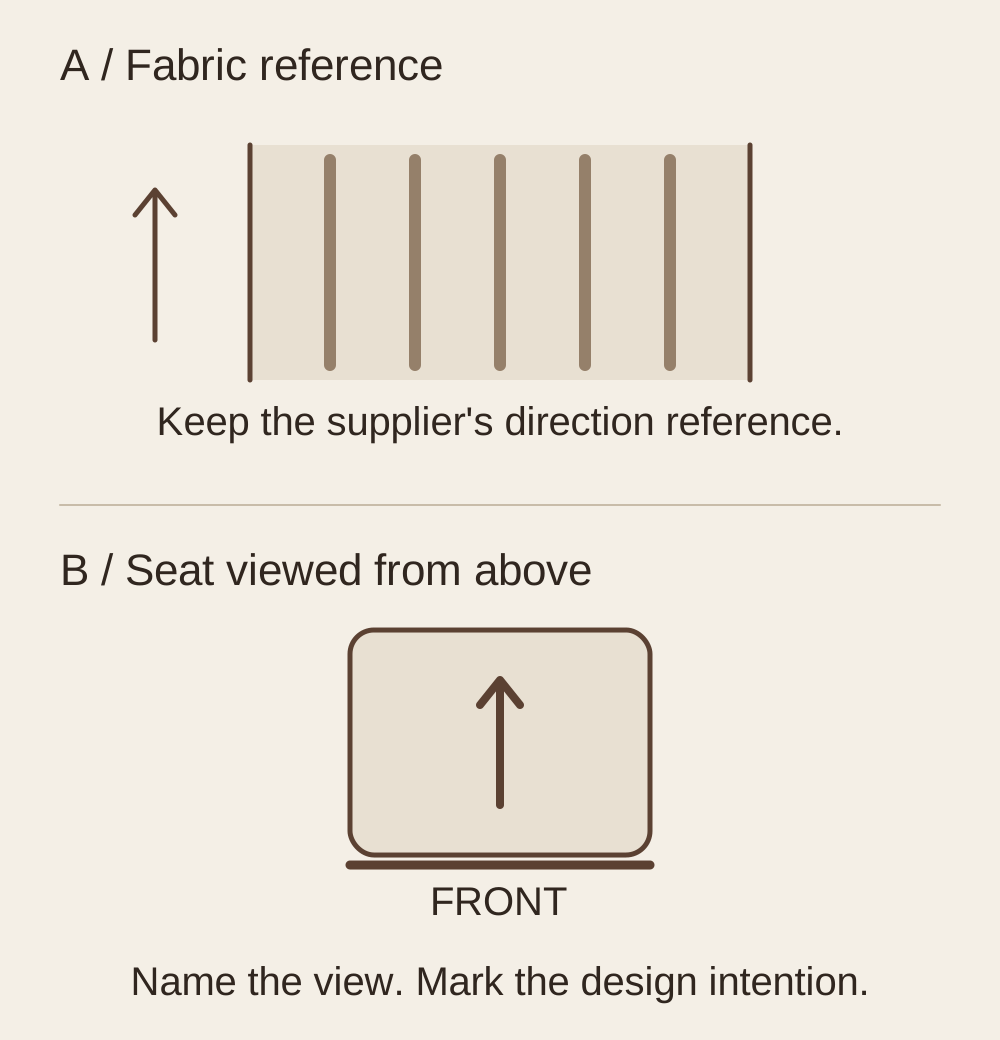
Open the two-view record ↓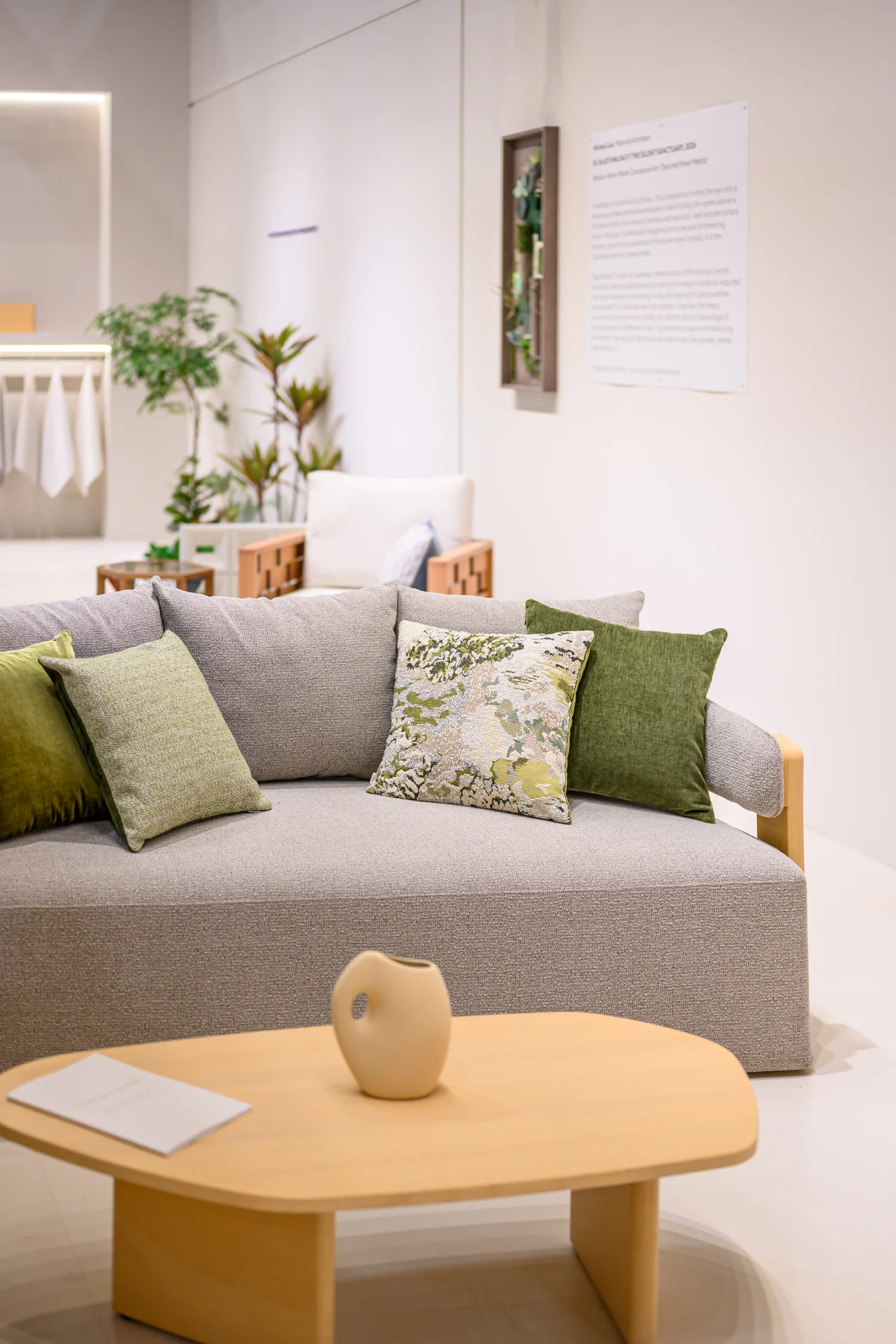
01 / Layout review
Give the fabric and the furniture separate references
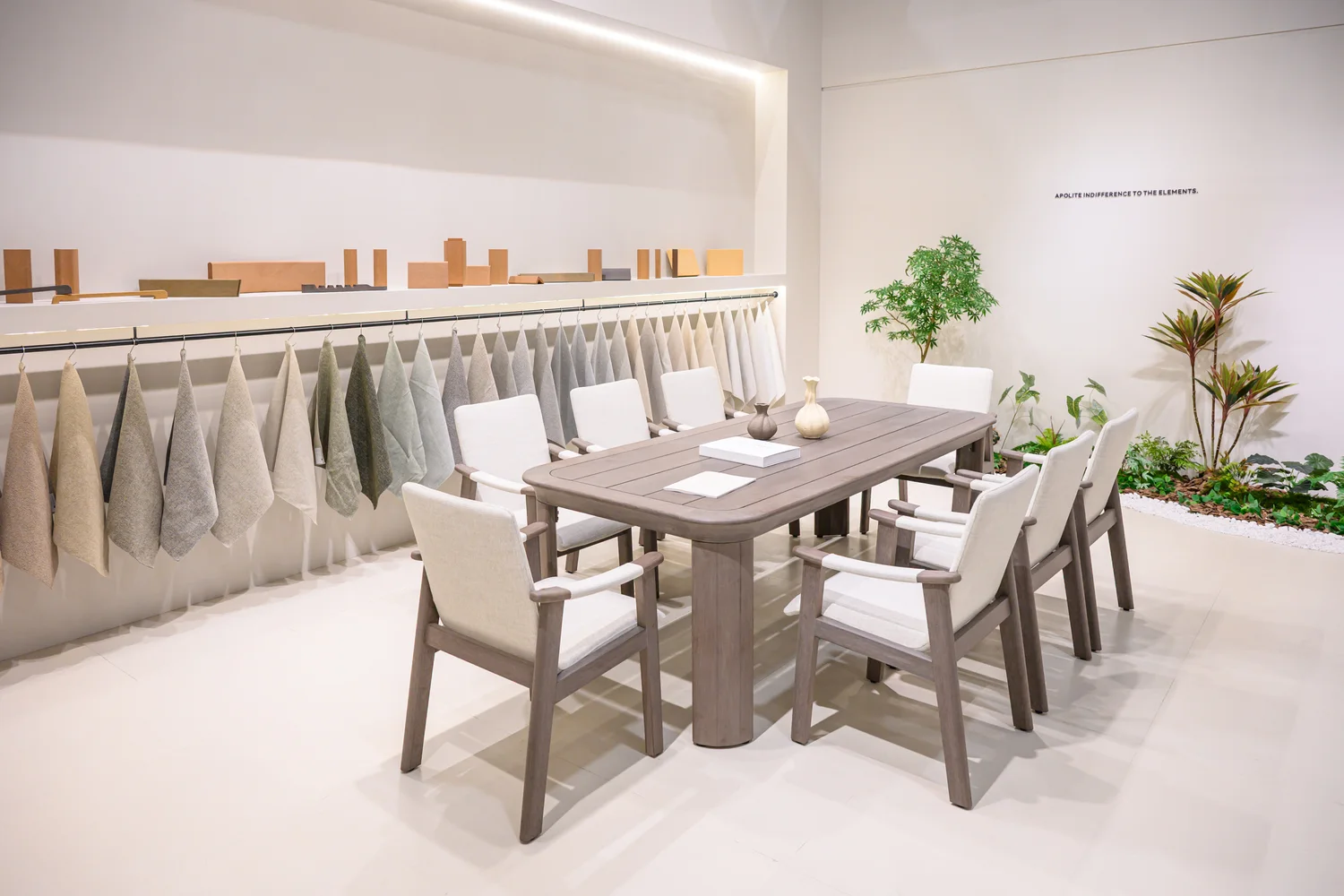
Begin with the exact textile supplier, collection, colour and article code. Keep the supplier's information beside the physical sample. Then identify the furniture model, drawing revision and upholstered parts covered by the decision. A seat, back, headrest and loose pillow do not share the same viewing direction simply because they use one fabric.
Sunbrella's Direction Dew product page is a useful example of the information available for an outdoor upholstery textile. It lists the application, width, repeat and selvedge position. Those are fields to check on the selected reference, rather than values to borrow for another fabric. The example does not identify the textile used in our photographs.
Keep selection and layout review separately visible. A fabric code answers which textile is intended. A marked furniture view answers how the team wants to see it. Our customer's own fabric guide covers the wider acceptance and purchasing brief. Here, the aim is to settle the visual instruction within that brief.
02 / Layout review
Translate roll language into a furniture view
Textile terms and design descriptions can refer to different things. Two Sisters Ecotextiles explains railroaded and up-the-roll patterns in relation to the selvedges: across them or parallel to them. The terms describe the fabric reference. A request for vertical stripes on a chair describes the intended appearance of the finished object.
Show both views. On the fabric reference, retain the supplier's direction information. On the furniture drawing, name the viewing position and mark the desired visible direction. For a seat cushion, say whether the view is from above. For a back cushion, say whether it is the view from the front. An arrow without a named view can leave the next person solving the same puzzle again.
Steelcase's April 2019 Surface Materials Reference Manual, pages 151 to 153, illustrates why the distinction matters. It explains that a stripe can appear vertical while the fabric is applied warp horizontal, and records application limits by product. This is a dated manufacturer example, not an outdoor upholstery rule. Ask the selected textile supplier and furniture maker to confirm the current interpretation for the actual item.
03 / Layout review
Choose the panel that leads the composition
A layout review becomes easier when it starts with one named priority. That might be the main seat face, the centre of a back cushion or the front view of a repeated chair. The design team should state what needs to read clearly in the finished furniture, then ask the fabricator to review the proposal.
Consider a hypothetical terrace sofa with three seat cushions. One proposal gives each cushion its own centred motif. Another treats the three cushions as one visual composition. These are different design intentions even when the fabric and furniture codes are identical. Draw the preferred relationship. Do not let the word centred stand for both.
Name the priority in ordinary language: main motif on each back cushion, stripes running front to back on the seat, or a deliberate break between separate cushions. The example is an editorial briefing exercise, not a photographed Sumparwood project. It gives the maker something specific to assess without prescribing a cutting method.
04 / Layout review
Mark relationships as well as individual faces
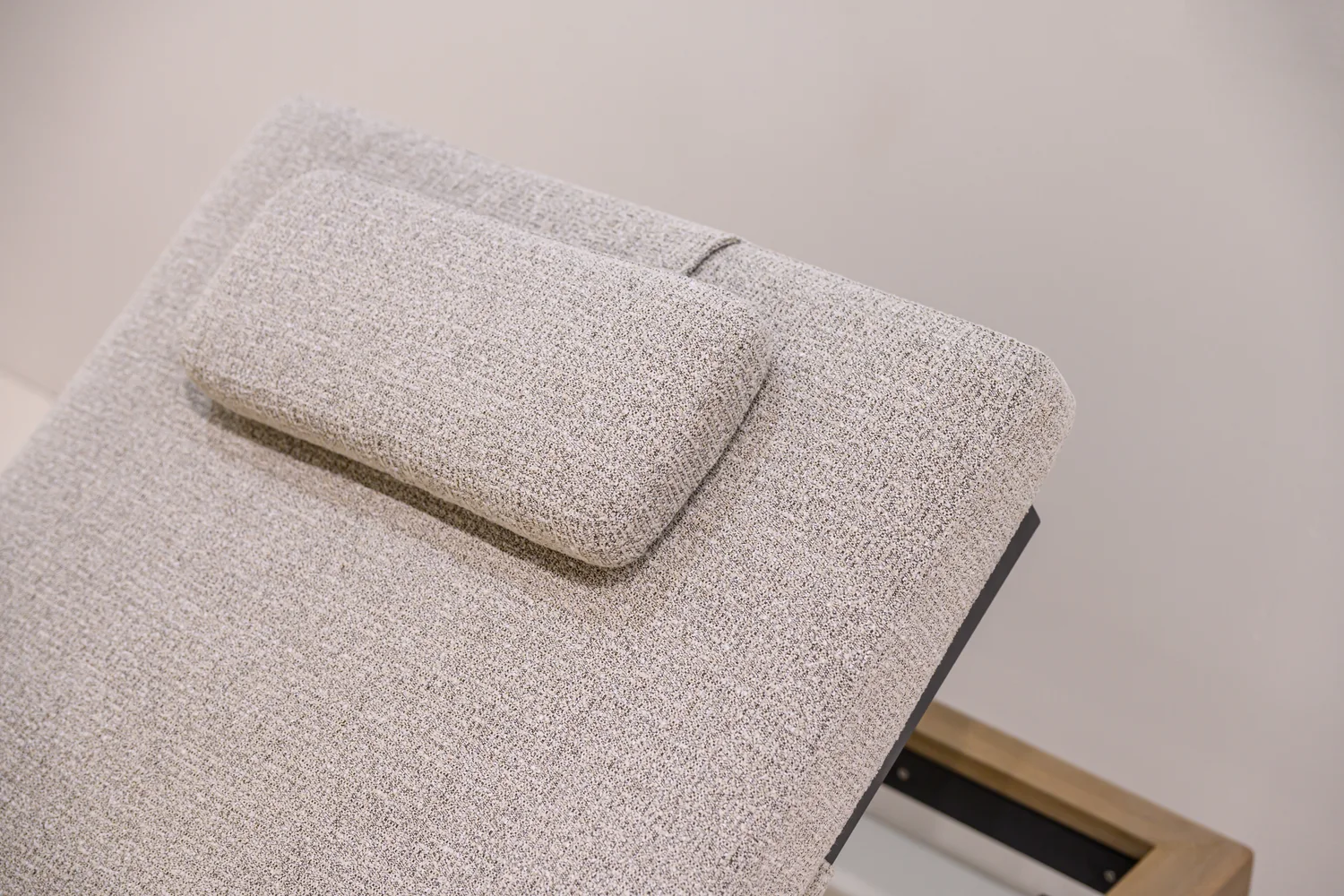
List the panels that need to be reviewed together. A seat face may look settled in isolation while its relationship to the back, narrow side band or adjacent cushion remains unclear. Ask which of those relationships is important to the design. Record an intentional difference as clearly as an intended match.
Use a small number of marked views instead of a folder of nearly identical images. One overall view can show the priority panel and neighbouring parts. A closer view can identify a particular motif or the place where a line is intended to meet an edge. Name both references and keep their orientation clear when they are forwarded separately.
For cushions that may be turned or moved, ask which positions are included in the review. Does the decision cover one display arrangement, both visible faces or a particular front edge? Let the maker explain the possibilities for the proposed cover and furniture design. A photograph of one arranged cushion should not quietly become an instruction for every possible position.
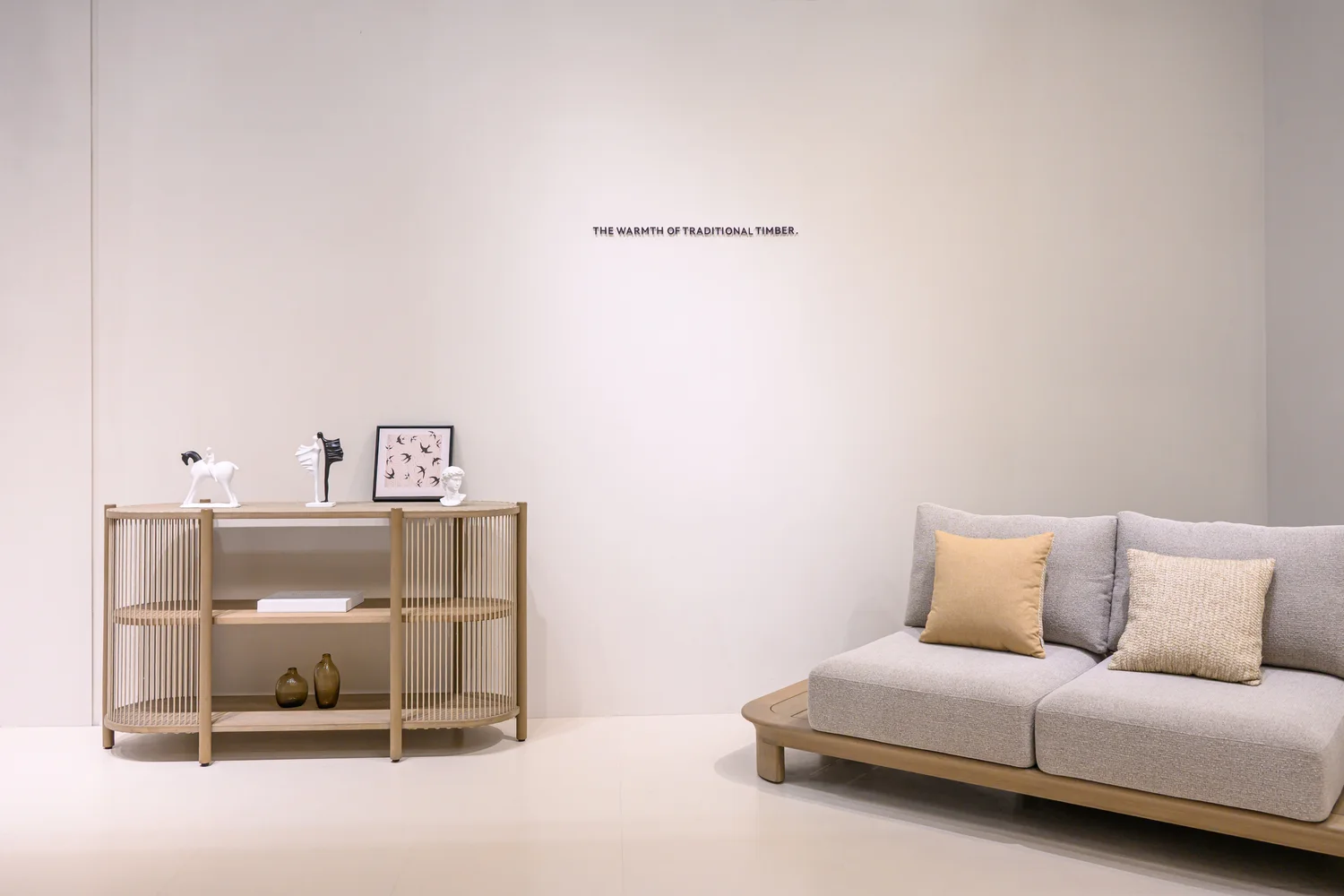
05 / Layout review
Review a physical arrangement before fixing the instruction
Use enough of the selected textile to discuss the intended appearance. Ask the supplier what reference will show the relevant pattern clearly, and ask the fabricator what form of layout sample is useful for the proposed furniture. The answer may differ between a small cushion and a larger upholstered surface.
Keep the review purpose specific. A flat arrangement can help the team discuss direction and motif position. A fitted review piece may be needed to answer a question about a particular furniture shape. State what was actually examined and what still needs the maker's answer. Do not describe a flat textile review as approval of a completed cover.
Photograph the reference with the named furniture view and mark identifying information outside the fabric where practical. Record the sample code, the drawing revision and the date. Keep the original physical reference available for the agreed review process. A cropped image without its label can be attractive and still be a poor production reference.
06 / Layout review
Let the fabricator confirm the quantity implications
An attractive layout is not a quantity calculation. Sydney Upholstery's guide to patterned fabrics explains that matching and placement can require additional cloth, with the amount depending on the furniture, width, repeat and intended arrangement. It does not offer one useful universal percentage. Ask the fabricator to calculate the requirement for the reviewed layout.
When the direction or motif decision changes, send the revised reference back to the person responsible for quantity. State the furniture count and the affected upholstered parts. Ask whether the earlier allowance still applies. Avoid editing a purchasing figure simply to keep an order moving while the layout is being reconsidered elsewhere.
Keep that reply with the layout record. A quantity confirmed for one cushion arrangement may not answer a different proposal. The design team can then compare the intended appearance and the maker's confirmed requirement together. This article does not supply cutting dimensions, allowances or a yardage formula.
07 / Layout review
Use a two-view layout record
The following decision aid keeps the textile reference and the furniture view connected. Complete it with the supplier and maker. It is an original editorial working record, not a technical cutting plan or a standard approval form.
On smaller screens, scroll the record sideways to see all three columns.
| View or decision | Reference to keep | Answer that needs an owner |
|---|---|---|
| Fabric on the roll | Exact article code and supplier direction information | How is the pattern identified relative to the fabric? |
| Furniture in view | Named component and labelled front or top view | Which way should the visible design read? |
| Priority panel | Marked overall drawing or layout reference | Where does the main motif or line belong? |
| Adjacent parts | Named cushion, back, edge and side relationships | Which matches or differences are intentional? |
| Physical review | Identified sample and dated review images | What was actually reviewed, and what remains open? |
| Quantity response | Fabricator's confirmation for this layout and item count | Does the proposed layout change the requirement? |
| Decision and scope | Current reference, responsible person and next action | Is this a review proposal or permission for the stated work? |
Use separate records where furniture variants need different layout decisions. Keep the writing short, but attach the actual marked views. A completed table cannot communicate a motif position that has never been drawn or shown. The record should point everyone to the same evidence rather than becoming another interpretation of it.
08 / Layout review
Keep a changed decision visible
If the fabric, furniture shape or preferred arrangement changes, identify the affected reference and review it again. Show which version is current. Retain the earlier decision in the project archive when needed, but keep it distinguishable from the instruction intended for the next stage. Our drawing revision guide addresses that wider handover question.
For an outdoor design, appearance review also remains separate from the selected textile's application evidence. A well-placed stripe does not establish weather performance, cleaning suitability or the behaviour of the complete upholstered item. Use the fabric-report reading guide for the different task of understanding a supplier's test information.
09 / Layout review
Bring the marked view into the conversation
The useful starting point is a named furniture item, an exact textile reference and one clearly marked view. Add the question that still needs an answer. That makes the discussion concrete for the designer, purchaser and person making the upholstery.
For a new furniture development, speak with the Sumparwood workshop team about the intended form and the references the design will need. To compare the material's four finishes alongside a textile selection, request the Sample Box. The material comparison and the upholstery layout each deserve their own clear decision.