Beyond the
rub count.Reading outdoor upholstery reports
The number is a starting point.
Read what sits around it.
A fabric sample arrives with a number attached. It looks reassuring. The weave feels right, the colour fits the palette, and the abrasion result seems high enough to settle the discussion.
But what exactly has been settled?
For outdoor upholstery, an abrasion result and a lightfastness result answer different questions. Neither, on its own, tells you how a finished chair will perform in a particular setting. Before approving a fabric, read the test method, the sample identity and the stated result together. Then ask what remains outside that report.
This is not a search for the biggest number. It is a way to make the next conversation with your fabric supplier and furniture maker more useful.
Start with the question, not the score
Imagine a design review with three things on the table: a pale fabric swatch, a frame sample and a drawing of an upholstered arm. This is an illustrative review, not a record of a tested Sumparwood chair.
The designer wants the arm to feel visually continuous. The buyer wants a clear approval record. The development team needs to know which questions can be answered by the fabric documents and which require discussion about the finished assembly.
Those are related needs, but they are not interchangeable. A useful opening question is: “What decision are we using this report to make?” If the answer is unclear, a pass mark will not make it clearer.
The Association for Contract Textiles, or ACT, organises its voluntary guidelines by fabric construction, intended application and indoor or outdoor use. Its guidance also cautions that laboratory requirements may not reflect every location's requirements. Use it as an industry reference, not a substitute for the requirements of a European project. ACT performance guidelines.
Our practical suggestion is to write one decision at the top of each review sheet. For example: “Confirm whether the submitted evidence addresses this upholstery application.” That wording leaves room for an honest answer, including “not yet”.
Abrasion is one question
An abrasion figure belongs to a method and a reported endpoint. Do not lift the number out of that context and use it as a general quality score.
ACT explains that Wyzenbeek and Martindale assess flat abrasion, not every kind of wear found on upholstered furniture. It also warns that a larger abrasion result does not establish a longer product life. Doubling the cycle count does not establish double the service life. ACT abrasion disclaimer.
For a design team, the useful response is not to ignore abrasion. It is to give that result a defined place in the discussion. Ask the supplier to identify the method used, the tested fabric and what the result means within that method.
Keep unlike results in separate fields. If one submission names one method and another names a different method, mark the comparison as unresolved rather than inventing a conversion. Ask the supplier or testing specialist how the results should be interpreted for the decision at hand.
On the drawing, note the parts you still want to discuss. An arm edge, a seam or a transition into the frame can become a conversation point without being labelled a defect. A report-reading exercise should help define the next review, not pretend to complete it.
Lightfastness needs its own line
Colour gives the chair much of its character. It deserves a separate evidence question, not a footnote beneath abrasion.
ACT's guidance for outdoor woven fabrics treats colourfastness to light as a specific test category. It expressly cautions against translating laboratory exposure hours directly into hours of field service. A stated laboratory exposure is therefore not a calendar promise for a terrace, garden or hospitality project. ACT outdoor woven lightfastness guidance.
In the review record, give lightfastness its own space. Record the method, exposure conditions and assessment supplied in the report. If any of those are missing, ask for clarification rather than borrowing detail from another fabric's sheet.
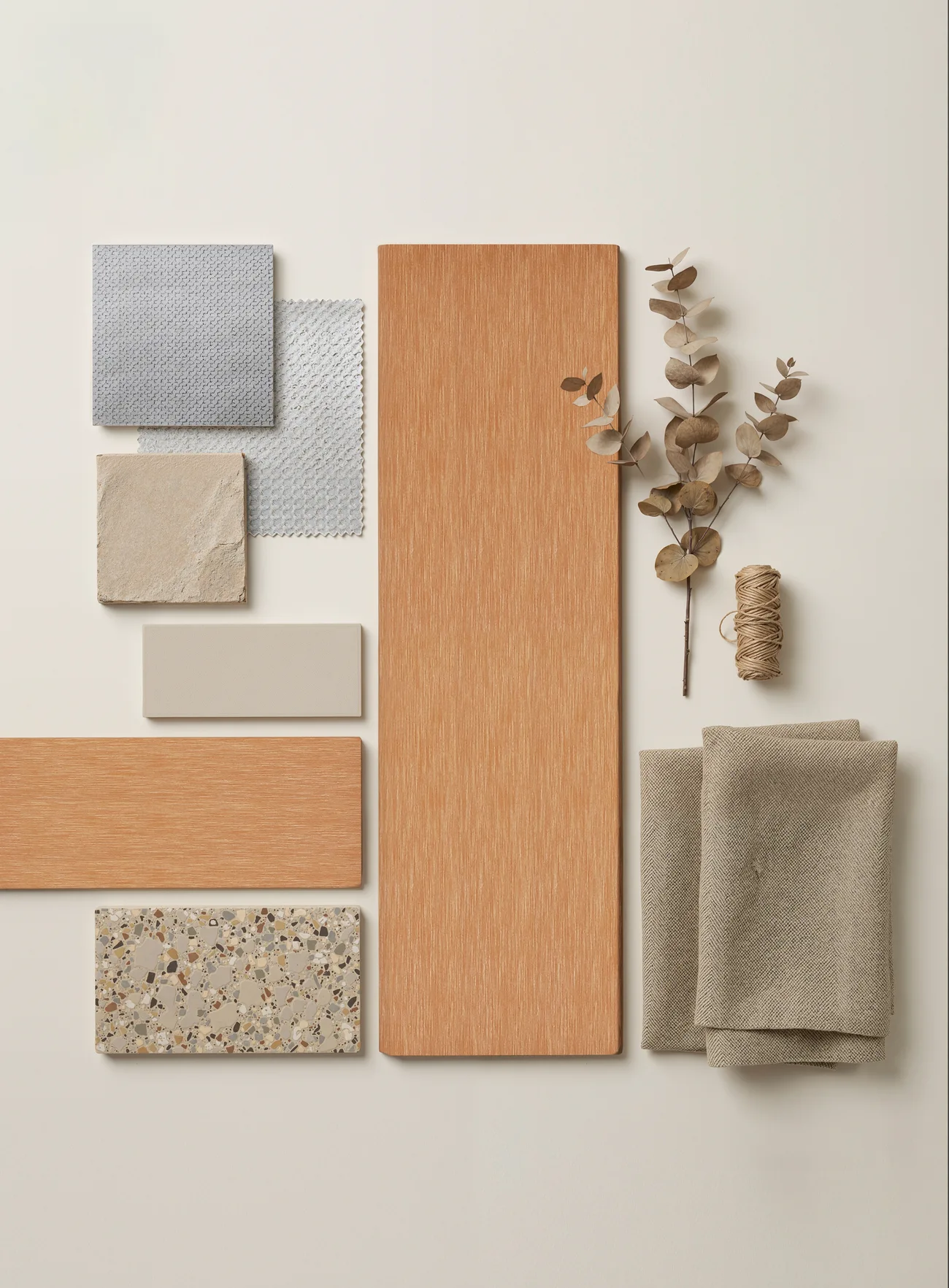
Also ask which colour reference the document covers. A moodboard can show your intended palette, but it should not become evidence for the tested identity of a particular textile. Keep the design reference and the supplier's identification side by side.
This makes a later substitution easier to recognise. A different shade or fabric reference should prompt a fresh check of which documents apply. It should not inherit approval merely because the new sample looks close to the old one.

Read the care document before approval
Care information belongs in the design review, while construction choices are still open. The question here is not which cleaning recipe to copy. It is whether the proposed design and the documented care route can be discussed together.
Sunbrella's upholstery care guide distinguishes removable and non-removable fabric. It tells readers to consult the furniture manufacturer before removing a casing and includes air-drying instructions. Those directions are specific to the manufacturer's fabrics and guidance; they are not instructions for an unidentified cushion or a Sumparwood assembly. Sunbrella upholstery care guide.
Use that distinction to frame your own questions. Who supplies the care instructions for the finished piece? Which fabric reference do they name? Is a cover intended to be removed, and who confirms that? What should the project team do if the upholstery specification changes?
Leave the answers with the responsible suppliers and maker. Do not fill an empty care field with a familiar instruction from another collection. A short, accurate note is more useful than a complete-looking page built from assumptions.
Read the document.
Ask the maker.
A practical tool: the report reading slip
We suggest a small reading slip for each document. It is an editorial tool for organising a discussion, not a test standard or certification checklist. Keep it beside the supplier's original report, so that the summary never replaces the evidence.
Name the object. Write the exact fabric reference shown in the document. Add the colour reference where supplied. If the identification is incomplete, label it “confirmation needed”. Do not silently resolve it from a photograph.
Name the question. State what you hope to learn from this document. “Understand the reported abrasion result” is a narrower and more useful question than “prove the chair is suitable outdoors”.
Name the method. Copy the method designation and edition if they are provided. Leave a visible gap if they are absent. This helps a colleague see why two apparently similar numbers may need further explanation.
Keep the result intact. Record the result with its unit, rating or stated endpoint. Avoid replacing a specific result with a broader adjective such as “excellent”. Keep any qualifications close to it.
Write the boundary. Add one plain sentence explaining what you are not concluding. For an abrasion report, this could be: “This review does not assign a service life to the finished chair.”
Assign the next question. Name the role that can close the remaining issue: fabric supplier, furniture maker, testing specialist or project specifier. Give that person a question they can answer, not just a request to “confirm everything”.
Record the revision. Add the document date or revision and the date of your review. If a new sample arrives later, this record makes it easier to see whether your earlier decision still refers to the same submission.
At the end, choose one outcome: ready for the next review, clarification needed, or not applicable to this decision. None of these labels should be confused with approval of the complete product.
Bring the reading back to the chair
The purpose of this paperwork is to support a better object. Return to the sample and drawing once the report boundaries are clear.
For an upholstered design, discuss the fabric, padding, frame and the way they meet as parts of one proposal. Keep the questions specific: which parts of this assembly are represented in the available documents, and which have not yet been addressed?
Our Your Design, Developed Together study shows a Sumparwood lounge-chair direction with integrated upholstery. It is a starting point for a development conversation, not proof that a particular fabric result applies to its complete construction.
If the project also needs a review of furniture safety evidence, keep that work distinct. The EN 581 scope guide explains why the scope of a furniture document matters. A clear boundary between documents helps prevent one result from being asked to answer every question.
Three questions worth keeping
Does a high Martindale result mean a fabric will last longer outdoors?
Not by itself. Keep the abrasion finding separate from lifespan and from the other evidence needed for the intended application. Ask what the specific report establishes, rather than turning the count into years.
Can laboratory light exposure tell us how many seasons a colour will last?
Do not make that conversion from exposure hours alone. Read the stated test and assessment, then discuss the intended setting with the responsible supplier. This article offers no seasonal colour guarantee.
Can we approve the chair from the fabric documents?
Treat fabric documents as part of the evidence, not automatic approval of the entire assembly. Identify the remaining product and project questions before recording a wider decision.
A clearer brief starts a better conversation
You do not need every answer at the first meeting. You do need to know which answers you have, which object they refer to and what the next question is.
Bring your fabric references, drawing and intended use to the development discussion. Explore Sumparwood material, compare the palette, or request a physical Sample Box to start reviewing the frame material alongside your upholstery direction. The box is a material reference, not a fabric test kit or approval of the finished chair.