Material Intelligence / Standards Scope
What EN 581 Does—and Does Not—Tell a Material Specifier
EN 581 helps assess furniture safety. It does not tell you how a material will age outdoors.
Keep finished-furniture safety, material ageing and project responsibility connected—without treating them as the same record.

In plain English
Three things to know.
A standard number can look complete while several separate decisions remain open.
Match the correct EN 581 part to the finished chair or table and its intended use.
Material ageing, site exposure and project responsibility need their own records.
What question does EN 581 answer?
Begin with the finished product and its use category.
Before reading a report, describe the object. Is it seating or a table? Is the intended use camping, domestic or contract? Is it for adults? These details decide whether the named standard is addressing the product in front of the team.
BS EN 581-1:2017 addresses general safety for adult outdoor seating and tables in those use categories. Its scope also lists exclusions. “Outdoor furniture” alone is therefore not a complete scope statement.
A useful project record names the product, intended user and use category. It also identifies the tested configuration. A material sample, a component and an assembled chair are different specimens and answer different questions.
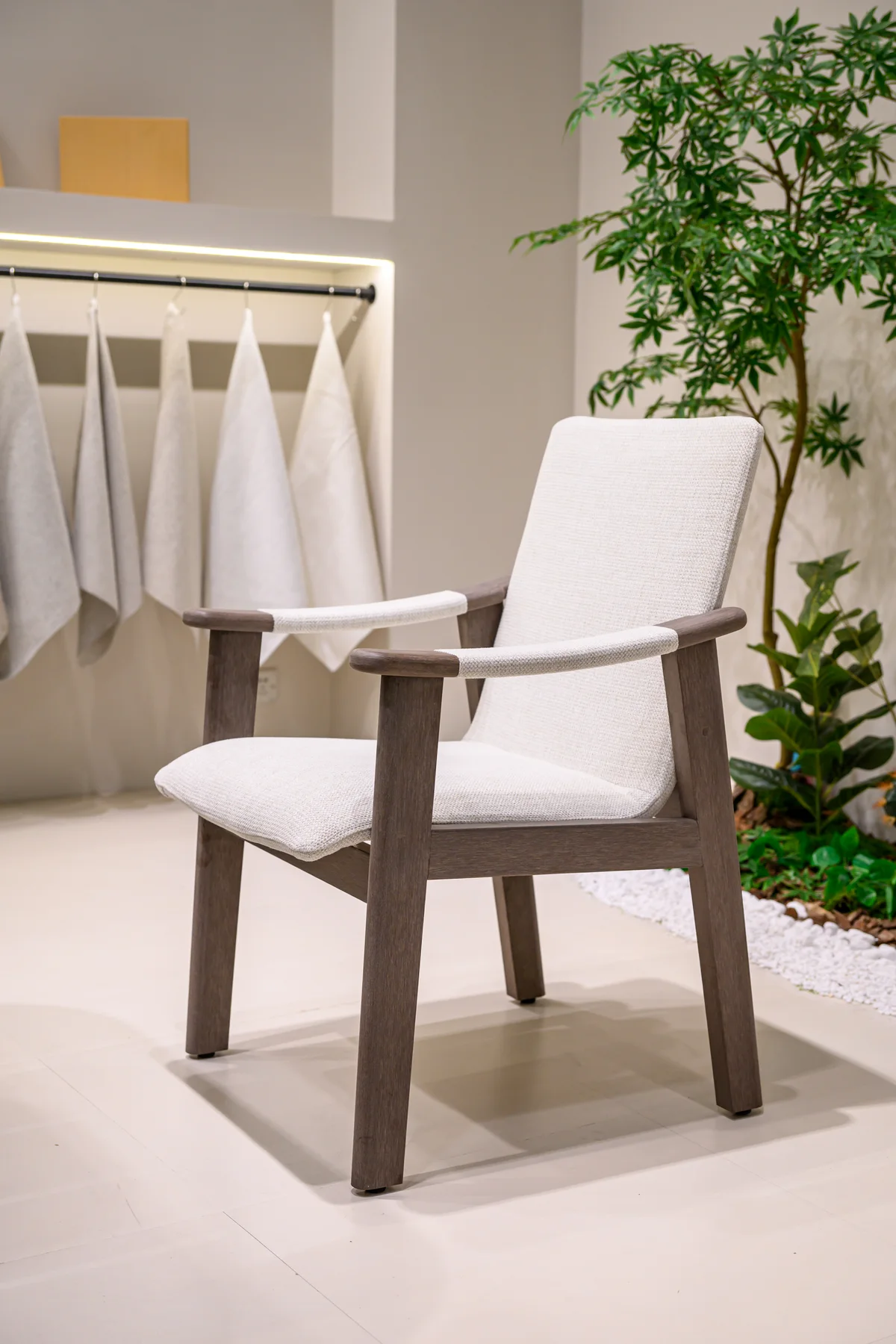
Which part of the series applies?
A seating report and a table report are not interchangeable.
Part 1 covers general safety within its stated categories. BS EN 581-2:2026 addresses mechanical safety for adult outdoor seating. BS EN 581-3:2026 addresses tables.
The public BSI pages describe strength, reliability and stability within the relevant finished-product scope. They also list exclusions. The report should identify the part, edition, use category and exact product configuration.
Do not hide moving parts, castors, adjustments, upholstery or hardware inside a generic product name. If a feature falls outside the cited scope, keep it visible as a separate review question.

What does EN 581 not tell you?
Mechanical safety and material ageing are different evidence paths.
The public scope of the current seating and table pages excludes resistance to ageing or degradation caused by light, temperature and moisture. This boundary prevents a finished-furniture report from being presented as proof of how every material, finish or colour will change outdoors.
The reverse is also true. A material exposure report does not establish the safety, strength or stability of the assembled chair or table. Both records can support the same approval, but one cannot replace the other.
For plastics, ISO 4892-1:2024 provides general guidance for laboratory light-source exposure methods. A useful record still needs the exact specimen, method, cycle, measured property, result and interpretation. An exposure-hour number alone is incomplete.
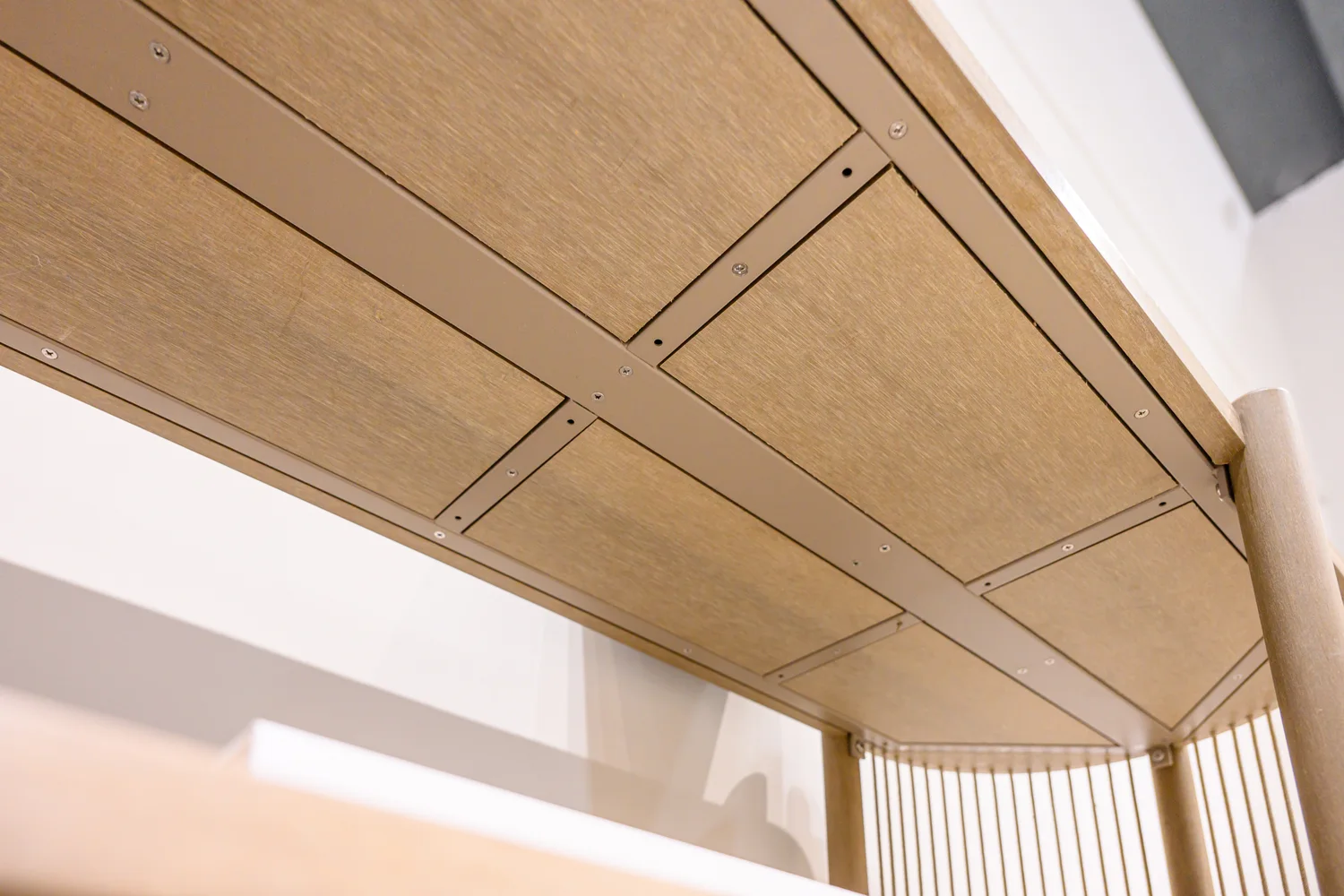
What should stay in the approval file?
Keep the boundaries visible from brief to release.
At the brief, record the furniture type and intended use. At prototype review, confirm that hardware, joints, profiles, finishes and moving parts match the tested or reviewed configuration. At release, verify each document's edition, specimen, issuer, date and conclusion.
A later change to material, finish, supplier, geometry or bill of materials may reopen one evidence layer. Do not assume that every approval travels automatically with the product name.
Ask a supplier a neutral question: which part and edition applies, what exact configuration appears in the report, what remains excluded, and what separate evidence addresses material ageing? Precise questions produce more useful records than a broad request for “certification.”

Take it to the prototype
The five-layer scope map
Keep each layer visible. Do not let one document stand in for all five.
| Layer | Ask | Keep |
|---|---|---|
| Product and use | Chair or table? Which use category? | Identity, user and category |
| General safety | Which Part 1 requirements apply? | Edition and finished product |
| Mechanical safety | Does Part 2 or Part 3 apply? | Configuration and conclusion |
| Material ageing | What specimen and property were exposed? | Method, change and interpretation |
| Project responsibility | What remains site- or operator-owned? | Exposure, care and change owner |
Evidence boundary
What this map does not prove
This guide is not a declaration that Sumparwood or any pictured product complies with EN 581. It helps a team identify the right standard, specimen, report and decision.
EN 581 evidence should not be turned into a material-ageing, service-life, certification or universal outdoor-performance claim.
Primary references