Fixed or
removable?
Designing outdoor upholstery
around access.
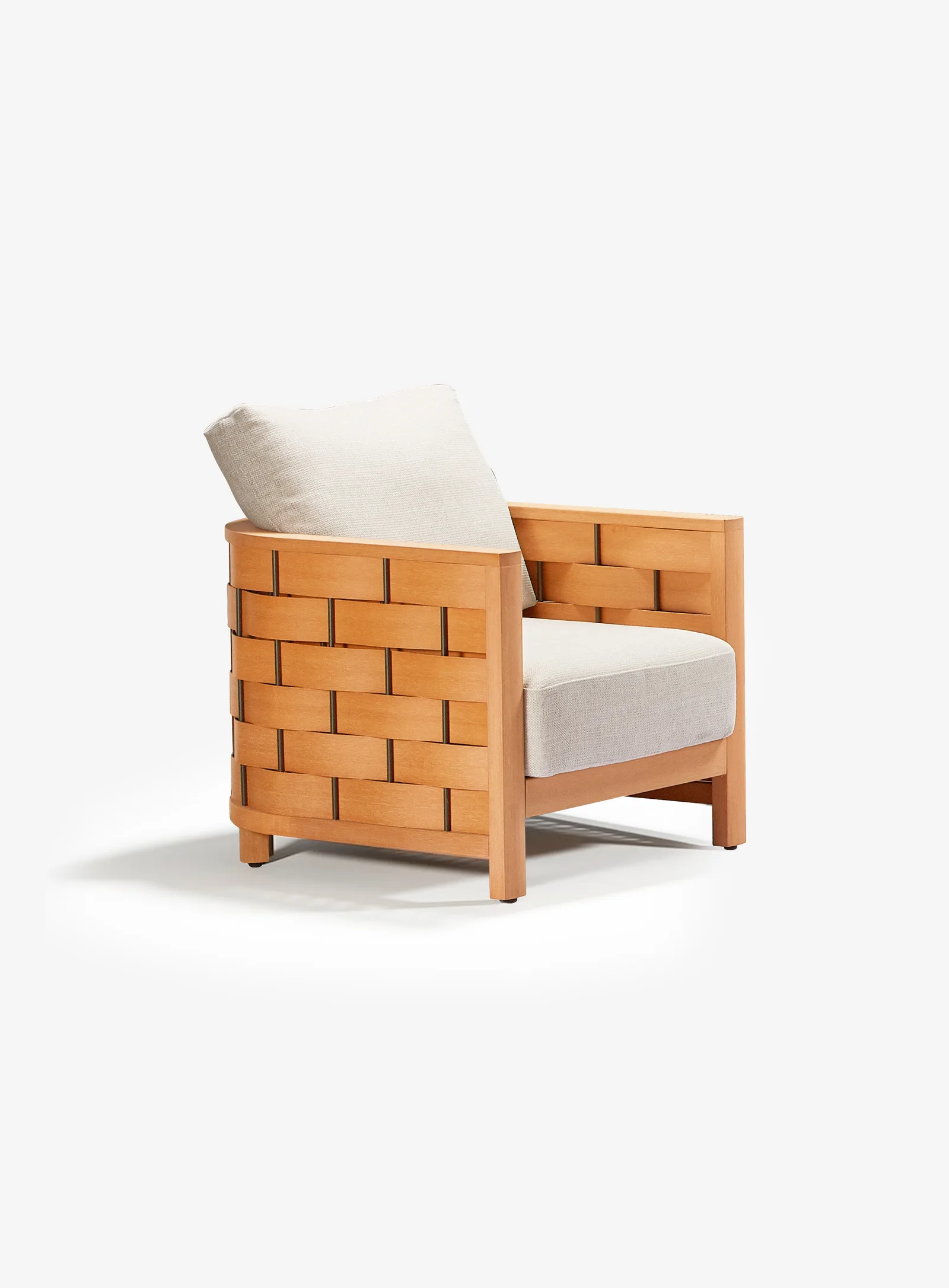
A clean outline matters. So does knowing how the soft part of a chair will be reached.
Look at an upholstered chair from a few steps away. The fabric, cushion and frame may read as one quiet shape. Move closer and a second set of questions appears. Where does the cover end? What can lift away? Which detail would someone need to reach before changing a part?
These questions belong on the design table. They are not simply instructions to write after the chair is finished.
Fixed and removable outdoor upholstery offer different ways to develop a piece. Neither is automatically the better option. The useful choice connects the intended outline with the proposed cleaning method, access route and replacement arrangement. Those details need to be considered together, then checked on the actual prototype.
First, say what can be removed
“Removable upholstery” can mean several things. A loose cushion may lift off the chair while its cover stays in place. A cover may unzip from a filling that remains separate from the frame. An upholstered pad may detach as a complete unit, with its fabric still fixed around it.
For this design review, use three plain descriptions: fixed upholstery, a removable cover, or a detachable upholstered part. They are working descriptions, not a technical classification or proof of how a particular chair is built.
Write the intended action beside the drawing. “Lift the seat cushion” is more useful than “easy maintenance.” “Remove the whole arm pad for specialist work” says something different from “wash the cover.” If the action has not been confirmed, mark it as a design question.
This small distinction can change the discussion. You may find that the team does not need every fabric panel to come off. It may need one specific part to be accessible without disturbing the rest of the chair.
Keep the line you care about
Begin with the visible intention. Perhaps the inner arm should feel like a continuous soft band. Perhaps a loose cushion should sit clearly apart from an exposed frame. Name that intention before choosing the attachment arrangement.
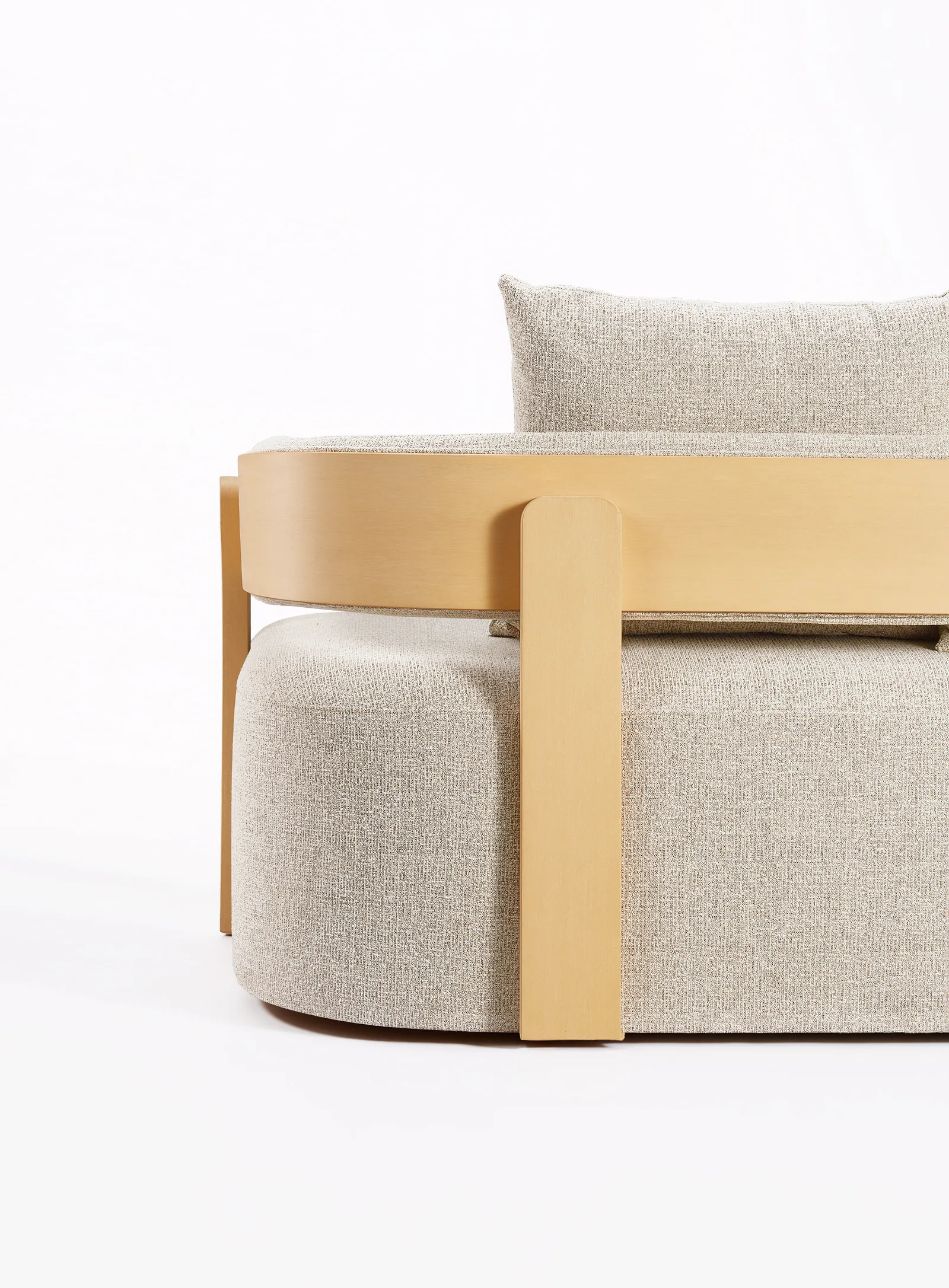
In our lounge chair development study, the owner-confirmed detail is fabric and foam fitted into a Sumparwood frame. It illustrates a relationship between a soft surface and an exposed structure. The photographs do not establish which components can be removed, how they are attached or which cleaning method is approved.
That boundary leaves room for a useful design question: how could the same visual intention be explored alongside a clearly defined access route?
One concept might keep the visible upholstered band continuous. Another might separate the seat from the arms. A third might explore a detachable pad. These are options to develop, not ready-made versions of the pictured chair. Each would need its own construction review.
The aim is not to let a closure dictate the whole design. It is to give the hidden detail a place in the conversation before the visible line becomes difficult to change.
A zip does not answer the care question
A removable cover is not necessarily a machine-washable cover. Sunbrella's upholstery care document distinguishes removable and non-removable fabric. It also directs readers to consult the furniture manufacturer before removing a casing because cushion construction can vary. This is guidance for the manufacturer's fabrics, not an instruction for an unidentified textile or a Sumparwood assembly. Sunbrella upholstery care guide
At the design stage, ask for the care instructions for the proposed fabric and the furniture maker's instructions for the proposed construction. Then ask whether the intended removal action is supported by both.
Do not put “washable” on a drawing simply because it contains a zip. If removal is intended only for a trained upholsterer, say so. If a cover is intended to be handled by the user, that action still needs a practical review on the prototype.
For fixed upholstery, ask which surfaces must remain reachable during the approved care process. Keep chemical compatibility as an open technical question until the relevant suppliers have answered it. A care statement for one fabric does not approve every neighbouring finish or component.
Consider the inside as well as the cover
Access and moisture are separate questions. Taking a cushion off a chair does not identify the filling inside it. Nor does the appearance of an outdoor fabric establish how the complete upholstered part will behave.
Sailrite's outdoor foam guide discusses different foam choices alongside exposure and cover arrangements. Its recommendations belong to the products it describes. The useful design lesson is to consider the filling and cover together, rather than treating either as an isolated choice. Sailrite outdoor cushion foam guide
Ask the upholstery team to show the proposed layers in a section drawing. Identify the cover, filling and support where known. Label unknown layers as unresolved. Ask what evidence is needed for the complete arrangement under the intended conditions.
For an Australian project, a country name is not a complete brief. Describe the actual setting and expected handling. A design intended to have cushions put away needs that action discussed with the project team; it should not appear as an assumption hidden inside a product description.

Show the movement, not only the finished view
A beautiful rear view can hide an unanswered access question. Add a second drawing that shows the intended movement: what lifts, what opens, what stays in place and where a person would work.
This is a proposed design-review method, not a certified test. Use it to expose questions while changes are still being discussed.
On a prototype, ask the person expected to carry out the action to demonstrate it using the maker's proposed instructions. Observe access to the closure or fixing, handling of the part and the steps needed to put it back. Record difficulties without translating a single demonstration into a claim of long-term reliability.
If the prototype does not yet contain the intended attachment, do not call the review complete. A temporary fitting can help explain an idea, but it cannot establish how the final arrangement will work.
Finish by looking at the chair again from the front and back. Has the access proposal changed a gap, seam or edge that matters to the design? Bring that observation back to the drawing.
Decide what a replacement would include
Before agreeing the arrangement, name the proposed replacement unit. Is it a cover, a complete cushion, an upholstered pad or a larger section? Ask whether that unit can actually be supplied and what information would identify it.
These are questions for development and commercial confirmation. A detachable part does not by itself promise future availability, a particular price or a shorter replacement time. Do not describe the design as more sustainable solely because one part can be removed.
Nor should a high fabric abrasion result be used to dismiss access questions. ACT warns that abrasion numbers do not establish product lifespan and identifies cleaning, use and manufacturing among the other considerations. That supports keeping service access in the design discussion; it does not predict when this chair will need replacement. ACT abrasion disclaimer
Keep the replacement proposal specific enough to review, but separate from any commitment that has not been agreed.
Try the One Part, One Action review
Choose one upholstered part rather than attempting to resolve the entire chair at once. Write six short lines beside its drawing:
- Part. Name the seat, inner arm, back pad or other component being reviewed. Mark its boundary on the drawing.
- Action. State what should happen: clean in place, lift away, remove the cover or detach the whole upholstered part. Avoid combining different actions under “removable.”
- Person. Identify who is expected to do it. A user, an operating team and a specialist upholsterer may need different instructions.
- Route. Show where access begins and what must move first. Include anything that remains unresolved rather than drawing an imaginary hidden fixing.
- Evidence. Link the proposed fabric care information and construction instructions. Ask which points require a prototype demonstration or a supplier response.
- Return. Describe how the part goes back and what should be checked afterwards. Keep replacement availability as a separate confirmed or open item.
This is an original discussion aid, not a compliance checklist. Its value is a clear next decision. Repeat it only for parts with a genuinely different arrangement.
Keep the answer specific to the design
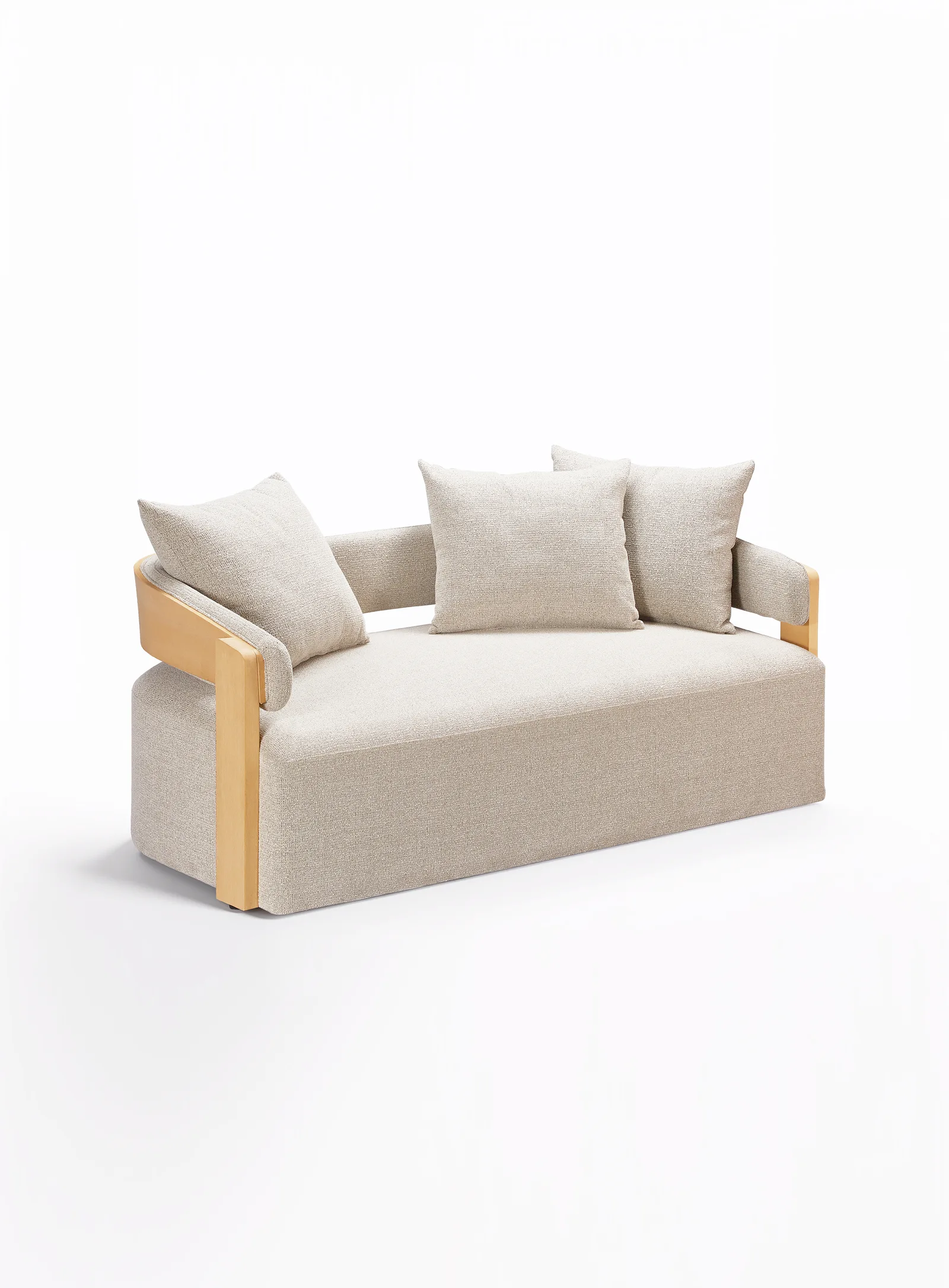
Imagine a team developing a lounge chair with a broad upholstered back and a separate seat. This is an illustrative brief, not a completed Sumparwood commission.
The team wants the back to retain a continuous line, while asking whether the seat can lift away. The review can treat those parts separately. There is no need to label the whole chair fixed or removable before the construction has been resolved.
The fabric specification also needs its own scope. ACT's voluntary guidelines distinguish fabric construction, intended application and indoor or outdoor use. They are not a substitute for local project requirements or evidence for a completed chair. ACT performance guidelines
Once the design questions are resolved, the agreed information can move into the service handover. That later record should describe the approved arrangement, not carry forward an untested sketch as an instruction.
Bring the detail into the conversation
Fixed or removable is a starting question, not the final description of a piece. The more useful answer says which part moves, who handles it and what needs to be verified.
Bring your drawing and the soft detail you want to preserve to a Sumparwood workshop conversation. We can discuss how the material relates to the design, while the upholstery and construction questions remain explicit.
A Sample Box can support that material conversation. It does not replace a full upholstered prototype. Start with one part and one clear action, then develop the whole piece around the decisions that matter.