Working Study / WS–01
Split Spine
A chair study made at full scale.
Not a collection. A question made full scale.
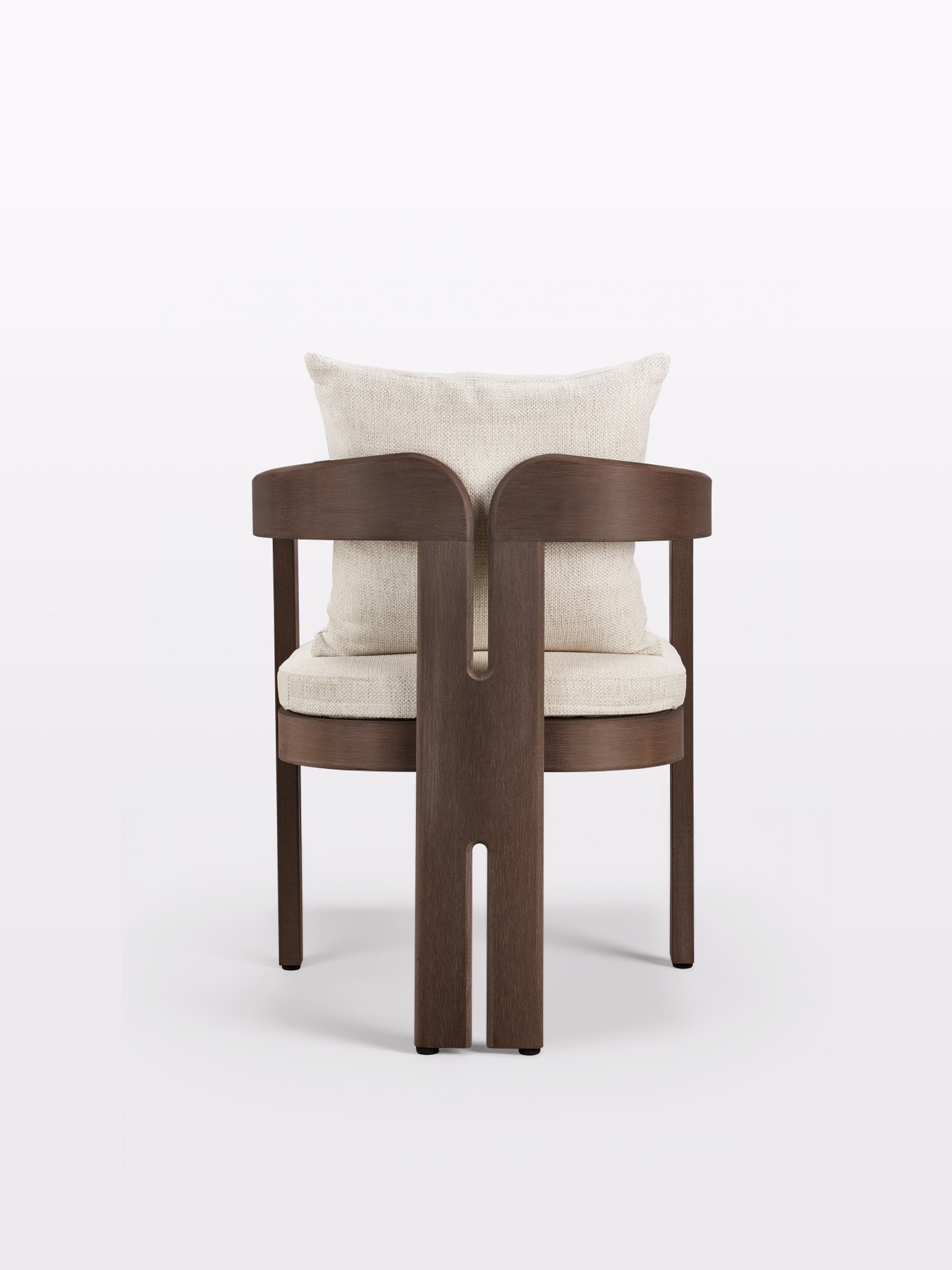
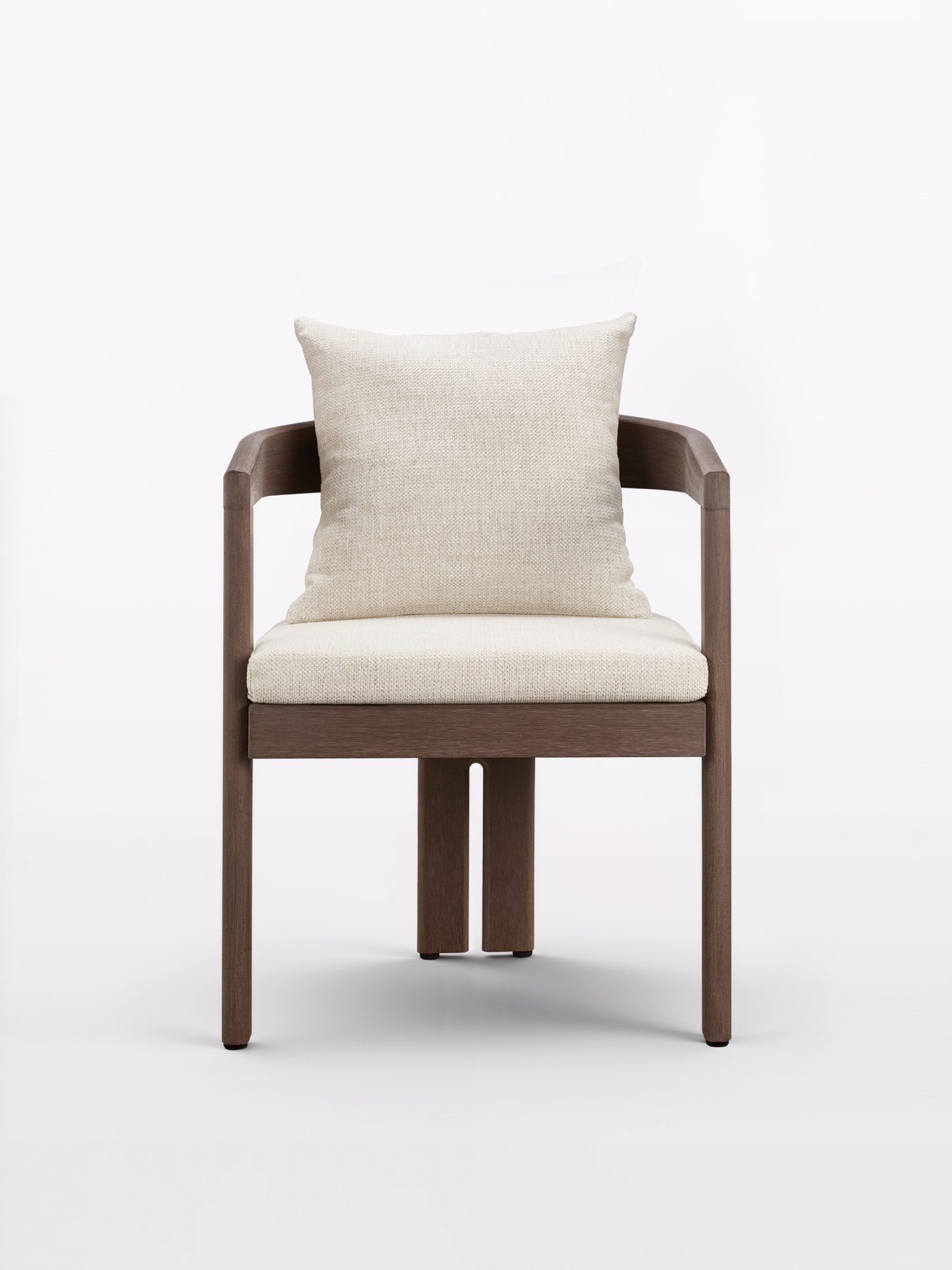
WS–01 / Split Spine. A full-scale chair study built around one question: what can the back of a chair say?
From opening to object
WS–01 / Split Spine is a chair study from the Sumparwood development bench. It is not a collection, and it is not a fixed product offer. It is a way of working.
We make studies like this to give an idea real weight, depth and proportion. A drawing can suggest a mood. A model can suggest a direction. But when a chair stands in front of you, the question becomes clearer. You can walk around it. You can see where a line becomes a joint. You can see how a soft cushion changes a hard frame. You can decide what should remain quiet and what should become the centre of the object.
For this study, the question began at the back.
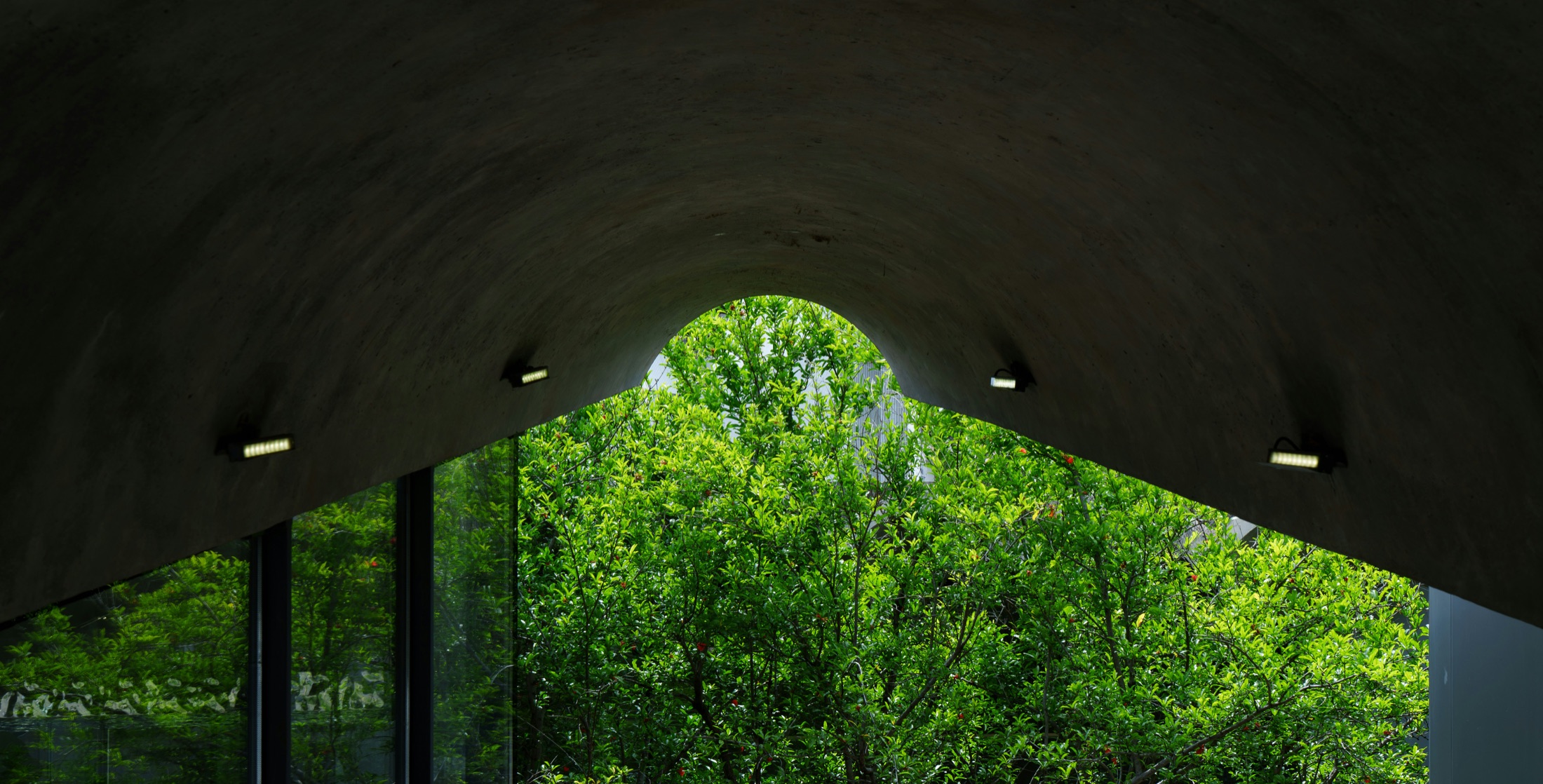
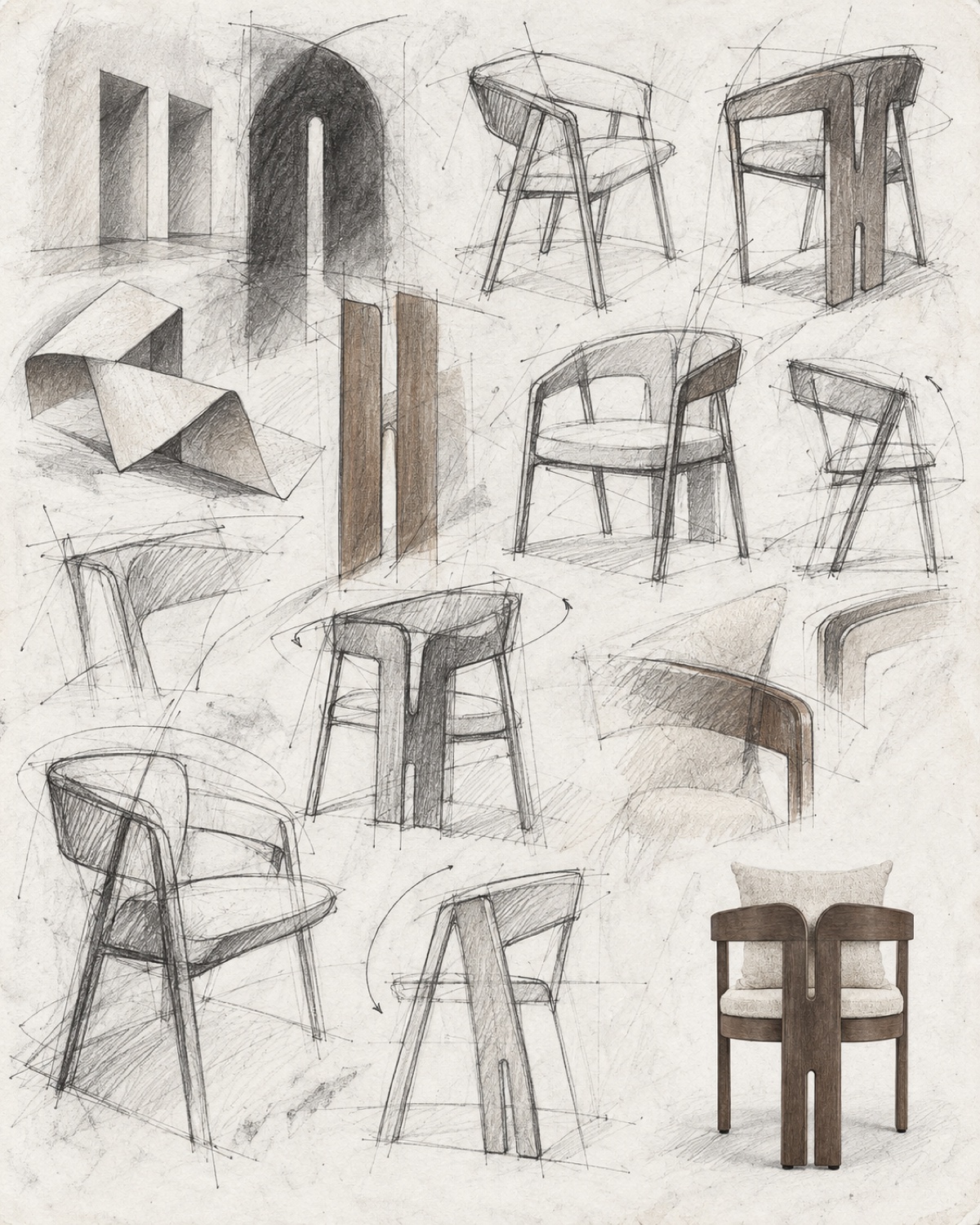
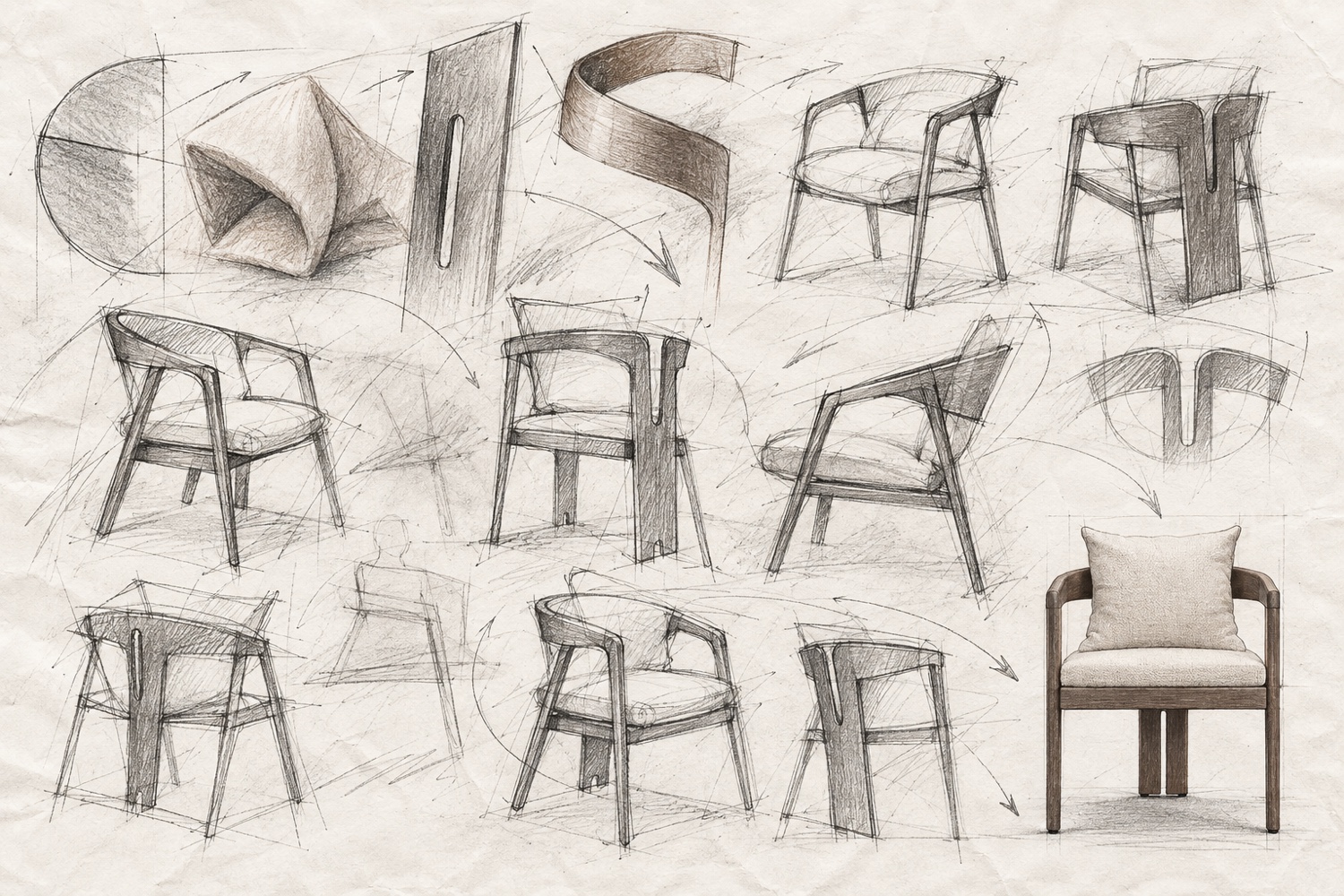
Before it reads as a chair, it can be read as a few simple things: two tall planes with a narrow space between them; a dark opening cut through a wall; a curved line held against a soft volume. These are not references to one named building or object. They are the kind of loose visual triggers that give a first sketch somewhere to go.
At that stage, the page should not be neat. The opening can be too wide. The arms can be too high. The cushion can become too large. One version can be almost a screen; another can be almost only a frame. Those wrong turns are useful because they make the final choice more specific. The point is not to make every early chair work. It is to see what the chair is not before deciding what it is.
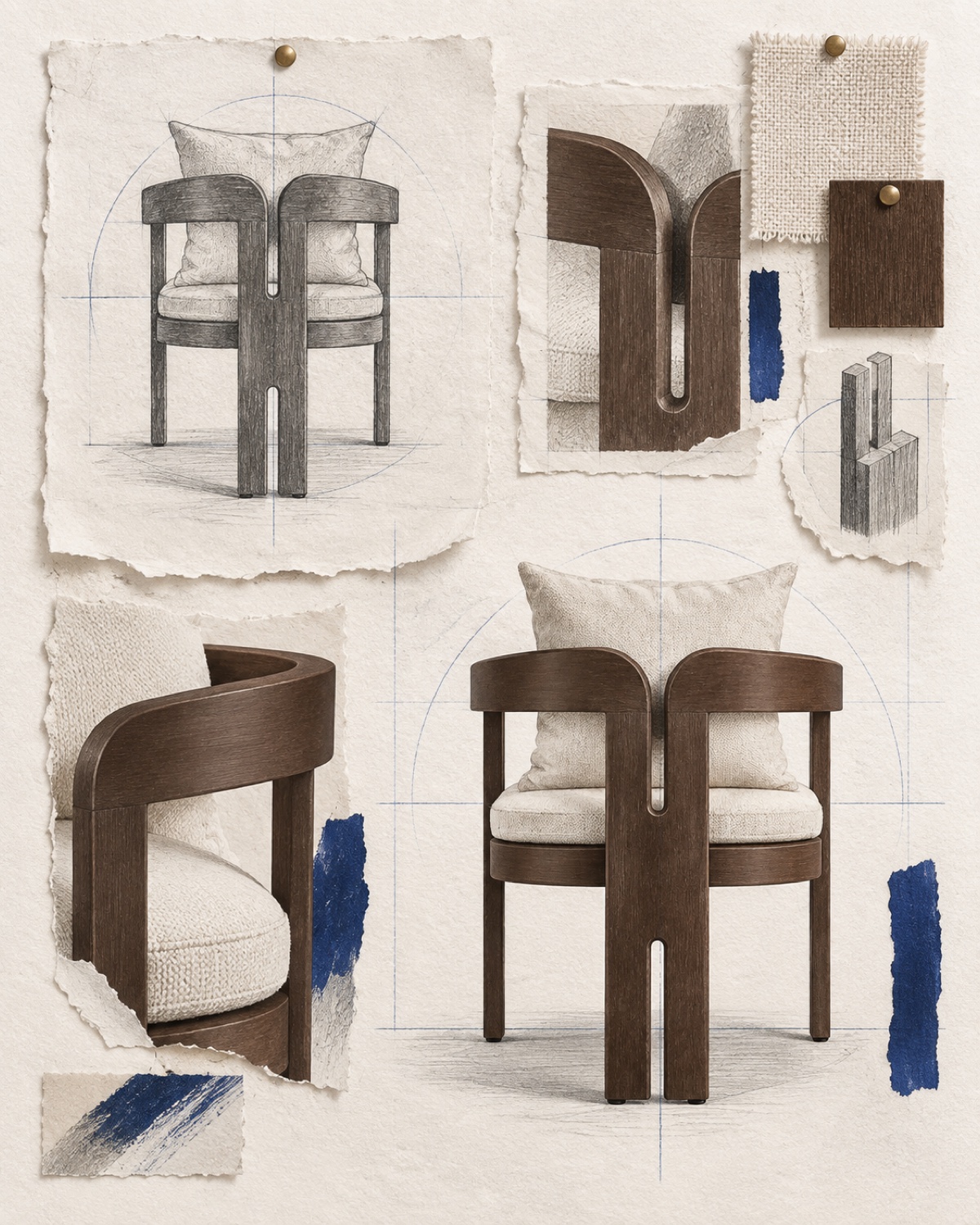
The chair has a central, divided rear element. We call it the split spine. From a distance it gives the chair a strong vertical rhythm. Up close, the openings change the light and make the structure easier to read. The side arms stay low and broad. The seat and back cushion bring softness into the frame. These parts do not try to say the same thing. Their contrast is the point.
Start where the eye pauses
Ask the back to do more.
Most chairs are first seen from the front or the side. This study starts from the rear view. It asks the back of the chair to do more than close the silhouette.
The split spine is not decoration added at the end. It gives the chair its visual centre. The narrow openings keep the central plane from reading as one heavy block. They make space part of the object. From some angles, the spine looks almost like a drawing in the air. From others, it becomes a quiet screen between the frame and the cushion.
That first observation led to three simple design questions:
- How much structure should be visible?A rear element can hold the chair together visually, but it can also make the whole object feel closed. The openings create a place for light and shadow.
- Where should softness begin?The pale cushions should feel held by the frame, not trapped inside it. Their edge softens the strong vertical line behind them.
- What should a person notice last?The arms are curved and welcoming. The rear spine is more direct. Walking around the chair moves the attention from comfort to structure.
These are not performance statements. They are working questions. They help a design team talk about proportion and feeling before they talk about a final specification.
From an idea to an object
Make the question visible.
Every Working Study starts with a real object, not a promise. The aim is to make a question visible enough for a useful conversation.
With WS–01, the full-size chair made several things easier to see. A curve that feels light on paper can feel wide when it sits beside a cushion. A central line that looks thin in a drawing can become important when it reaches the floor. A material contrast that appears calm in a sample can become much stronger when it covers a whole seat.
This is why the study is useful before a client brief is fixed. It gives both sides of a project something concrete to discuss. A designer can point to the back and say, “I want this part to remain open.” A brand team can say, “The softer element needs a different proportion.” A development team can identify which junction needs more attention. The conversation moves from taste alone to a shared object.
We do not use a Working Study to tell a client what their next product should be. Their design team owns that work. We use it to show the range of questions that can be explored together: a structural rhythm, a surface direction, a joint, a profile, a contrast between a frame and an upholstered element, or the difference between a small sample and a full-scale form.
The Working Study loop
Look. Frame. Make. Return.
- 01Look
Look at the question.
- 02Frame
Frame the visible decisions.
- 03Make
Make one thing full scale.
- 04Return
Return with a clearer brief.
A Working Study is not a straight line from idea to catalogue. It is a loop that gives the next brief better questions.
The point of the split
Keep the contrast visible.
The word split is useful here because it describes more than the two narrow openings in the rear element. The chair is built from paired ideas.
There is a clear difference between front and back. There is a difference between the hard visual discipline of the frame and the relaxed shape of the cushions. There is a difference between a long, calm arm line and the direct vertical line of the spine. None of these differences need to be solved into one smooth message. They can stay visible.
That is often where a custom project becomes interesting. A design may need one part to be calm and another part to carry tension. It may need a familiar type of chair to gain a new rear view. It may need a soft material moment inside a more architectural outline. A Working Study lets us explore that balance without pretending that one study is the final answer for every setting.
Full scale changes the conversation
Walk around the question.
A full-scale study is useful because it brings distance into the discussion. You do not only see the chair from the angle chosen for a presentation. You see it when you approach it, stand behind it, and move past it.
For WS–01, that movement matters. The rear spine has a different role from each side. The soft cushion changes the view from the front. The arms guide the eye inwards. When all of these elements are present at real size, a team can speak with more precision:
- Is the rear gesture too strong, or is it the right amount of character?
- Does the arm line lead into the seat naturally?
- Is the contrast between frame and cushion balanced?
- Which detail deserves to become more exact in the next brief?
The purpose is not to arrive at a universal chair. The purpose is to make the next decision easier to name.
Working Studies are invitations
Complete enough to be seen. Open enough to keep working.
Sumparwood Working Studies are our internal inspiration prototypes. We make them to share a direction, not to close one.
Each study allows a future client conversation to begin from something more useful than a trend board. It can show the level of detail we are ready to discuss. It can make a material direction more visible. It can help a team decide which part of a concept should be explored through a sample, a drawing, a full-scale model or a further development session.
That is especially helpful for independent designers and brand teams. You may already have a clear point of view. You may be looking for a material partner who can understand it without turning it into a ready-made collection. The study is a bridge: it shows how we think, while leaving room for your own form, use case and design language.
WS–01 therefore remains open. It is a chair, but it is also a prompt. The split spine may lead one team toward a new back detail. The low arms may lead another toward a different silhouette. The contrast between soft and structural may be the useful part for a third project. The object is complete enough to be seen, and unfinished enough to keep working.
Source note
This feature is an editorial account of the visible prototype and a working method. It makes no claim about material composition, recycled content, fibre, durability, load capacity, weathering, safety, certification, manufacturing process, service life, production quantity, client project, regional suitability or commercial availability.
The illustrative studies were produced after the photographed prototype. They are contemporary visual interpretations, not historical sketches, documentary workshop photos, original development archives or evidence of manufacturing.