13 October 2026 · Collection planning
One collection.
Several sizes.
What changes between outdoor furniture variants?
Open the variant review sheet ↓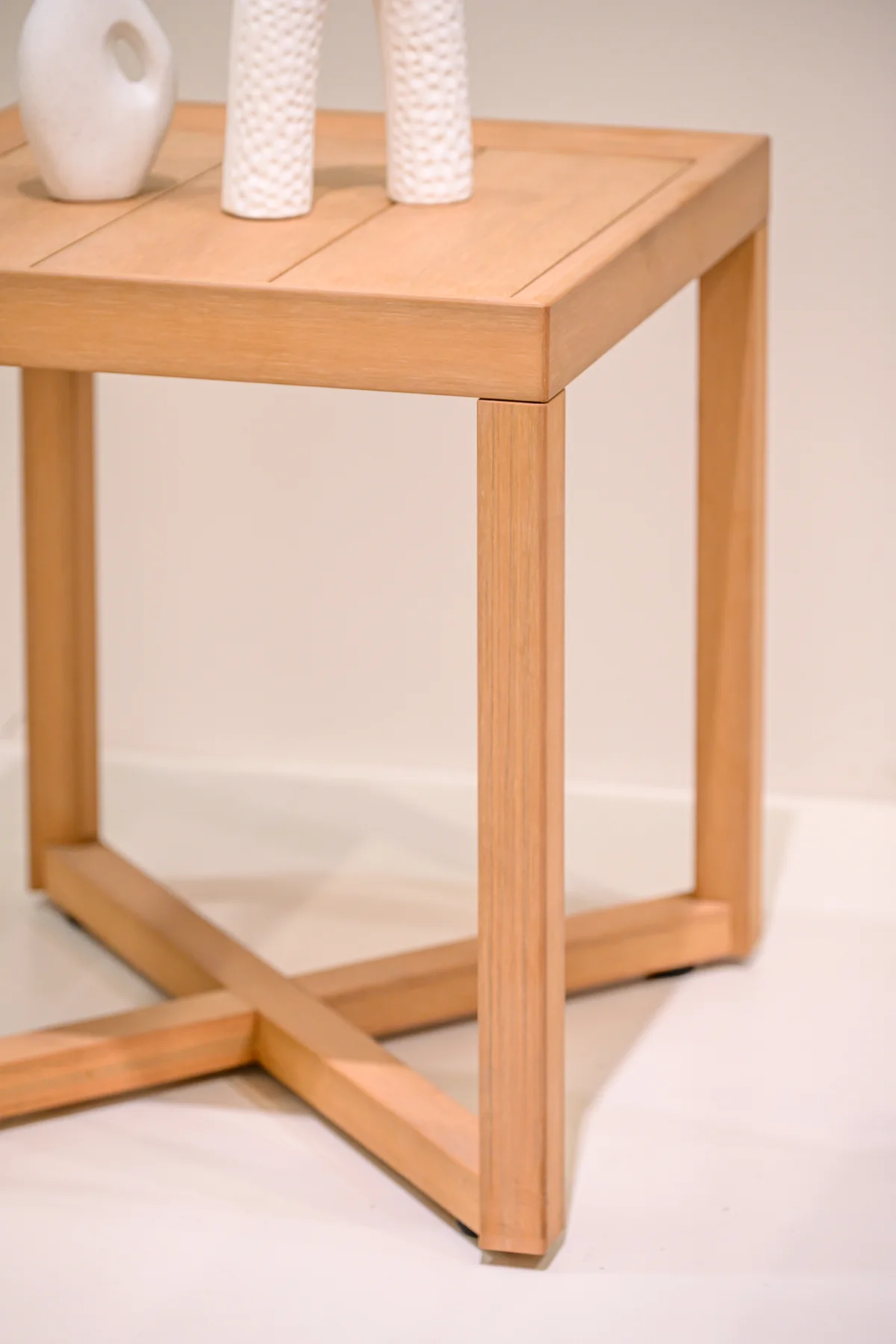
A shared name.
A separate record.
A collection can look consistent before it is fully defined. A low table, a dining table and a longer dining table may share an edge profile, a finish and a recognisable base. In a presentation, they read as one family. In a production brief, each still needs a clear identity.
For a furniture brand developing an outdoor collection, the useful question is not simply whether the larger version looks right. It is what remains common, what changes, and which decisions still need their own review. A shared collection name is a useful organising device. It is not a substitute for a variant specification.
Start with a small register of the proposed sizes. Then agree with the manufacturer which drawings, samples and other evidence apply to each version. This article offers an editorial workflow for that conversation, not an engineering method or a claim that one prototype can validate an entire range.
A family name is only the beginning
Published furniture ranges make the distinction visible. Knoll's 1966 Dining Table page lists several models under one collection, including square and rectangular formats with separate model codes and dimensions. The collection gives them a common identity; the individual codes make them orderable, distinguishable objects. Knoll: 1966 Dining Table
That is a useful starting point for a new range. Give each proposed version an identifier before feedback starts circulating. It can be provisional, provided everyone uses the same one. “Long table” becomes ambiguous as soon as there are two lengths or two top options.
Keep the collection name above the register, not in place of its rows. A reviewer should be able to point to one row and know which object, drawing and revision are being discussed. This also makes it easier to retire an option without accidentally removing decisions that still belong to another version.
Separate the design language from the dimensions
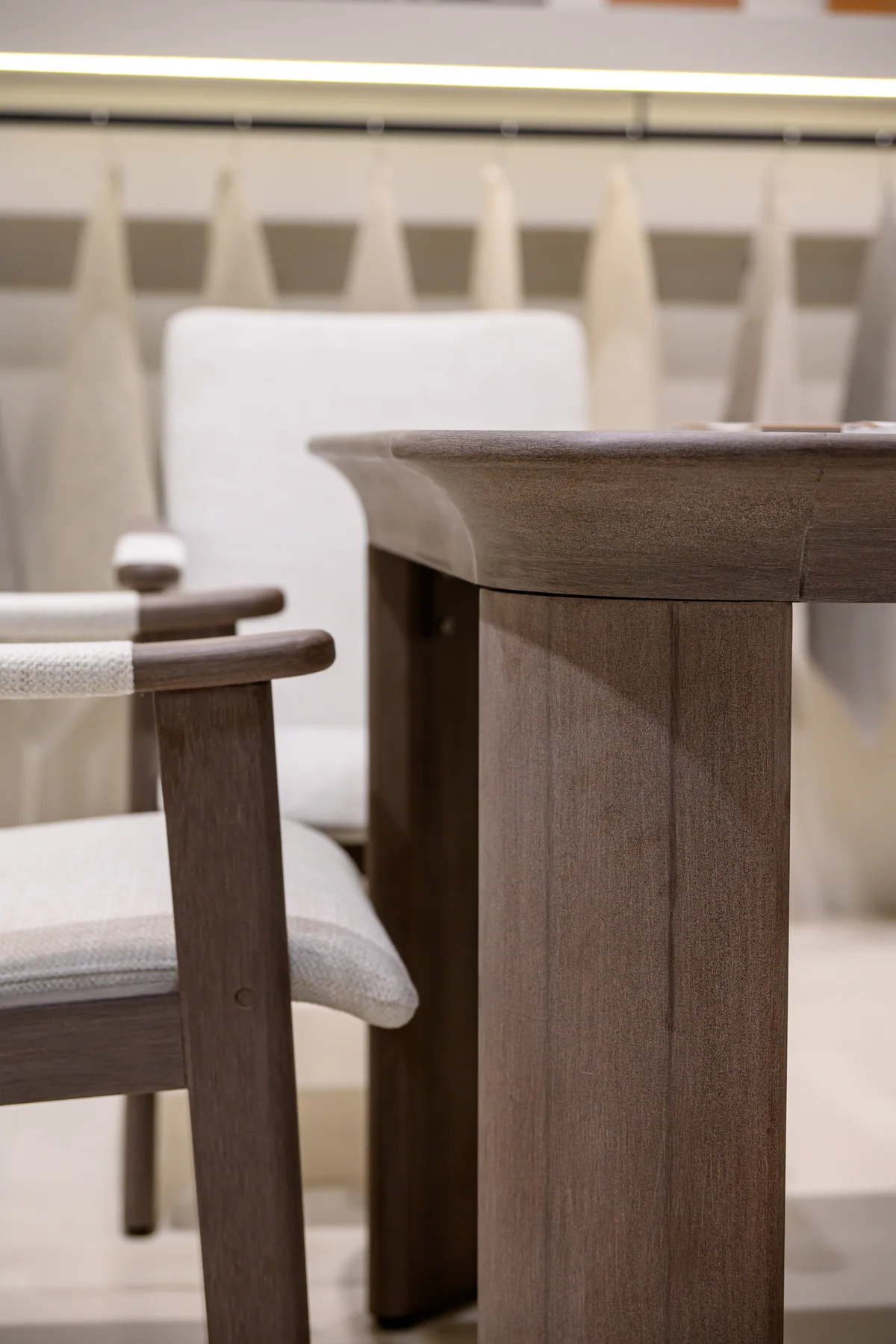
Begin with two lists. The first describes the intended common language: the appearance of the edge, the relationship between frame and top, the finish reference, or the treatment of visible connections. The second describes the information that must be recorded for each variant.
The distinction is intentional, not automatic. A detail may be intended to remain common but still need checking when the surrounding geometry changes. Record it as “intended common detail, application to be reviewed” until that review has happened.
For each variant, capture overall dimensions, top outline, support layout, connection references and the relevant drawing revision. Do not rely on a perspective image to communicate all of these. The image can explain the character; a dimensioned reference explains what the team is being asked to develop.
Herman Miller's outdoor rectangular Eames table product sheet is an example of a product-specific reference that combines a drawing with size information. Its role here is documentary: it shows why a named variant benefits from its own dimensioned reference. It does not establish a sizing rule for another collection. Herman Miller: Eames Tables, outdoor rectangular product sheet
Do not turn a resize into an invisible decision
“Make this one longer” sounds like one instruction. In a development conversation, it is better treated as a question with several parts. Which dimension changes? Which details are intended to stay fixed? Does the manufacturer need to review the support arrangement or the connections? Which drawing will capture the answer?
There is no universal percentage increase that this article can recommend. Nor should a designer assume that every element should grow by the same proportion. The correct response depends on the actual design and the manufacturer's review.
Show the proposed versions together at the same drawing scale when discussing their appearance. Then examine each version on its own. The first view helps identify a family resemblance; the second helps prevent a small annotation or unresolved interface from disappearing inside a collection overview.
If a change affects an already reviewed component, keep the change history explicit. Our guide to component substitution addresses that later-stage question. This article starts earlier: defining which variants exist and what evidence each will need.
Choose a prototype for a named question
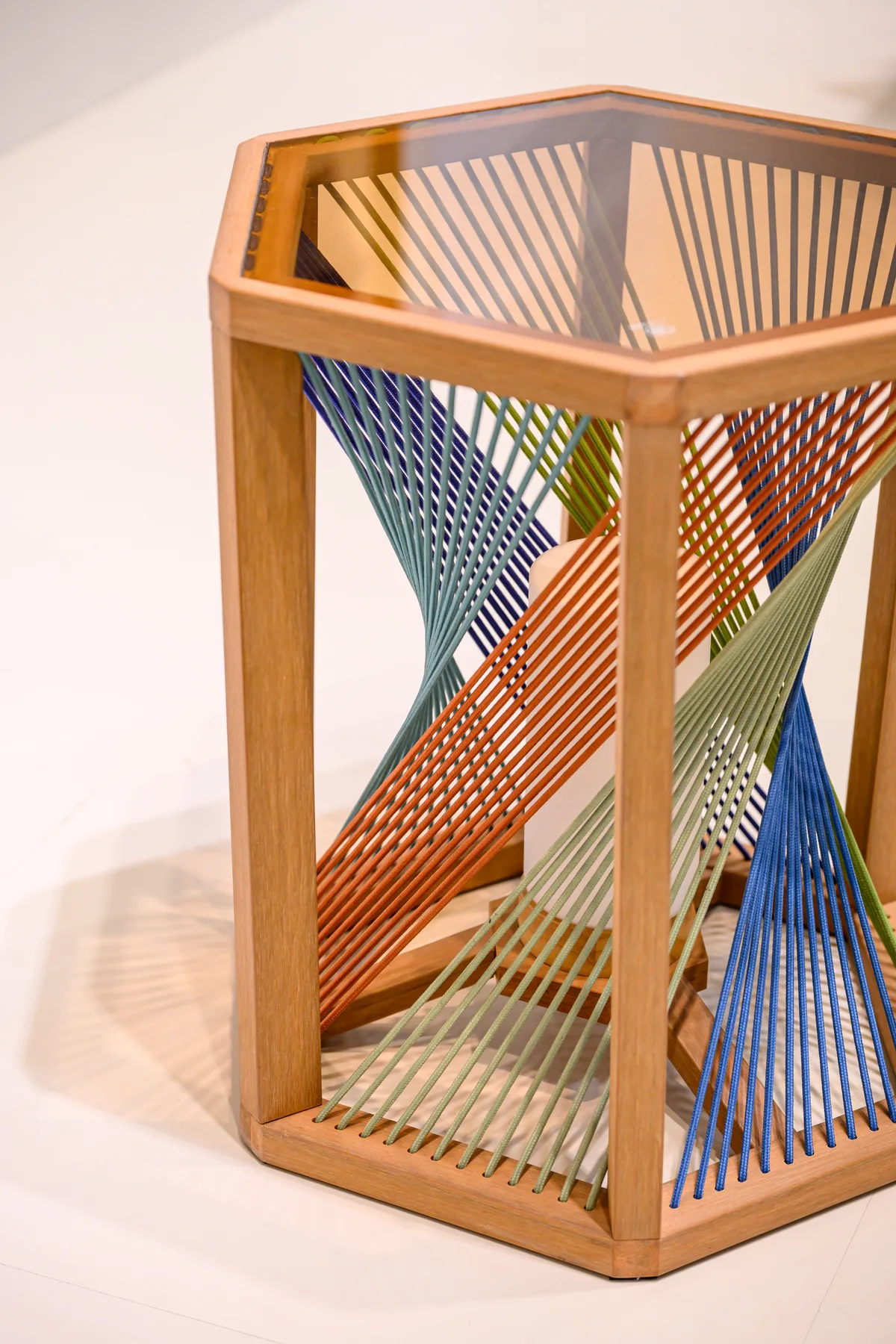
A prototype is most useful when the team knows what it is supposed to answer. A presentation sample, a detail sample and a complete assembly may support different conversations. Write the intended purpose beside the proposed sample, rather than allowing the word “prototype” to carry every expectation.
For example, the team might want to review the visual relationship between a top and its frame, access to a connection during assembly, or the placement of a finish transition. These are proposed review questions, not claims that a particular sample has passed them.
Do not assume that the largest version represents every other version. Equally, do not assume that every size must be prototyped in exactly the same way. Ask the responsible manufacturer or testing party to define the applicable review or test scope. Record that answer and its limits.
Where evidence is proposed for more than one variant, name those variants explicitly. “Applies to the family” is too loose if the family is still changing. A later addition should trigger a fresh applicability question, not inherit a completed status merely because it shares the collection name.
Use a variant review sheet
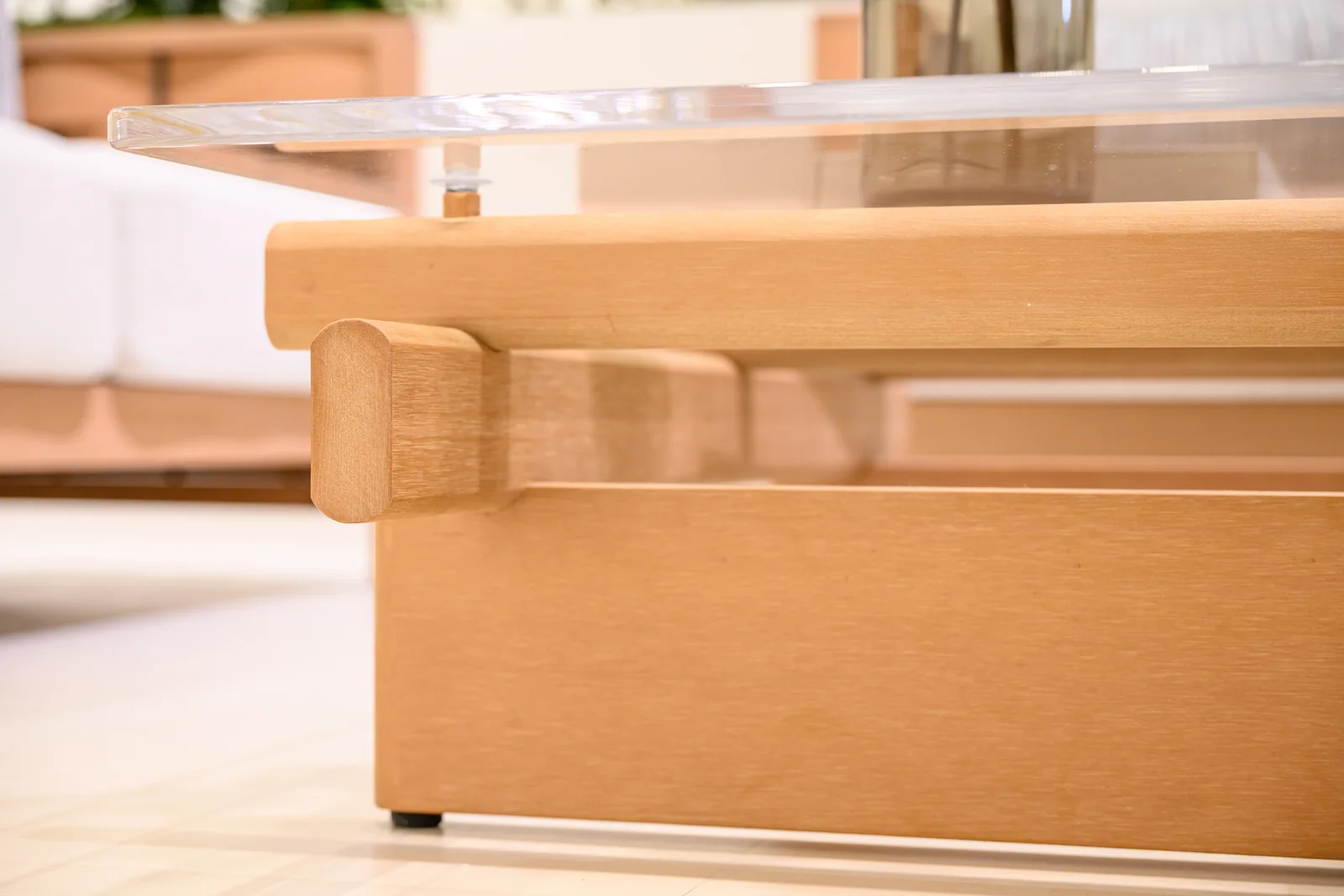
The following is a working aid for a design-development meeting. It is not a test standard. Fill one copy for each version, then compare the copies to see where information genuinely repeats and where it does not.
| Field | What to record | Question to close |
|---|---|---|
| Variant identity | Working code and intended use | Can everyone identify this exact version? |
| Geometry | Drawing revision and overall dimensions | Is the proposed size captured in the current drawing? |
| Shared details | Referenced edge, finish and connection details | Is common use intended, reviewed or still unresolved? |
| Variant differences | Specific departures from the reference version | Has each difference been made visible? |
| Review evidence | Named sample, drawing review or applicable report | What does this evidence actually cover? |
| Handling and packing | Variant-specific information when available | Does the packing reference identify this version? |
| Status and owner | Open question, responsible person and next action | What must happen before this row can close? |
Avoid a single green status for the whole sheet while individual questions remain open. “Appearance reviewed; packing not defined” is more useful than “approved” without a stated scope. Keep the language factual enough that a colleague joining later can understand the decision.
Ordering information should stay connected
As options multiply, it becomes easier to combine a size from one reference with a finish or base from another. A short ordering summary should keep the selected options together, with the exact variant code and current revision.
Herman Miller's Eames Tables price book explains specification through a sequence of selections that complete a product number. That is a useful illustration of connected ordering information, not a recommendation to copy its codes or option structure. A developing collection needs its own controlled record. Herman Miller: Eames Tables price book
Knoll also notes that its configurator is for reference and may not represent every available option, finish or size. The practical lesson is to identify the controlling specification, rather than treating a visual preview as a complete order definition. Knoll: configuration guidance
For your own collection, state where that controlling record lives. If an image, a spreadsheet and a drawing disagree, the team should know who resolves the mismatch before production information is issued.
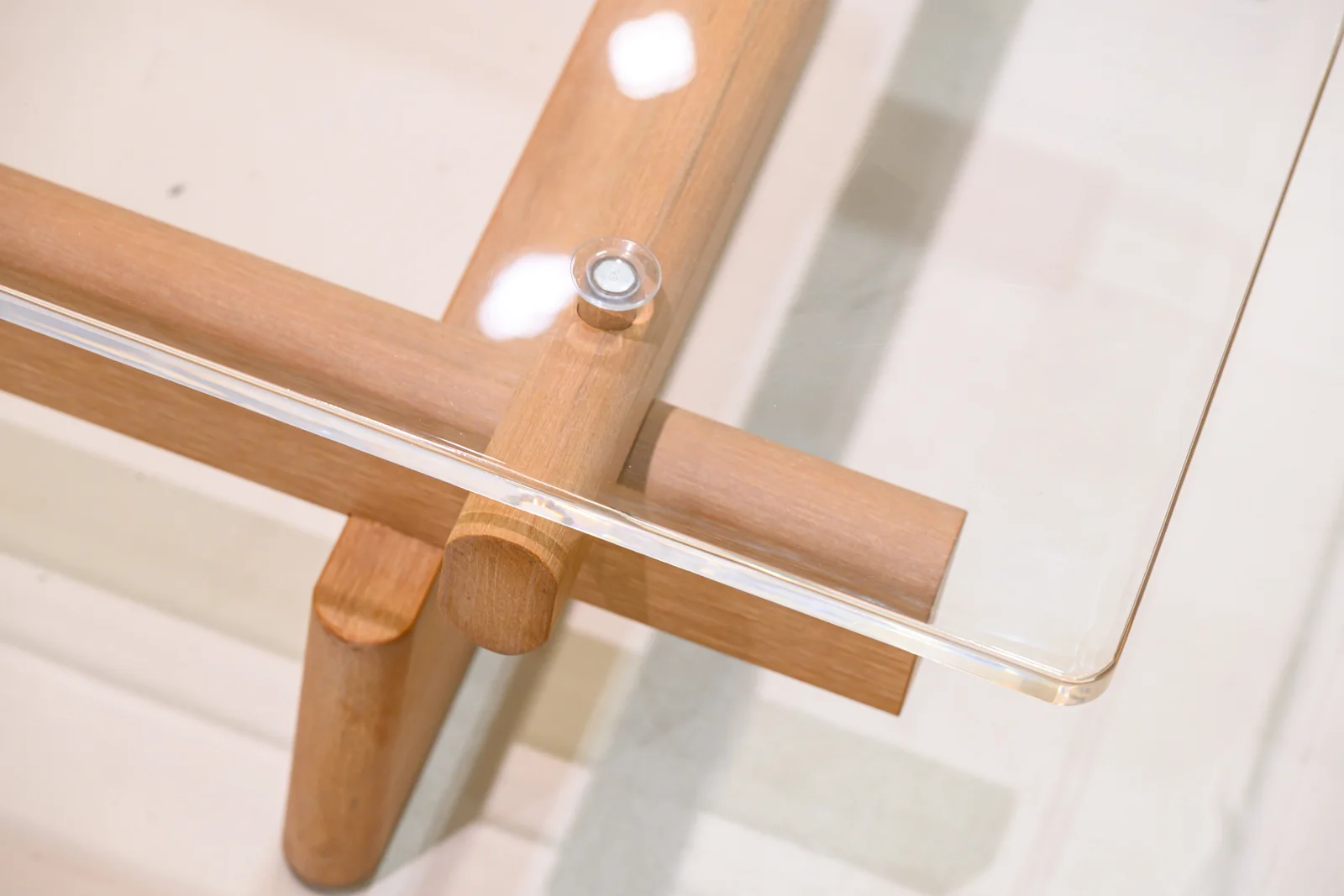
Remember the object outside the drawing
Different versions may also have different handling and packing information. Knoll's retail listing for the 1966 porcelain dining table gives separate dimensions and weights for its size options. This is a concrete reminder to look up the selected version rather than copy another version's data. It is not evidence about the weight or packing of a Sumparwood design. Knoll: 1966 porcelain dining table size options
Add the relevant packing reference to each variant once available. If it has not been defined, leave an explicit open item. A collection photograph cannot tell a warehouse team which carton, assembly instructions or component list belongs to a particular order.
The same discipline helps at receipt. A delivery record is easier to interpret when it names the variant and order reference. Our arrival-condition guide explains a separate documentation workflow for that stage.
Close the range one version at a time
Before the next review, ask three questions: can we identify every proposed variant, can we trace the evidence used for each decision, and can we see what remains unresolved? If any answer is no, the next action is to clarify the record, not to add a broader approval label.
A smaller, clearly defined first release can be easier to discuss than a large list of loosely described options. That is a planning choice for the team, not a reason to discard useful designs. Keep future variants visible as future work, with their own questions and owners.
Sumparwood works with brands and design teams developing outdoor furniture. Bring a collection overview, the intended variants and the questions you want to resolve to a development conversation. For an initial finish comparison, request the Sample Box. A material sample supports that conversation; it does not replace the review of a complete furniture variant.