12 October 2026 · Receiving field notes
Before installation,
make the arrival visible.
Outdoor furniture arrival checks: record identity, condition and the next decision.
Go to the Arrival Record ↓
A delivery can be on site without being ready for installation. Cartons may have arrived together, but the people receiving them, opening them and placing the furniture may be different. A useful arrival record connects those moments. It shows what arrived, which package held it, what was visible and who owns the next decision.
Start with identity, then condition. Photograph the package before changing it, connect each concern to an item reference, and record the next action with a named owner. Do not use a clean carton as proof that the furniture inside has been inspected. Equally, a marked carton does not establish damage to its contents or tell you who caused it.
This is a practical recording workflow for Australian hospitality teams, not a delivery acceptance rule, safety inspection or claims procedure. Follow the instructions agreed with your supplier and carrier. The record below helps a reviewer understand the situation; it cannot determine liability, warranty coverage or whether an item is safe to use.
Give the delivery a receiving owner
Before arrival, decide who will match the shipment to the order and where the first checks will happen. That person needs the purchase reference, expected package list and a contact for questions. If another team will install the furniture later, agree how the record will reach them. A shared folder is useful only when someone knows which folder to open.
Prepare a clear working area where packages can remain identifiable. Confirm access arrangements through the appropriate site team rather than assuming that a loading bay, lift or room will be available. Herman Miller's US delivery guidance discusses measuring access and clearing the route. It is a useful preparation example, not the service specification for an Australian commercial delivery. Herman Miller delivery guidance
Keep observation separate from handling. The person taking photographs should not ask a delivery team to hold an unstable load or enter an unsafe area for a better angle. Follow the site's handling arrangements. If access prevents a view, write “not visible at receipt” rather than leaving an empty field that could be read as a completed check.
Match the shipment before describing the furniture
Record the delivery date and time, order reference and carrier or consignment reference where available. Then give each package a recognisable identifier. Use the supplier's carton number if it is clear; otherwise add an internal receiving reference without covering the original label. Keep the expected quantity and the observed quantity in separate fields.
That distinction matters when one chair arrives in two packages or several components share a carton. A package count is not automatically a furniture count. If the relationship is unclear, mark it as unresolved and ask the supplier to explain the packing list. Do not guess a missing component from a photograph of an unopened package.
Photograph the identifying label for the private project record. Shipping labels may contain personal addresses or contact details, so avoid sharing the original image in public presentations or social posts. A public illustration can be different from the unaltered operational record. Preserve the original privately and make a separate, clearly identified copy when redaction is needed.
Describe what you can see
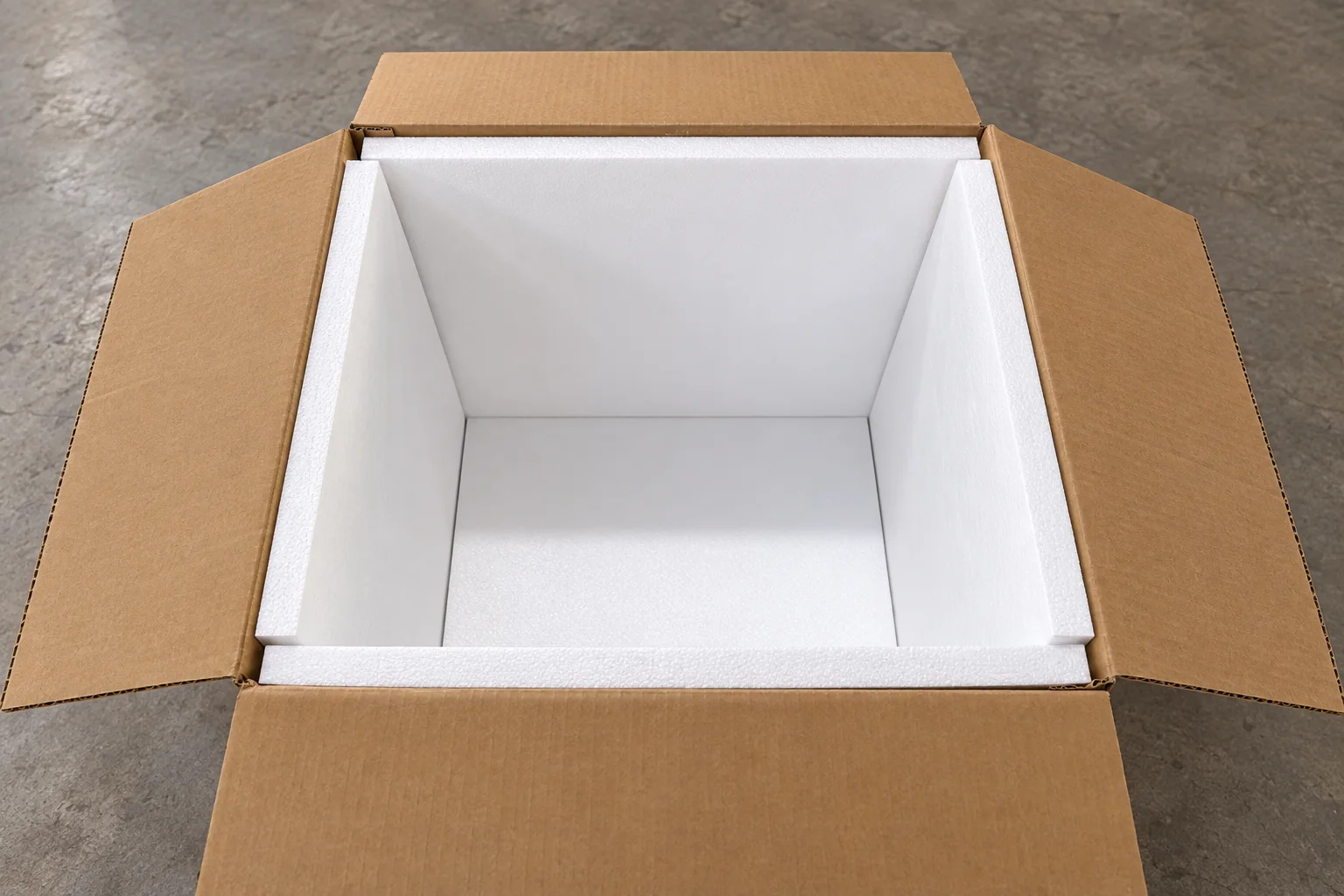
Use plain observations: a puncture on one side, a compressed upper corner, a wet area along the base, an open seam. Note the location so another person can find it. “Carton damaged” gives less information than “front lower corner compressed; close-up A03”. Avoid writing “dropped by carrier” when the photograph only shows a bent corner.
TNT Australia's packing policy identifies punctured, crushed and wet boxes, and damaged pallets. Those are useful condition categories. The page concerns packaging presented for transport; it is not a rule telling a receiving team whether to accept a delivery or who is responsible for damage. TNT Australia safe-packing policy
Keep a second field for what remains unknown. For example: “Outer carton punctured; inner protection and item not yet examined.” This wording makes the limit visible. It also avoids turning a packaging observation into a conclusion about the furniture. When there is a potential handling hazard, refer it to the responsible site person before continuing.
Take a sequence, not just a close-up
A close photograph can show a mark clearly and still leave the reviewer unable to identify the item. Build a short sequence: the whole package, its identifier, the affected area in context, then the detail. When opening is appropriate under the agreed process, record the protection and the item before moving them into a different arrangement.
Treat this sequence as an editorial recommendation, not a carrier's mandatory evidence list. The aim is continuity. Give related files the same package reference, with a simple sequence number. Keep the originals and avoid filters that change colour or surface appearance. Add a written description when reflections, wrapping or poor light make a photograph ambiguous.
Do not unpack more than you can keep organised. If small fittings are present, keep their packaging and item association clear. If an accessory is not found, describe the search accurately: “not found in package A at opening”, rather than “not supplied”. Another package or a separate delivery may still need checking.
Let the responsible party assess the concern
An Australian furniture supplier, Office Furniture Company, asks customers reporting arrival damage to provide photographs including packaging, together with the order number. Its own policy includes a reporting timeframe and an assessment process. The relevant point here is the connection between an identified order and visual evidence—not a deadline or remedy that applies to every supplier. Office Furniture Company arrival-damage guidance
Send the concern through the agreed project contact promptly. Include the affected item, observed condition, photographs and current location. State whether it remains packaged, has been opened or has already been moved. If installation is scheduled, explain the operational timing without assuming when a replacement or assessment will be available.
Ask for a clear next action. The response might require another photograph, a product reference or an assessment by someone qualified for that question. Do not repair, alter or conceal a concern simply to make the installation programme look complete. Where condition raises a safety concern, keep the affected item out of use pending appropriate assessment.

Keep the evidence together
FedEx's US claims page lists photographs of packaging and damaged contents among supporting documents. It also asks customers to retain original packaging and contents until a claim is resolved. This is a carrier-specific US example, not an Australian claims instruction. Use your own supplier's and carrier's applicable requirements to decide what must be retained and for how long. FedEx US claims documentation
For the project record, connect the photographs, delivery reference and correspondence in one place. If packaging is retained, record where it is stored and which item it belongs to. If someone instructs a change in its status, record that instruction. A loose piece of protective material is less informative after its connection to the package has been lost.
Avoid turning the receiving folder into a collection of unrelated images. Record the latest decision beside the original observation, but do not overwrite the original note. If a description was mistaken, add a correction with a date. This makes it possible to distinguish the first observation from what a later review established.
A one-page Arrival Record
Use one record for each affected item or clearly defined package group. The following fields are a suggested team worksheet, not an industry standard.
| Field | What to enter |
|---|---|
| Shipment identity | Order and consignment references; delivery date and time |
| Package and item | Carton reference, item reference and relationship still to confirm |
| Observation | Visible condition and exact location; avoid assigning cause |
| Inspection extent | Outer package only, opened package or item examined; limits noted |
| Evidence | File references for context, label and detail photographs |
| Present location | Where the item and relevant packaging can be found |
| Responsible contact | Person notified and time; response still needed |
| Next action | Written instruction, owner and review point |
For example, a hypothetical entry could read: “Package A, item reference awaiting confirmation. Upper corner compressed. Exterior photographed A01–A03. Unopened in receiving area. Project lead notified; awaiting instructions for opening.” This is deliberately incomplete about the contents. A useful record makes uncertainty legible instead of filling it with assumptions.
When the package is opened, add a new dated observation to the same record. If the item appears unaffected in the areas examined, say exactly that. Do not change “unopened at receipt” to “all checked” retrospectively. A later assessment should be identifiable as a later assessment, with its own scope.
Close the handover, not just the carton
Before installation, the receiving owner and installation lead should be able to answer three practical questions: which items have been examined, which concerns remain open, and who has instructed the next step? A delivery signature, a photograph and an installation decision serve different purposes. Do not use one as a substitute for the others.
The aim is not to create paperwork for every small surface variation. It is to preserve enough context for a fair, informed response when something needs attention. For questions about the approved finish reference, use the finish specification guide. For planning protection before dispatch, read the furniture packaging development guide. Arrival recording is the next stage, not a replacement for either.
Planning a furniture development project? Bring the item references, proposed packing approach and receiving constraints into the development discussion. A Sumparwood Sample Box can support an earlier material and finish conversation. It does not certify the condition of a delivered item. Keep those decisions connected, but keep their evidence distinct.