
The terrace is ready for guests. The chairs sit neatly around the tables. But where will they go when the space needs to change?
For a hospitality team, outdoor chair storage is part of the furniture brief. The question is not only whether chairs can be stacked. It is whether the intended chairs, in their intended configuration, can be stored, retrieved and returned through the space available.
A stack in a product photograph can make that decision look simple. A working venue adds doors, corners, equipment, other stored items and people. The arrangement needs to make sense after service as well as before opening.
This guide offers a way to organise that conversation. It does not prescribe a safe stack height, a lifting limit or a storage layout. Those decisions need the manufacturer's instructions and an assessment of the actual task and site.
Start with the exact chair
First establish whether the manufacturer identifies the proposed model as stackable. Do not infer this from similar shapes, slender legs or another chair in the same range.
The IKEA VISINGSÖ outdoor armchair page explicitly describes that model as stackable. It also separates overall chair measurements, seat measurements and packaging measurements. This is a useful example of reading product information carefully, not a recommendation of that chair for a particular venue.
For your own selection, keep the model reference and configuration together. Ask which cushions, pads or accessories can remain in place during storage. If the answer is not supplied, leave the question open. A photograph does not establish the instructions.
Record the source of each answer. A current manufacturer document is different from an assumption made during a design meeting. Keeping that distinction visible helps prevent an attractive proposal from becoming an unsupported purchasing decision.
Ask for the stack, not just the chair
The dimensions of one chair do not describe the outside dimensions of a complete stack. Nor do shipping-carton dimensions answer the storage question.
Request information for the intended stack configuration: its overall width, depth and height, the permitted number of chairs, and the conditions attached to that instruction. If several arrangements are permitted, identify which one the venue plans to use.
Do not create a stack limit by dividing the room height by the height of one chair. The missing information is how the actual products fit together and what their manufacturer permits. A neat calculation cannot replace it.
Where practical, review the proposed arrangement physically with the responsible team. Record the model and number of chairs present, the equipment used and the dimensions actually observed. A measured envelope is useful information, but it is not, by itself, confirmation that the arrangement is safe or approved.
Keep the manufacturer's limit separate from a venue's operating decision. The venue may need a different arrangement because of its storage space, handling process or retrieval needs.

Find out where the pieces meet
Stacking brings one object into contact with another. Before approving a storage plan, ask where those contacts are intended to occur and whether the manufacturer specifies protective parts or a particular orientation.
Treat those details as part of the configuration. If a spacer or other component is required, include it in the information given to the team. Do not assume an improvised pad is an equivalent substitute.
The same applies to upholstery. If a cushion needs to be removed, the storage brief now includes another item and another action. Ask where that item will be kept and how staff will identify the matching configuration when the furniture returns to use.
This is an information request, not a claim that all chairs need the same protection. The aim is to avoid designing the room around an incomplete picture of what will actually be stored.
For related development questions, our guide to fixed and removable outdoor upholstery considers access to individual parts. Storage adds a separate question: where do those parts go between uses?
Walk the route before choosing the space
The place where chairs finish their journey is only one part of the arrangement. Follow the intended route from the terrace to storage and back.
Note the doors, turns, changes in level and other objects along that route. Ask which parts of the movement need to be observed or measured. A storage bay can appear generous while the approach remains unresolved.
HSE's guidance on reducing awkward postures discusses work arrangements, obstacles and the position of the task. Its context is workplace assessment, not approval of an Australian hospitality layout. Here it supports a limited principle: review the working situation, not the object in isolation.
Keep access and emergency-route requirements with the responsible project adviser. This guide does not supply an aisle width or confirm compliance. Do not use a furniture footprint to represent the whole area needed for movement.
An annotated plan can help the discussion. Mark the proposed storage location, the route and each unresolved point. It should identify questions for review, not turn unverified clearances into a finished operating instruction.
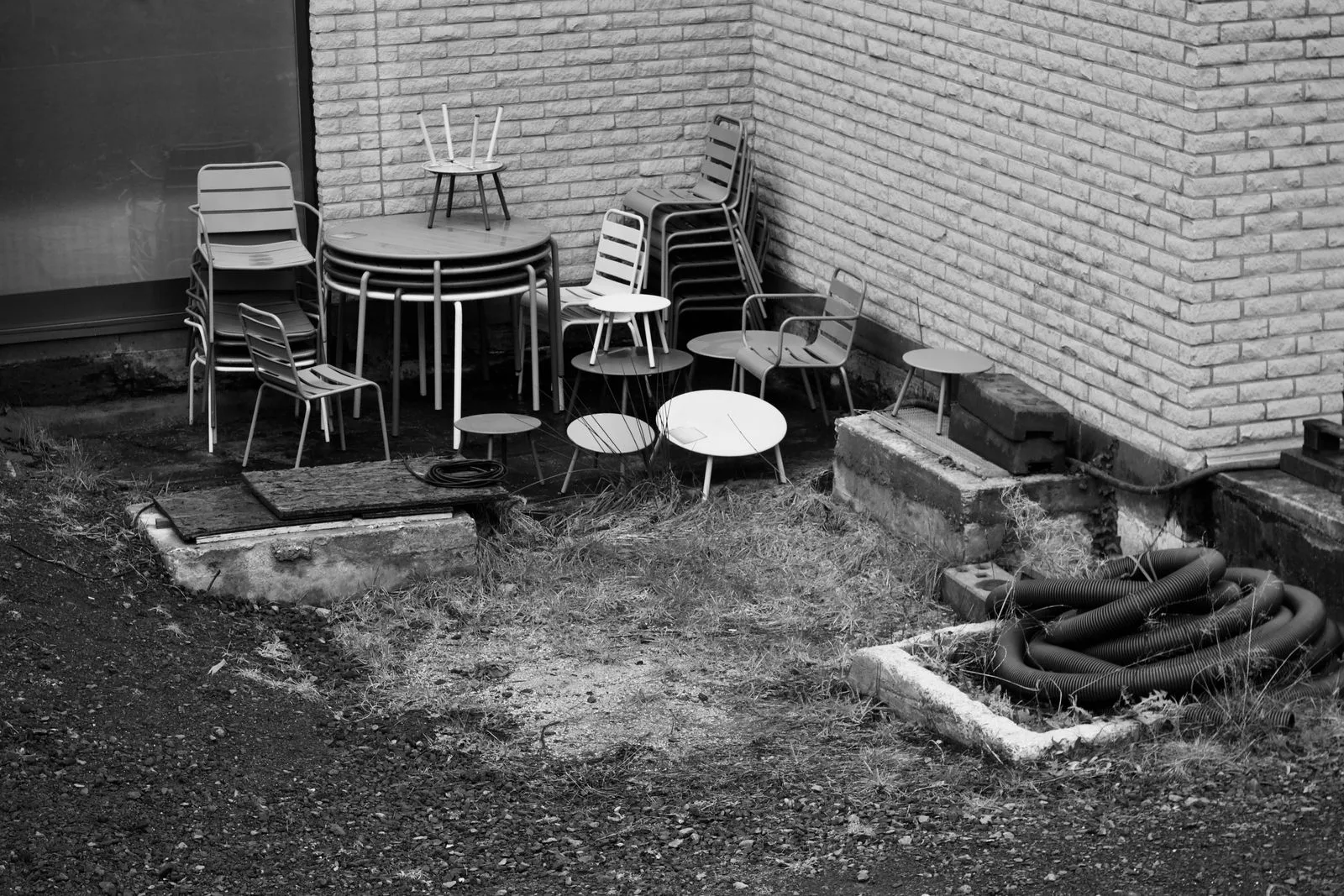
Include the people doing the work
Ask the venue team how frequently the furniture moves, who is involved and what else happens in the same space. Daily rearrangement and occasional seasonal storage are different operating briefs.
Safe Work Australia explains that hazardous manual tasks can involve force, repetition, posture and movement. The useful implication is not a universal chair-weight threshold. It is that the task needs attention alongside the object.
Describe what staff will actually do. Will chairs be retrieved individually? What equipment is proposed? Where does it wait when not in use? Which parts of the task remain undecided?
These questions should inform a competent review, not become an improvised handling method. We do not recommend carrying a particular stack or choosing a trolley based on appearance.
SafeWork NSW's guidance on hazardous manual tasks considers the task, objects, environment and work systems, with worker consultation as part of identifying issues. Its jurisdictional context should remain clear. Check the requirements and advice applicable to the venue rather than treating a general article as a local assessment.
Plan the return as carefully as the storage
Putting chairs away and bringing them out are two parts of the same brief. An arrangement that fits the room still needs a workable way to retrieve the intended items.
Discuss the order of use. If one group of chairs is needed more often, ask whether the proposed arrangement gives the team appropriate access to that group. Do not assume that filling every available corner produces a useful storage plan.
Record where any separately stored cushions or accessories belong. Use the venue's existing identification system where possible rather than introducing an elaborate new one.
We recommend keeping unresolved actions with a named reviewer. If the model, equipment or storage location changes, revisit the affected parts of the brief. An earlier observation describes the arrangement reviewed then, not every later version.
The result can be a short, clear record. It should help a designer, supplier and venue team discuss the same proposal without presenting a planning note as a certificate.
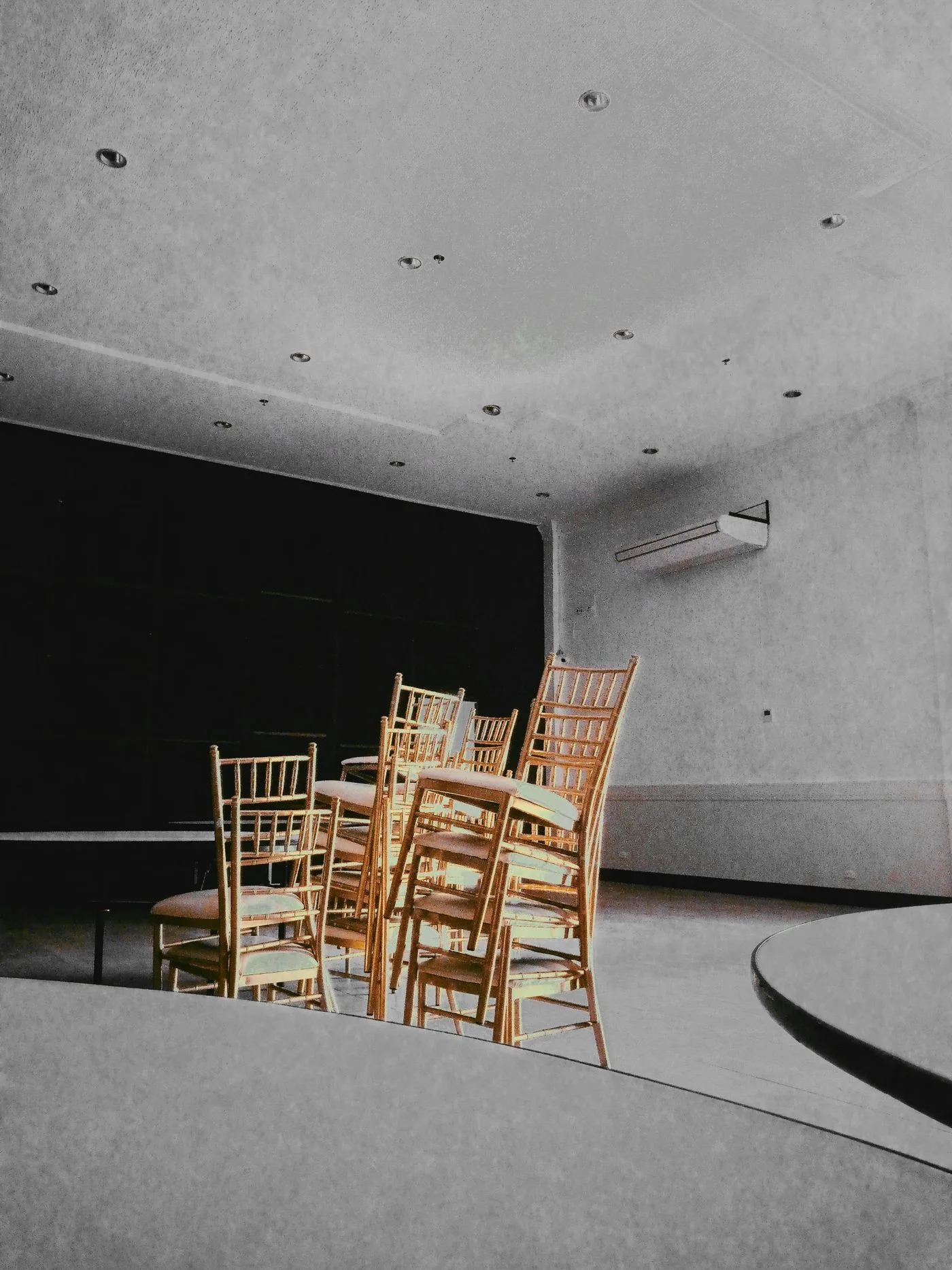
The Storage and Retrieval Brief
Use these seven prompts before committing to a storage arrangement. This is an editorial discussion aid, not a stacking instruction or risk assessment.
1. Identify the configuration
Record the exact chair model, revision and accessories. Link to the manufacturer's statement about stackability. Note anything that must be removed or changed before storage.
2. Attach the applicable instructions
Request the permitted stack arrangement and any limits, orientation or protection requirements. Mark missing instructions as unresolved. Do not replace them with a number inferred from a photograph.
3. Describe the actual stack
Record the width, depth and height of the intended arrangement, and how those dimensions were established. Keep single-chair, packaging and stack measurements in separate fields.
4. Identify the equipment
Name any proposed handling equipment and the source confirming its suitability for the arrangement. Include its own storage location. If compatibility is unknown, assign that question rather than assuming it.
5. Review the route
Show the path between use and storage. Mark doors, turns and other points needing review. Keep measured observations separate from the approval of access or circulation requirements.
6. Describe the operating pattern
Note how often chairs move and which team performs the task. Include retrieval and return, not just the final stored position. Record staff input and the issues requiring competent assessment.
7. Close the open questions
Give each unresolved point an owner and a next action. Keep the reviewed documents together. Revisit the brief when the model, configuration, equipment or venue arrangement changes.
Bring storage into the design conversation
For custom outdoor furniture, storage should enter the conversation while the design is still being developed. If stacking is important, state it as a requirement to investigate, not a property assumed from a sketch.
At Sumparwood, the useful starting point is your design intention and the questions that need to be resolved around it. Our design-development Journal introduces that collaborative approach. It does not mean every possible form has the same capabilities.
A Sample Box can support a discussion about material and colour. It cannot prove that a finished chair stacks, establish a stack limit or approve a handling arrangement. Keep those questions connected to the exact furniture and its supporting information.
The goal is simple: a storage brief that describes the furniture when guests are no longer sitting on it, and the work needed to bring it back.
Questions to settle before ordering
Can I calculate a stack from one chair's dimensions?
Not reliably. Request information for the intended stack. Overall chair dimensions and package dimensions describe different things and do not establish a permitted stacking arrangement.
How many outdoor chairs can we stack?
Use the applicable manufacturer's instructions for the exact model and configuration, then review the venue's needs. This article does not set a universal number.
Does stackable mean easy or safe to move?
No such conclusion follows from that word alone. The handling method, equipment, route, frequency and people involved still need review.
Are the Sumparwood chairs pictured elsewhere stackable?
Do not infer that from their appearance. Ask about the exact design and configuration. Images in other Journal articles show form and context, not verified stacking instructions.