Material Intelligence / Interface Review
Outdoor Furniture Hardware and Drainage: An Interface Review Checklist
A good outdoor joint lets water out, keeps debris visible and remains possible to inspect.
Review the junction as a system: geometry, hardware, water path, access and evidence all meet at the same detail.

In plain English
Three things to know.
A strong material can still be let down by one wet, hidden or undocumented joint.
Follow water and debris through the real furniture, then check cleaning and tool access.
A test result only applies when its specimen, method and conclusion match the joint being reviewed.
Where can water enter?
Start with the path, not the part.
Draw what water can do in every normal position of the furniture. Mark where it arrives, where it may stop and where it can leave. Add dirt, leaves, food residue and cleaning liquid. These follow gravity, gaps and low points—not the bill of materials.
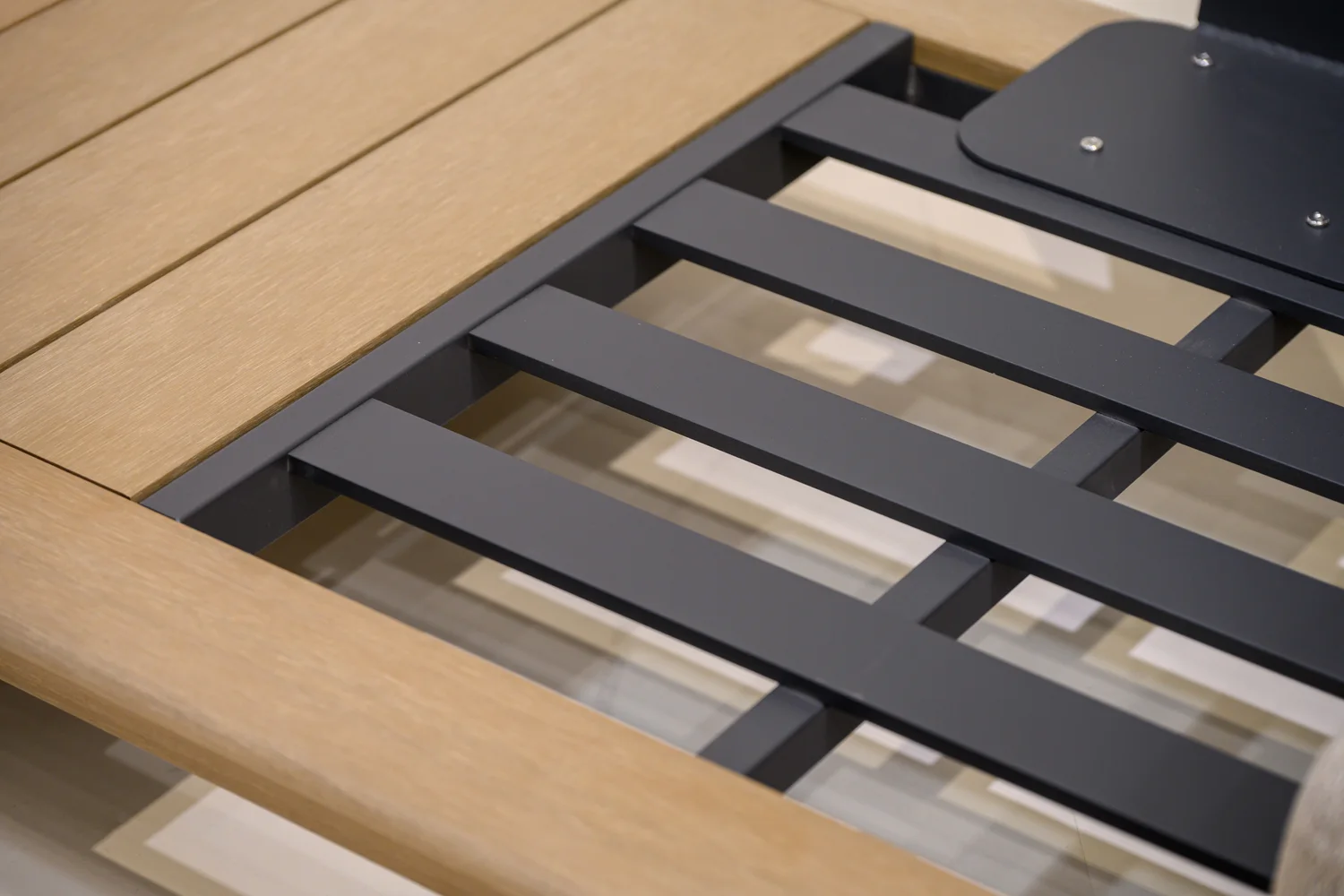
Look under rails, inside recesses and around caps, fasteners and overlapping surfaces. If the product folds, stacks or adjusts, repeat the check in those positions. The useful question is simple: has the geometry created a place that stays wet or becomes hard to inspect?
The FHWA detailing advisory is written for bridges, not furniture. Its bounded lesson is still useful: avoid water and debris traps, provide a way out and keep inspection access. It does not provide a furniture drain-hole size.
What exactly makes up the joint?
A joint is a recipe, not a material label.
Write down the profile, fastener, insert, washer or isolator, finish, sealant and assembly sequence. Include the supplier and drawing revision. A phrase such as “stainless fastener” or “outdoor coating” is not enough to identify the interface.
This record stops a common problem: the prototype looks right, but the approved recipe is never fixed. A new washer, coating, supplier or hole shape can change the joint that the team originally reviewed.
Different metals or conductive materials should trigger a review, not an automatic answer. Moisture, electrical contact, coating condition, exposed area and drainage all matter. The NIST conservatory report is a different building context, but it shows why retained moisture and joint geometry must be considered together.

Can the joint be checked later?
Design for the person who must inspect, clean or replace it.
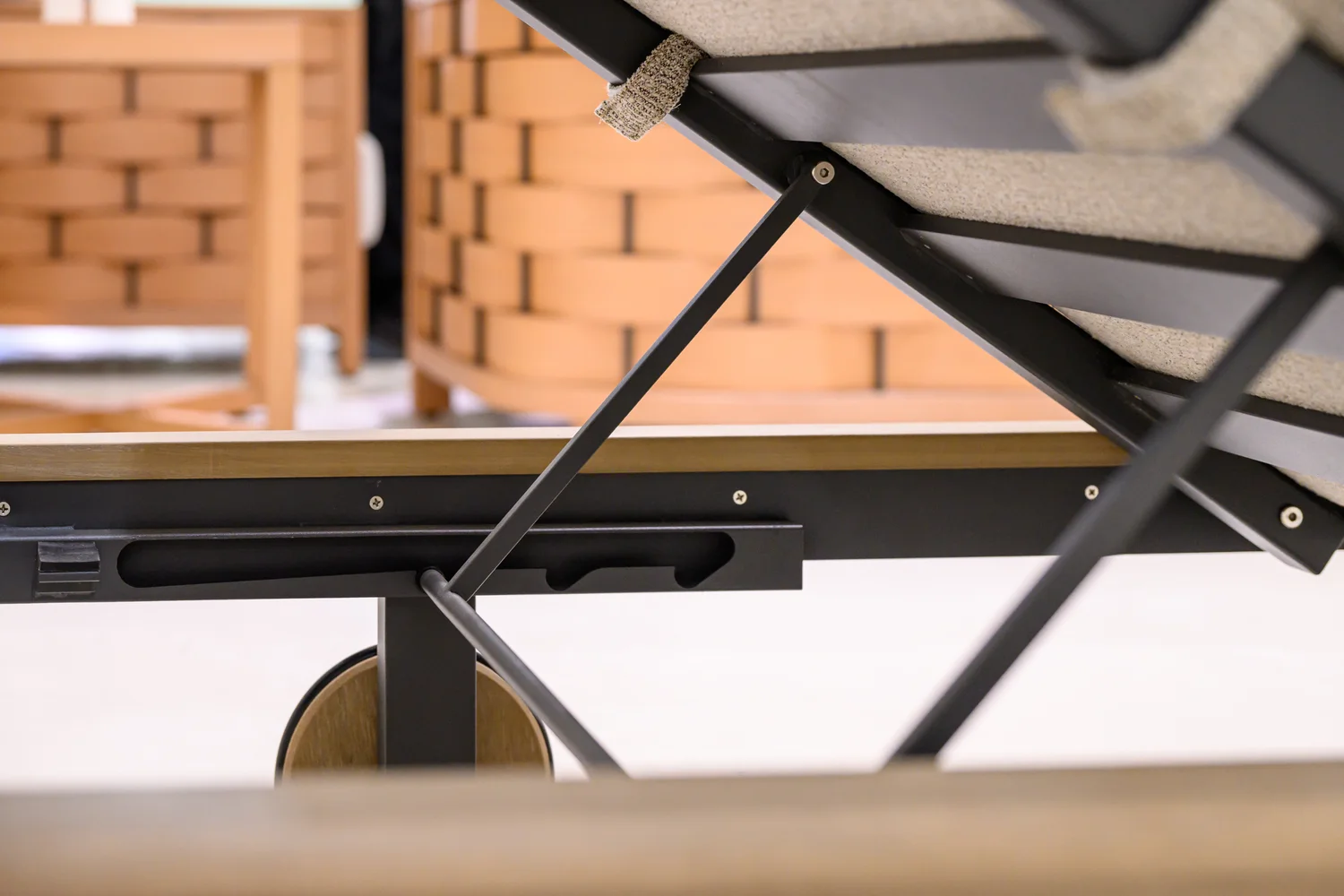
Can the fastener be seen? Can a tool reach it without damaging the surface? Can a recessed area be cleaned? Can a cap or insert be replaced without taking the whole product apart? Hidden hardware can be elegant, but the service sequence still needs to be intentional.
Use the physical prototype. Photograph the dry joint, a controlled wetting check, the observed exit path and the tool position. Store those images with the drawing revision and bill of materials. Memory is not a reliable change-control record.
A controlled wetting check does not predict service life. It confirms whether the expected path can be observed on that prototype in that position.
How should test evidence be read?
Do not turn one test-hour number into a promise.
Salt-spray evidence can support a defined comparison or quality-control question. ISO 9227:2022 describes test apparatus, reagents and procedures. Its public scope does not set one specimen, duration or interpretation for every product.
Ask for the exact specimen, coating or finish, named method, duration, inspection points, measured result and conclusion. Then ask why that record applies to the current joint. If one link is missing, keep the result as an open question.
Repeat the interface review when geometry, finish, fastener, insert, supplier or assembly method changes. Evidence does not automatically travel to a changed specimen or process.

Take it to the prototype
The six-point interface check
Use this at the drawing, prototype and change-control gates.
| Check | Ask | Keep |
|---|---|---|
| Water | Where can it enter, pause and leave? | Marked path and wetting photos |
| Debris | What can collect or block an opening? | Cleaning check |
| Recipe | Which exact materials and layers meet? | Specification and revision |
| Access | Can it be seen, cleaned and reached? | Tool-access photo |
| Evidence | Does the report match this specimen? | Method, result and conclusion |
| Change | What reopens the review? | Named owner and trigger |
Evidence boundary
What this review does not prove
This checklist does not prescribe a universal metal grade, coating, drain-hole size or maintenance interval. Those decisions depend on the exact assembly and intended conditions.
A controlled wetting check, salt-spray result or material label is not by itself proof of outdoor life, coastal suitability or finished-product performance.
Primary references