Open-Air Design / Site Exposure
How to Build a Site Exposure Map for Coastal and Poolside Outdoor Furniture
“Suitable for Australia” is too broad. Record the conditions at the real site.
Replace a broad regional label with a project-owned record of sun, wetting, salt, shelter, cleaning and service access.

In plain English
Three things to know.
A shaded courtyard, rooftop and pool terrace do not create the same exposure.
Record sun, heat, water, salt, shelter, cleaning, drainage and service access.
It creates better evidence questions. It does not predict service life or approve a material.
Where will the furniture sit?
Replace a country label with the exact location.
Start with the address, plan zone and furniture orientation. Add the level, nearby walls or planting, distance from exposed edges, nearby water and whether the item can be moved, stacked or covered.
One face may receive direct sun while another stays shaded and damp. The underside of a seat may avoid rain washing. The same chair can meet different conditions beside a pool, beneath a roof or near an open edge.
The map only needs enough detail for a reviewer to stand at the location and understand the assumptions. It is not a full climate model. Its purpose is to stop the words “outdoor,” “coastal” or “hospitality” from hiding important differences.
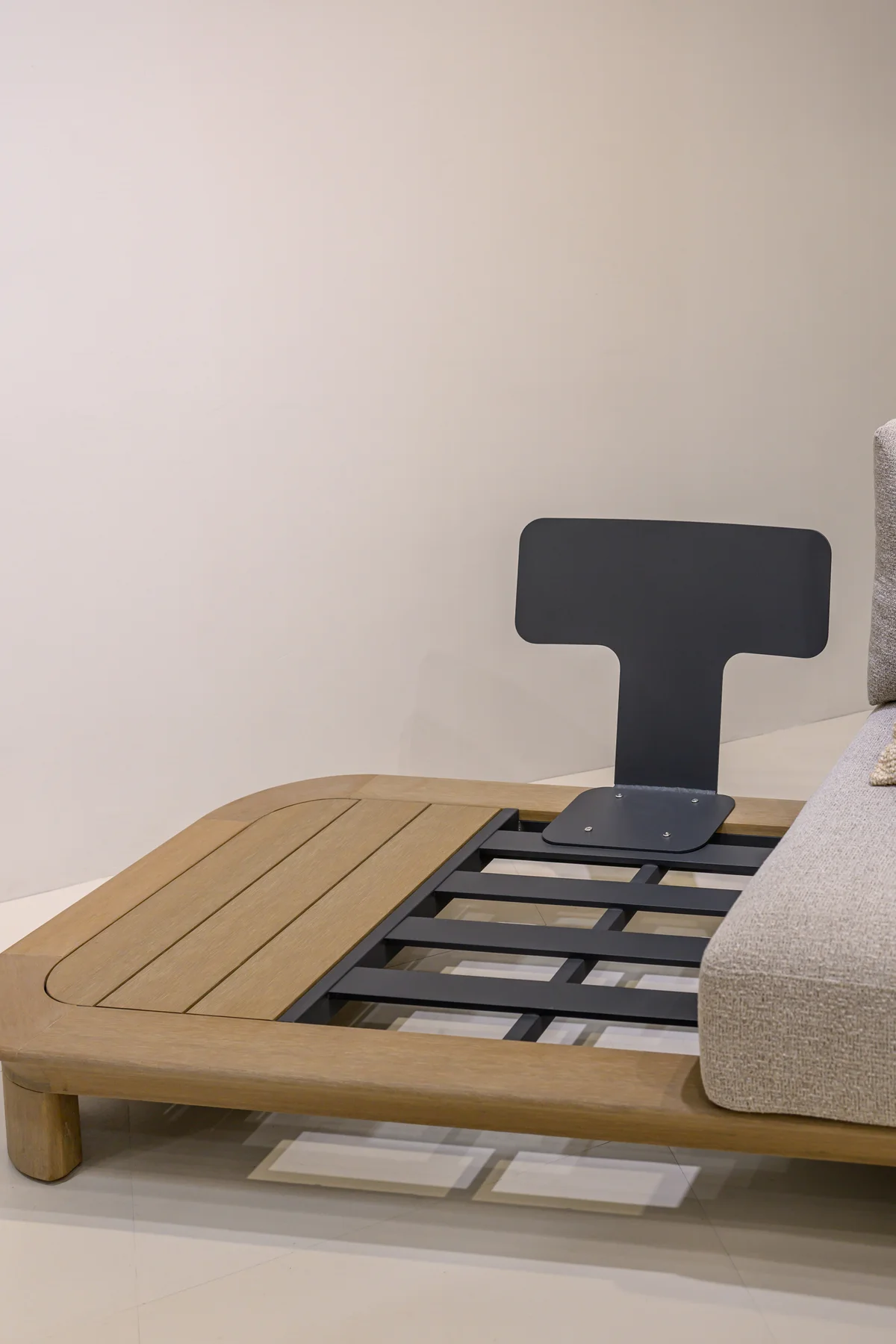
What reaches the surface?
Keep sunlight, heat, water, salt and cleaning as separate fields.
The Australian Bureau of Meteorology explains that UV varies with time, date, latitude, altitude and ozone. It also separates UV level from air temperature. Its UV Index guidance is for human exposure, not a material test, but the distinction is useful.
Record direct-sun periods and shade separately from air temperature, radiant heat and hot surrounding surfaces. Then mark rain, irrigation, pool splash, washing, spills and condensation. Each source can reach a different face or junction.
For salt, write down the likely source: exposed surf, airborne deposit, splash or transfer from wet clothing and towels. Distance to the coast alone does not describe the local condition.

Which conditions happen together?
Weathering conditions interact; a list of averages cannot show the full sequence.
CSIRO describes heat, light, moisture and stress as interacting factors in plastics weathering. Its technical service page does not provide a Sumparwood result. It supports a better project question: what happens together at this site?
Does direct sun follow morning condensation? Does a shaded joint stay wet after an exposed surface dries? Does furniture carry load while hot or wet? Does cleaning add another wetting-and-drying cycle? These questions define the exposure that a test or prototype review may need to address.
Wind can deliver rain or deposits, but it also changes drying. Walls, screens, planters and nearby furniture can create rain shadows or slow-drying areas. Draw the direction and the obstruction instead of calling the location simply “sheltered.”
Who will inspect and maintain it?
Carry the site map into the junction and the operating routine.
For each representative joint, ask where water and debris can enter, stop and leave. Record whether a technician can inspect, clean, tighten or replace the relevant part. The site exposure and the physical interface belong in the same review.
Name the operator. Who cleans the area? Which products and dilution are controlled? Who notices looseness, blocked drainage or surface change? What happens when furniture is moved, stacked or covered? Do not invent a universal maintenance interval; record the proposed routine and the person who owns it.
If a salt-spray report is supplied, keep its scope visible. ISO 9227:2022 defines test methods, not a universal field-life prediction. The exact specimen, process, result and conclusion still need to match the hardware or interface being considered.

Take it to the prototype
The ten-field site record
Complete the first version at the brief, then update it at prototype review and handover.
| Field | Record | Use it to ask |
|---|---|---|
| Location | Plan zone, level and orientation | Is this placement representative? |
| Light | Direct periods, shade and season | What specimen evidence is relevant? |
| Heat | Air, radiant and contact assumptions | Which property matters? |
| Wetting | Rain, splash, cleaning and condensation | Where does water leave? |
| Salt | Source, delivery and washing | Which exact system needs advice? |
| Wind | Direction, shelter and drying | Which faces receive deposits? |
| Pool and cleaning | Products, dilution, rinsing and drying | What contact condition is expected? |
| Drainage | Low points, openings and debris | Can the joint be cleaned? |
| Hardware | Metals, finishes, isolators and supplier | Does the evidence match? |
| Operation | Inspection owner and unresolved gaps | What triggers a review? |
Evidence boundary
What this map does not prove
A site map does not select a material, predict service life or prove that a product is Australia-ready, coastal, poolside or marine-grade.
It creates a shared brief for choosing evidence, reviewing interfaces and assigning responsibility. Any product conclusion still needs evidence matched to the actual specimen and decision.
Primary references