Sumparwood at matériO’:
A Material Conversation in Paris
On 24 September 2026, Sumparwood was among the newly received materials presented to members at matériO’ in Paris. Samples were passed around, held beside one another and photographed. Members could also access the material’s information card to explore it further.
For us, the photographs shared after the session capture an important moment: a material moving beyond its description and into someone’s hands. A surface becomes something to examine. A colour becomes something to compare. An edge becomes the beginning of a question about how an object might be made.
This is a record of that introduction, and a reflection on why physical material discovery matters to our work with furniture designers and brands.
An introduction among new materials
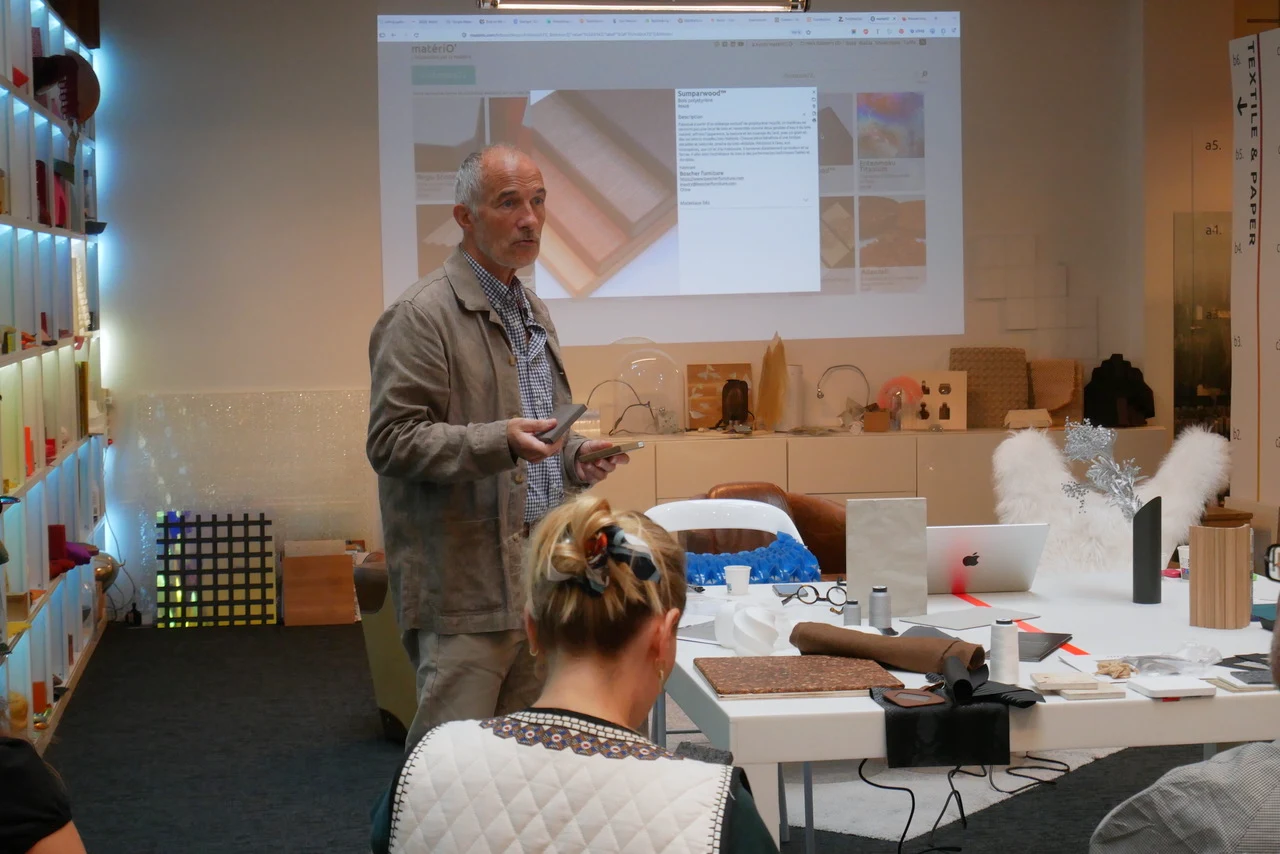
The event was a member session introducing materials recently received by matériO’. In his message following the meeting, Quentin Hirsinger confirmed that Sumparwood had been included and that members had direct access to its information card. The photographs accompanying that message show the presentation and several moments of hands-on examination.
One frame places the physical samples beside their digital counterpart. A presenter holds two pieces while the Sumparwood information card appears on the screen behind him. Around the room, other samples and objects remain visible. Our material is part of a wider conversation about what designers might discover next.
That context matters. This was not the launch of a finished furniture collection. Sumparwood entered the room as a material: something with a surface, a section and possibilities still to be explored. A designer could begin with what was in front of them, before deciding whether it belonged in a particular project.
We are grateful to the matériO’ team for including Sumparwood and for sharing this record of the session. The selection gave our material an introduction to its members; it should not be read as evidence of a commission, product endorsement or specification by any attendee.
What is matériO’?
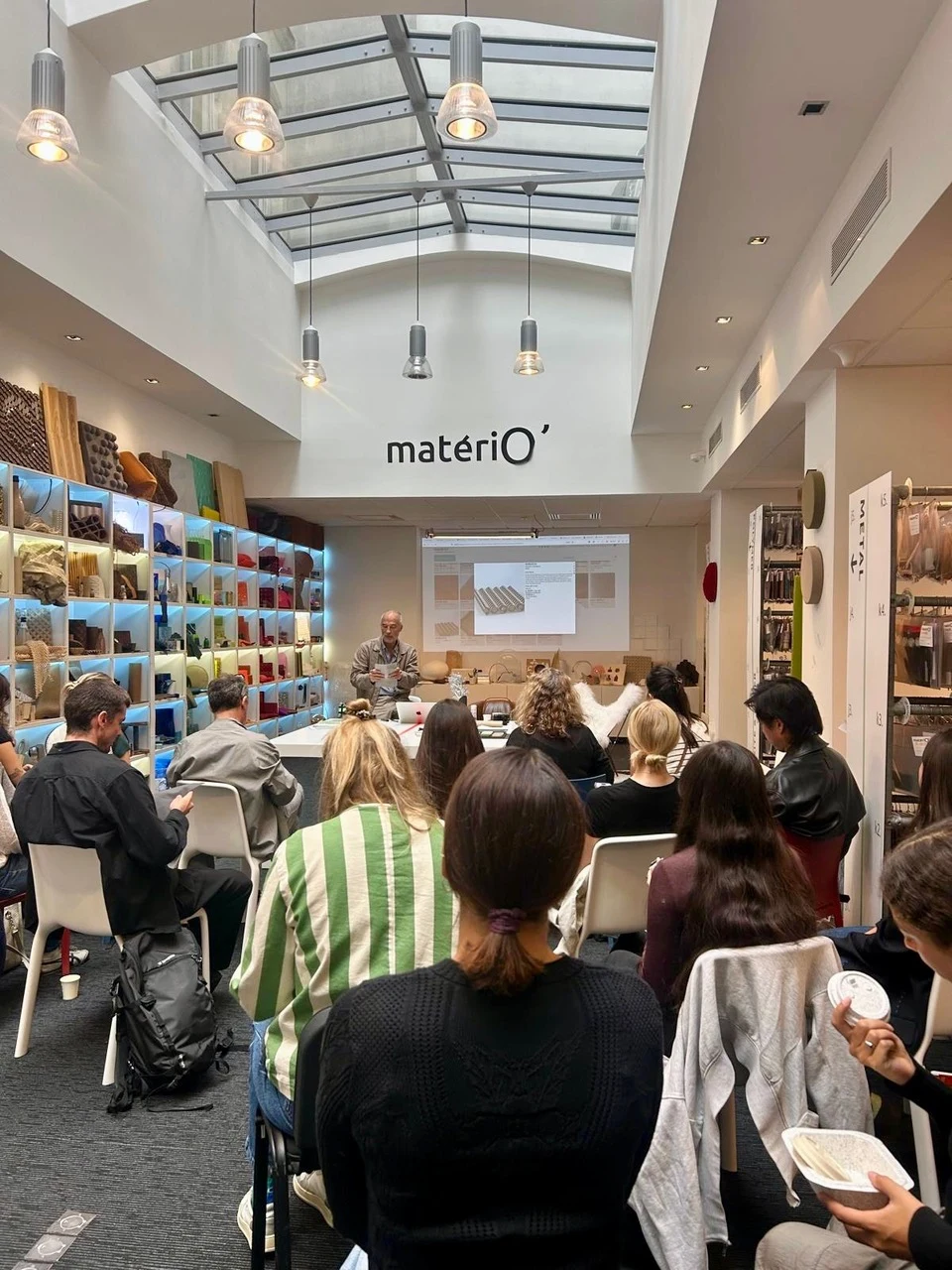
matériO’ describes its work as a service monitoring material innovation across the world and across sectors. Its member-access database and showrooms serve professionals working in fields including architecture, packaging, automotive design, cosmetics, fashion and consumer products.
For Sumparwood, the relevance of this setting is the breadth of the design conversation. A material developed with outdoor furniture in mind can be encountered by people whose everyday questions begin elsewhere. They may notice a proportion, a colour relationship or an edge detail before they ask about a furniture application.
That does not mean every possible application is suitable. It means the starting point is open. Discovery comes first; the requirements of a proposed use still need their own discussion and evidence.
Readers interested in the service itself can explore matériO’ directly. The September meeting is the specific occasion recorded here, rather than a claim about the full extent of our presence across its locations or programmes.
The moment a sample is held
The most compelling images are not the ones in which a screen explains the material. They are the quieter moments afterwards.
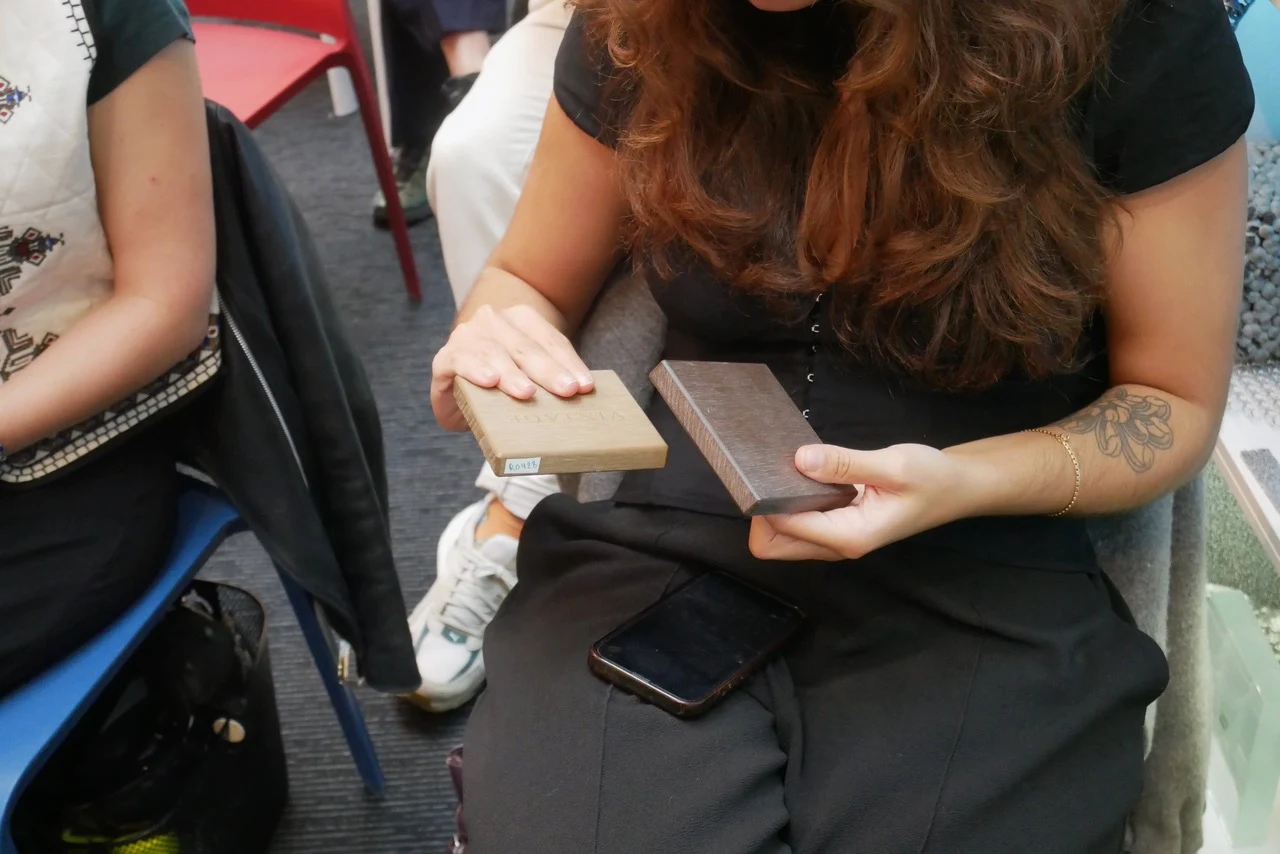
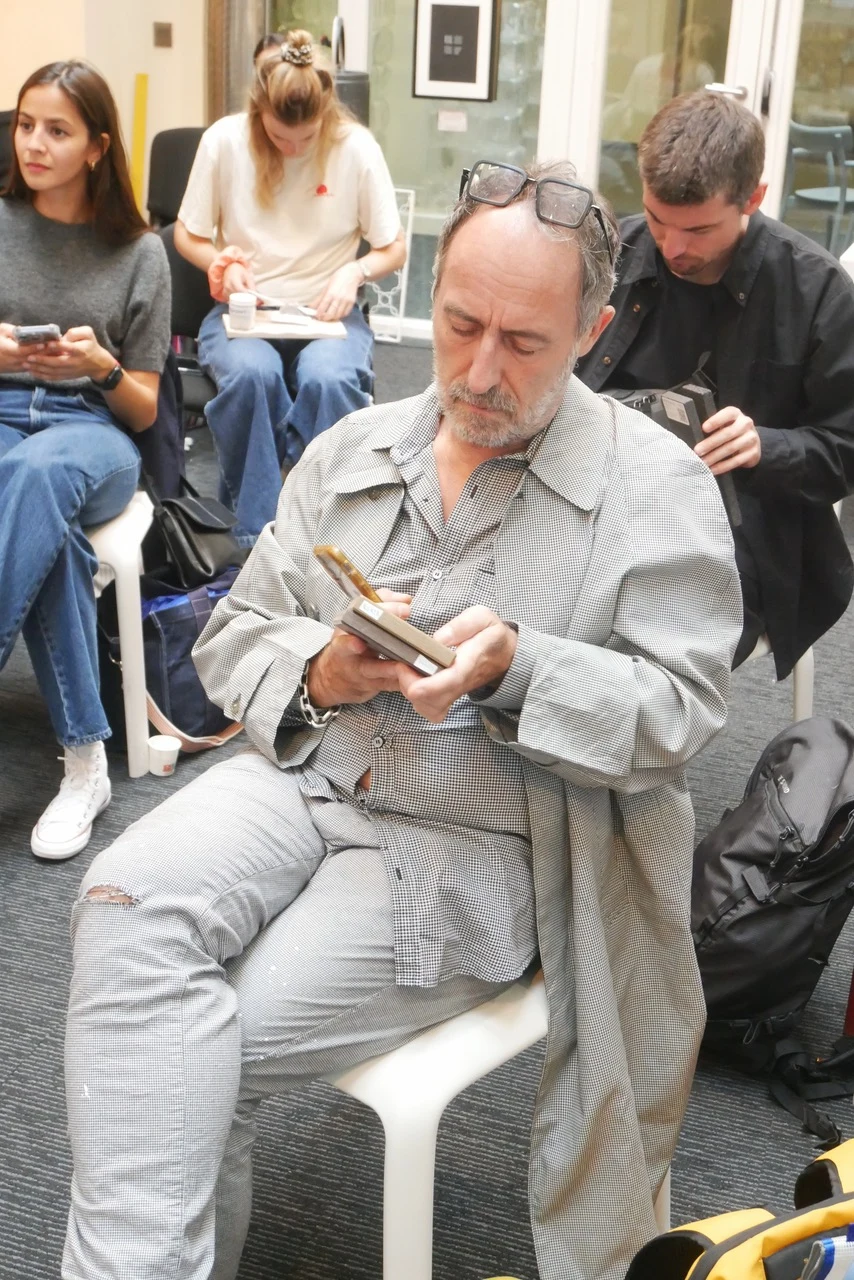
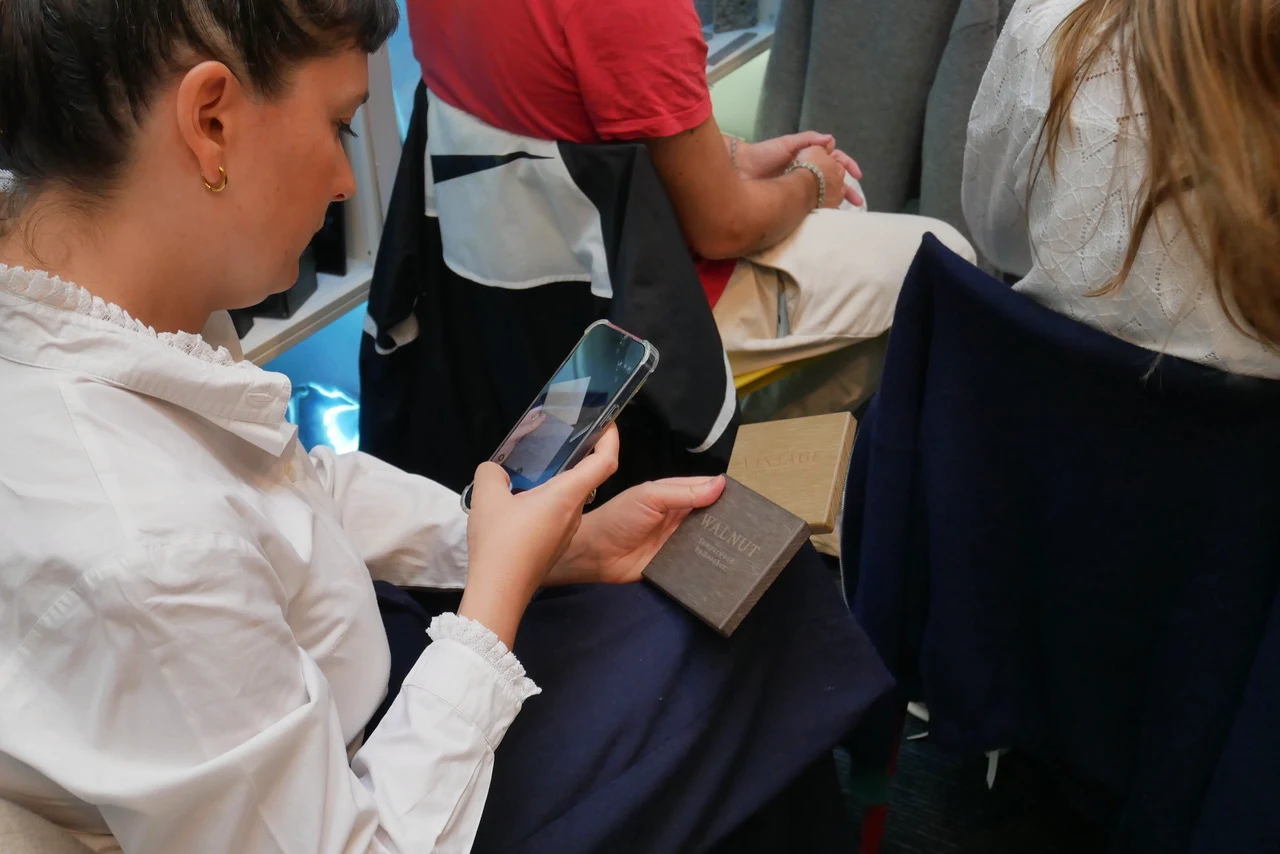
In one photograph, an attendee holds a light sample in one hand and a darker sample in the other, with fingers resting on the lighter surface. In another, a participant brings a phone close to two samples to record them. A third shows a sample being examined at close range, with its thickness and edge visible.
These are small actions, but they reveal what a material photograph alone cannot offer. The observer chooses the angle. The distance changes. The sample can be turned, lifted and placed beside something else. Attention moves from the overall impression to a particular detail.
We cannot know each person’s thoughts from an image, and we would not invent feedback on their behalf. What the photographs do show is direct engagement with the pieces. That is the part of the event we want to preserve: not an imagined verdict, but the opportunity to look closely.
For a material brand, this is a useful reminder. A description should help someone begin an examination, not attempt to replace it. A good photograph opens the conversation. A physical sample gives that conversation another dimension.
Colour, surface, edge
When we look back at the session, three aspects of the samples stand out: their colours in relation to one another, their visible surfaces and their edges. These are also useful starting points for a design team encountering Sumparwood for the first time.
Colour is relational. A light tone seen alone may suggest one direction; placed beside a darker tone or a chosen upholstery fabric, it becomes part of a more specific composition. The question changes from “Do I like this colour?” to “What does this colour do beside the other materials in the project?”
Surface invites a different kind of attention. The visible grain, the way light falls across it and the feel of a sample all contribute to a designer’s first impression. A photograph records one lighting condition. It cannot act as a final colour or tactile reference for every setting.
The edge brings the discussion closer to an object. Looking at a section can prompt questions about an exposed side, a junction or a transition between components. Those questions belong in development, where a particular geometry and assembly can be reviewed rather than assumed from a small piece.
Our Palette provides a visual introduction to the finishes. Physical samples remain the reference for a closer colour discussion. For the broader material story, begin with Meet the Material.
From a first impression to a useful brief
A material encounter becomes more valuable when its observations can travel back to the studio. The photographs from Paris suggest a simple sequence: see a piece, handle it, record what matters, then return to the information behind it.
For readers preparing their own sample review, we use four prompts to make that next conversation more specific. These are our suggested working questions, not a transcript of the event or a matériO’ evaluation method.
Notice
What caught your attention first? Name the feature as plainly as possible: a lighter tone, the visible grain, the thickness of the sample or a particular edge. A short, concrete observation is easier to develop than a broad description such as “premium” or “interesting”.
Compare
What should the sample sit beside? Bring the relevant fabric, finish or other reference into the discussion. Record the lighting conditions and the sample identity so that a later conversation can refer to the same starting point. A phone image is a useful reminder, not a controlled colour approval.
Question
What do you still need to know before using it? Separate questions about appearance from questions about making and intended use. An attractive sample does not establish the performance of a proposed assembly. It helps identify the details that deserve a closer review.
Develop
What is the smallest next step that would make the idea clearer? It might be a drawing, an edge discussion or a prototype brief. State the intended object and the unresolved detail. That gives a development conversation a practical purpose without prematurely treating the material as approved for the whole project.
Material discovery is a beginning
The significance of the Paris session, for us, is not that a single morning resolves a specification. It is that someone can encounter a material before a design has become fixed.
At that early stage, there is room to ask whether a different colour changes the character of a chair, whether an exposed section should remain visible, or whether a junction needs another approach. Those are design questions. Answering them well requires the specific project, its priorities and the people developing it.
This is where our work as a material and development partner continues. We want designers to bring an intention, a reference or a question, rather than feel they must arrive with every detail already settled. Our Journal on custom outdoor furniture design development explores that collaborative process in more detail.
The meeting photographs also keep an important distinction clear. Handling a sample is an act of discovery. Approving an application is a separate decision. Any discussion of outdoor suitability, construction or performance needs evidence relevant to the proposed design; participation in a material presentation does not provide that evidence by itself.
Continue the conversation with a sample
Sumparwood’s introduction at matériO’ is a moment we are pleased to share. It places the material where we want the conversation to begin: in front of curious people, with enough space to examine it and ask what might come next.
Thank you to the matériO’ team for the invitation to share this news and for the photographs of the session. The gestures in those images—holding, comparing and recording—say more about the value of a physical introduction than a long list of adjectives could.
If you are exploring Sumparwood for a furniture project, request the Sample Box. Bring it into your own material discussion. Compare the finishes with your references, note what you want to understand and tell us about the object you have in mind.
The next conversation can begin there.
Editorial sources
Event facts: correspondence from Quentin Hirsinger / the matériO’ team, dated 24 September 2026, and the accompanying session photographs supplied to Sumparwood. Organisation background: matériO’ — About, consulted 1 October 2026. The sample-review prompts and reflections are Sumparwood’s editorial contribution, not quotations or attendee feedback.