Recognition / Material Journey
Two International Recognitions, One Continuing Material Journey

Two points on a longer path
Some moments ask to be celebrated. Others ask us to look again at the work that brought us there. For Sumparwood, two recent international recognitions do both.
In 2025, Sumparwood received a French Design Award in Product Design / Furniture. The following year, it was named a 2026 Green Product Award Finalist in Building Design. The titles belong to different programmes, with different evaluation lenses and different recognition statuses. Together, they place the same material exploration inside two larger design conversations: how an idea takes form, and how that idea is examined in relation to the world around it.
We are proud of these milestones. But we are more interested in what they make possible next: a clearer dialogue with designers, architects and project teams; a closer look at the material; and better questions about how form, detail and evidence meet.

A public frame
Recognition gives the work a public frame
Design development is often quiet. It happens through samples, rejected details, revised junctions and repeated conversations between what a material appears to promise and what a project actually needs. An award changes the scale of that conversation. It gives the work a public frame and invites people outside the development process to examine it.
That frame matters, but it is not the work itself. A recognition cannot replace a sample in the hand, a technical document read in context or a project-specific review. What it can do is signal that a submitted design has entered a wider professional discussion. It can create a reason for someone new to pause, look closer and ask a more informed question.
This is how we understand the two Sumparwood recognitions: not as a finish line, and not as permission to make every possible claim, but as two distinct checkpoints in a material journey that continues through furniture, open-air details and collaborative development.
Recognition 01 / Recipient
2025: Sumparwood and the French Design Award
The French Design Award says it was established in France by the International Award Association as a platform for designers to communicate concepts and present design work internationally. Its current public review standard names four lenses: Aesthetics, Design Impact, Innovation and Ergonomics. The programme also describes an international jury whose composition changes over time to introduce different geographic and cultural perspectives. These are the organiser's own descriptions of the programme and its process, and they help explain the design context in which entries are considered. (French Design Award — About (opens in a new tab); French Design Award — review standard (opens in a new tab))
Within that context, the official Sumparwood record identifies the project under Product Design / Furniture for 2025. It credits Guangdong Shunde Boscher Environmental Furniture Co., Ltd. and names Sam Lao, Julian Lo, Joey Lo and Michael Lao as the design team. The page records the project as award-winning work, while the physical certificate and trophy supplied by Sumparwood confirm the 2025 French Design Award recognition. The official record does not establish a separate medal class, so this article uses the precise and sufficient term recipient rather than adding an unsupported Gold, Silver or Platinum level. (French Design Award — Sumparwood (opens in a new tab))
The category is meaningful because furniture makes material decisions visible. A line becomes an edge. A surface meets a joint. A curve must become a repeatable part. Proportion, touch and assembly move from drawing to object, where the relationship between appearance and use can be encountered at human scale.
For Sumparwood, the French recognition is therefore best understood as a moment in which material exploration became legible through furniture design. It does not close the discussion around the material. It opens the work to a broader design audience and gives that audience a clear point from which to begin looking.

Recognition 02 / Finalist
2026: A Green Product Award finalist in Building Design
The second milestone places Sumparwood in a different frame. According to the organiser, the international Green Product Award programme has operated since 2013, recognising products, services and forward-looking concepts through an annual process. Its current pathway moves from submission and formal review to finalist qualification, followed by public-vote and jury stages before winners are announced. (Green Product Award — programme and process (opens in a new tab))
The current criteria page describes seven assessment areas: Overall Approach, Elaboration, Impact, Market, Design, Innovation and Sustainability. It also says assessment is based on information and evidence supplied by participants. Finalist and winner statuses are distinct, and the organiser explicitly limits its seal to the evaluated project rather than treating it as a general certification of an entire company or automatic proof of legal compliance. (Green Product Award — criteria (opens in a new tab))
That distinction matters. The 2026 gallery combines finalists and winners and explains that winners are visually marked in green. Sumparwood is presented in the gallery and Building Design category as a Finalist, not as a category winner. The official project profile names the company and the four members of the Lao design team, while the category page places the project within a field that includes building materials, systems and components. (Green Product Award — 2026 gallery (opens in a new tab); Building Design category (opens in a new tab); Sumparwood project (opens in a new tab))
We value the finalist recognition precisely as it stands. It gives Sumparwood a place in a wider discussion about material choices and building-related design, while leaving room for the next stages of scrutiny. It is not necessary to inflate the result to make it meaningful. Accuracy is part of the design language too.
Recognition atlas
Recognition atlas: two awards, two contexts
The two recognitions should be read together, but not collapsed into one claim.
| Organisation | History and review context | Sumparwood status | Category | What the recognition supports | What it does not establish |
|---|---|---|---|---|---|
| French Design Award | Established in France by the International Award Association; current review standard lists aesthetics, design impact, innovation and ergonomics | 2025 recipient | Product Design / Furniture | The submitted Sumparwood work received the recorded design recognition | An unspecified medal tier or universal material-performance conclusion |
| Green Product Award | International programme operating since 2013; current framework covers overall approach, elaboration, impact, market, design, innovation and sustainability | 2026 Finalist | Building Design | The submitted Sumparwood project qualified for finalist status in the recorded category | Category-winner status, whole-company certification, legal compliance or automatic project suitability |
This atlas is intentionally narrow. It preserves what the official records establish and prevents the excitement of recognition from outrunning the evidence.
These recognitions relate to the submitted design in their stated award contexts. Project teams should assess material evidence and application suitability through the relevant technical documents and project-specific review.
A short history
Three dates. Two programmes. One continuing practice.
- 2013The Green Product Award says its international programme has operated since 2013.
- 2025Sumparwood receives a French Design Award in Product Design / Furniture.
- 2026Sumparwood is named a Green Product Award Finalist in Building Design.

Aesthetics · Design Impact · Innovation · Ergonomics
Overall Approach · Elaboration · Impact · Market · Design · Innovation · Sustainability
Different lenses
Two systems, one useful design question
The French Design Award begins with a familiar design vocabulary: what a work looks like, how it affects people, where it is original and how it interacts with the user. The Green Product Award adds a broader set of questions around development, market, impact and sustainability evidence. Neither framework should be treated as a substitute for the other.
Placed side by side, however, they reveal a useful question for material-led design: Can an idea hold together across different scales of attention?
At the scale of furniture, attention may begin with proportion, tactility, form and the relationship between parts. At the scale of building design, the conversation can expand toward application context, documentation and the responsibilities attached to a material choice. A project becomes stronger when it can move between those scales without hiding the limits of what is known.
This is also why careful language belongs inside design practice. Saying recipient when the record shows a recipient, and Finalist when the record shows a finalist, is not a constraint on the story. It is what makes the story trustworthy. The same discipline applies to material communication. A broad award context cannot independently prove every statement about composition, performance, environmental impact or service life. Those questions require their own documents, conditions and project-specific evaluation.
For architects and specifiers, that separation is useful. It lets recognition serve as an invitation while keeping technical review where it belongs. The award can start the conversation; evidence and physical evaluation must carry it forward.
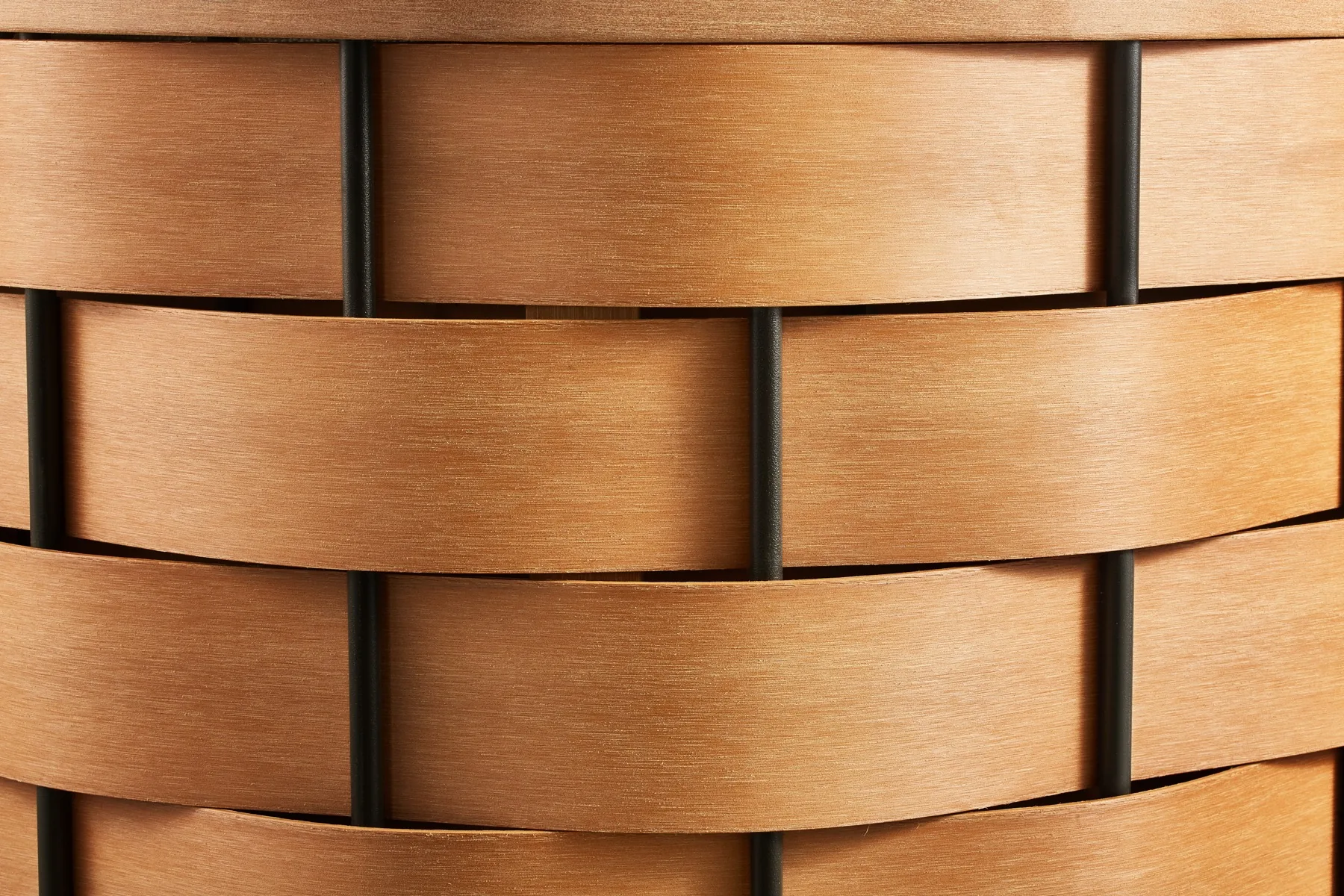
Awards frame a moment.
Material questions keep moving.
The people behind the milestones
The people behind the milestones
The official French Design Award record names four people: Sam Lao, Julian Lo, Joey Lo and Michael Lao. The Green Product Award profile presents the same four-person group. We do not need to invent individual titles or biographies to recognise what that shared credit suggests: material development is rarely the work of one isolated gesture.
It is a process of translation. An idea must move between design intent and a physical sample, between a visual ambition and the realities of making, between the language of a brand and the questions asked by a professional project team. Each translation can reveal a gap. Each gap can lead to another test, another detail or another way of explaining what the material is—and what still needs to be verified.
The two recognitions belong to that collective process. They acknowledge a submitted body of work, but they also return attention to the people who keep the work moving after the certificates arrive. For the team, celebration and responsibility can exist at the same time: pride in what has been recognised, and curiosity about what the next version of the conversation should become.
That is the larger achievement we want this moment to represent. Not only that Sumparwood appeared in two international award contexts, but that the material journey has become visible enough for more designers and architects to enter it.
Primary references