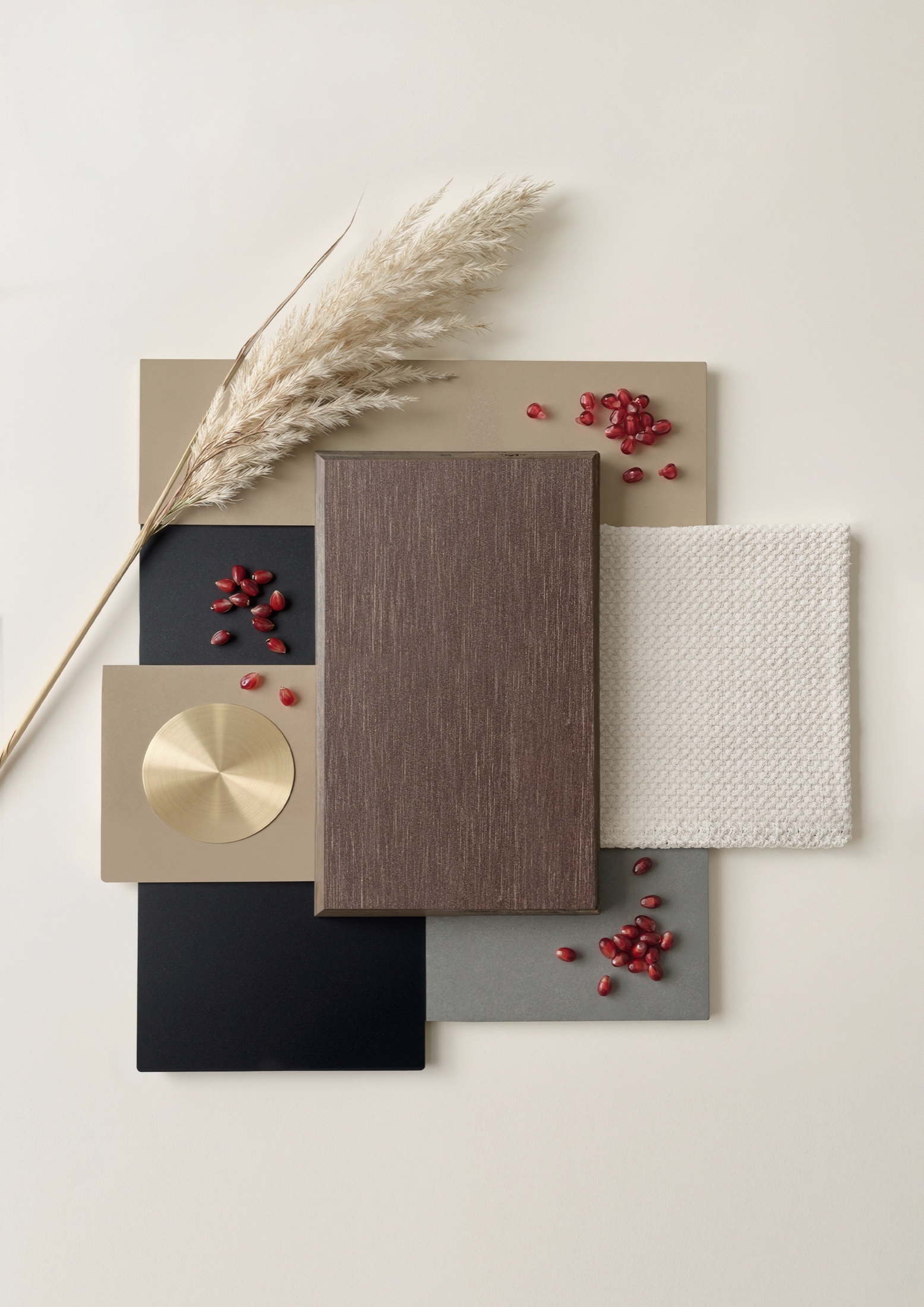
Colour is a material decision.
In open air, the same surface moves between direct sun, reflected light and deep shade. A colour that appears convincing in one photograph can flatten when the light changes—or become so uniform that the material starts to feel synthetic.
Uncontrolled fading is different. It weakens contrast and separates the intended finish from the object that was originally specified. Tonal movement should add depth without giving weather permission to redesign the palette.
The aim is not perfect sameness. It is a family of related tones that still reads as one finish.
Three useful questions
- Does the finish hold depth in full sun?
- Does the grain retain definition in shade?
- Do neighbouring parts feel related without appearing copied?
Begin with the quieter finishes.
Vintage brings a muted, time-softened register. Black Walnut carries deeper architectural weight and becomes especially graphic in shade. Maple offers a pale counterpoint when a composition needs visual lift.
Natural remains part of the complete palette and one visible example of controlled variation. It is not the aesthetic reference for every project. The right finish is the one that supports the atmosphere, light and surrounding materials of the place being designed.
Specify with the material in hand.
A screen can introduce a colour; it cannot finish the decision. Review the grain at more than one angle, place the sample beside fabrics and stone, and move it between daylight and shade before the finish is signed off.
The complete Sample Box is arranged for exactly that comparison: four finishes, one material language, judged under the light of the project team rather than the light of a photograph.
This note addresses visual specification, not a quantified colour-retention claim. Final colour should be confirmed with physical samples; project performance requirements should be reviewed against the relevant approved evidence.