Material Intelligence / Approval Workflow
From Sample to Prototype: An Outdoor Material Approval Workflow
A five-gate workflow for moving an outdoor furniture material from sample review to component prototype, evidence check and controlled approval.

A material sample can start a good design conversation. It cannot finish one.
The sample shows colour, grain, touch and the character of an edge. The finished outdoor product adds geometry, machining, joints, fasteners, drainage, cleaning, repeated use and exposure. Between those two states sits the work that decides whether a promising material becomes a controlled component or remains only an attractive reference.
That work does not need to become a mountain of documents. It needs a clear sequence of decisions.
The five-gate workflow below is designed for furniture brands, hospitality teams, architects and product developers reviewing an unfamiliar outdoor material. Each gate has one question, one physical or documentary output and one reason to stop. The process keeps visual judgment, component development, laboratory evidence and finished-product responsibility connected without treating them as interchangeable.
Gate 1 / Define the boundary
Write the use-case brief before approving the sample.
The first gate is not “Do we like it?” It is “What exactly are we considering it for?”
Record the proposed component, geometry, duty level and operating context before the team becomes attached to a finish. A lounge chair arm, a dining-table slat and a decorative screen may all use the same material family while presenting different edge, joint, loading and replacement questions.
The use-case brief should state:
- the furniture or architectural application;
- the component and approximate section;
- the intended use category and responsible market;
- credible sunlight, wetting, salt, pool, temperature and cleaning conditions;
- adjacent materials, hardware and likely contact points;
- the visual features the designer intends to preserve;
- the project decision that this review must support.
This is not a performance declaration. It is a boundary. It stops the project from asking a sample to answer questions that belong to a component, an assembly or a site-specific review.
- Gate output
- a one-page use-case brief.
- Stop if
- the team cannot identify the component, use condition or decision owner.
Gate 2 / Fix the reference
Review the material as a physical system.
Now review the sample, but do more than choose a colour.
Look at the principal face, edge and section. Rotate it under controlled light and relevant daylight. Place it beside the intended metal, textile, stone or coating. Compare the full finish family before narrowing the choice. Record the sample identity and production date where available, because a later prototype must be traceable to the material that was actually approved.
Controlled viewing matters when colour is part of the design intent. ASTM D1729-22 is an active practice for visual appraisal of colour differences in diffusely illuminated opaque materials. Its public scope makes clear that the viewing setup and observer affect a visual assessment. The standard does not make a screen image equivalent to a physical review, and it does not cover every directional or special-effect appearance.
For a design team, the practical lesson is simple: record the light, observers, comparison samples and acceptance language. “Warm enough” is difficult to control. “Approved against sample X under the stated studio and outdoor viewing conditions” is a decision that can travel into prototyping.
- Gate output
- a dated sample-review record with finish, edge, section, viewing conditions and selected reference.
- Stop if
- the approval depends only on rendered imagery or an unidentified sample.
Gate 3 / Concentrate the risk
Prototype the highest-risk detail first.
A full polished prototype can hide uncertainty by placing effort everywhere. A risk-detail prototype concentrates effort where the design is most likely to change.
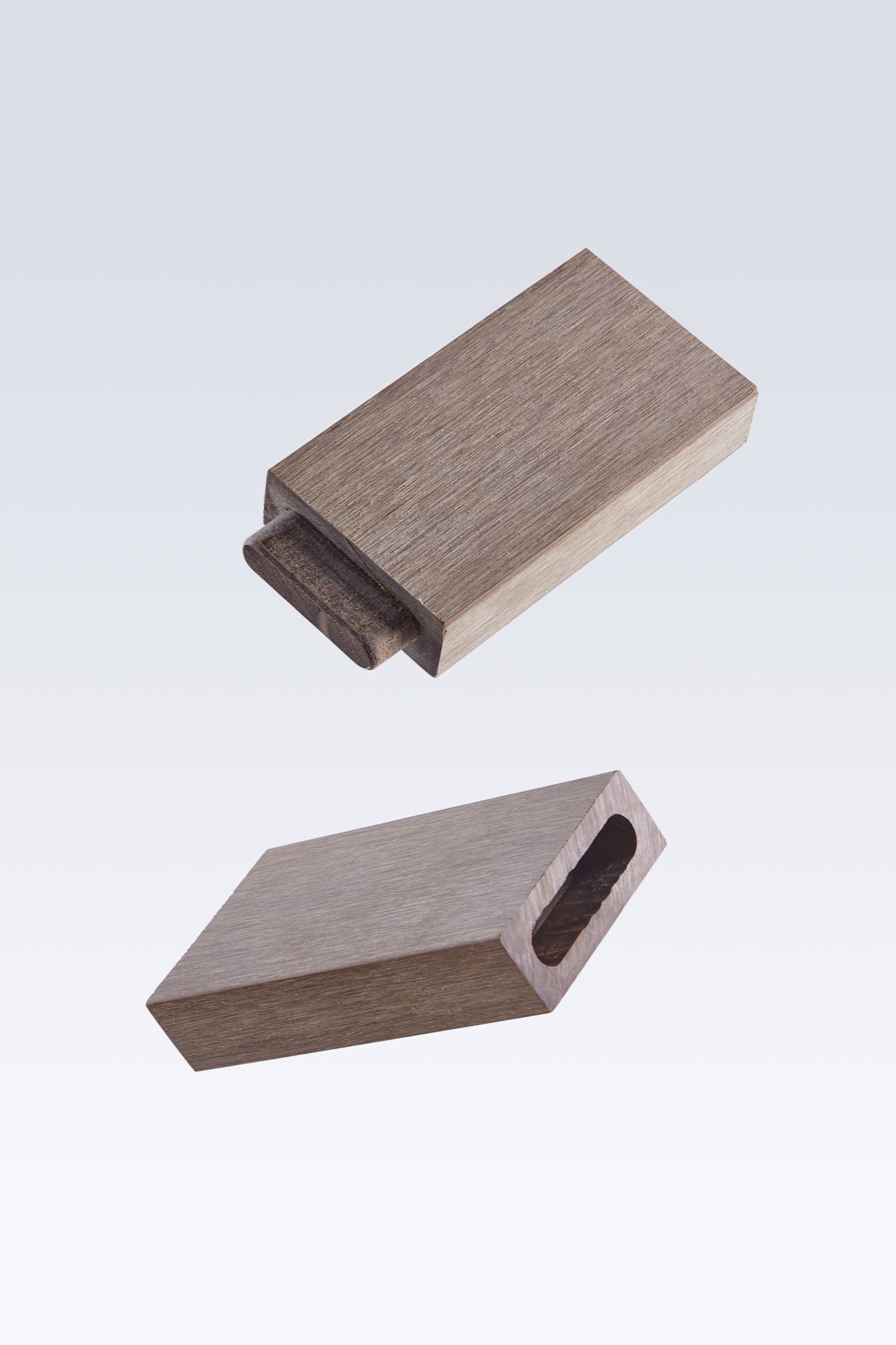
Choose the feature that carries the greatest combination of visual and technical risk. It may be the tightest curve, thinnest section, most visible joint, exposed end, drainage path, concealed fixing or transition between materials. Build that detail before committing to the whole piece.
The review should answer questions such as:
- Does the section still express the intended material character?
- Can the edge and joint be finished consistently?
- Does the fixing strategy allow assembly, inspection and replacement?
- Is water likely to collect at a horizontal surface, recess or interface?
- Does machining or forming change the visible surface in an acceptable way?
- Which tolerance is design-critical, and how will it be checked later?
This gate is where a material supplier and furniture developer create more value together than either can create with a catalogue board. The output is not “the material works.” It is a documented answer for one defined geometry and process.
- Gate output
- a marked-up risk-detail prototype with observations, tolerances and required changes.
- Stop if
- the prototype avoids the critical joint, edge, curve or fixing.
Gate 4 / Assemble the decision
Test the assembled idea, not only the material.
Once the risk detail is resolved, move to a representative component or full-scale prototype. The objective changes: the team is now reviewing relationships between material, geometry, frame, hardware and use.
This is also where the scope of a standard becomes decisive. BS EN 581-2:2026 covers general and structural safety for outdoor seating within stated camping, domestic and contract categories. Its public scope includes strength, reliability and stability, but excludes ageing and degradation caused by light, temperature and moisture. That separation is useful: a finished seating assessment and a material-weathering review answer different questions.
The responsible team must confirm the requirements that apply to the product, market and project. The workflow does not certify a prototype. It helps the team avoid presenting a material report as finished-product evidence—or a mechanical furniture test as proof of long-term surface behaviour.
Review the prototype in its intended configuration. Include the actual section, joint, fastener, support and contact surface where practical. Record any deviations from the approved risk detail. If a prototype changes the geometry to make fabrication easier, the design team should approve that change explicitly rather than allowing it to become an invisible production assumption.
- Gate output
- a representative prototype review and a list of product-level checks owned by the responsible technical team.
- Stop if
- the evidence refers to a different configuration or the product-level requirement has no identified owner.

Gate 5 / Keep the evidence connected
Connect reports to specimens, then freeze the decision.
The last gate is evidence and change control. Its purpose is not to collect every available report. It is to connect each important conclusion to the correct method, specimen, result and decision.
ISO 4892-1:2024 provides general guidance for laboratory light-source exposure of plastics and for interpreting accelerated exposure data. Its public abstract does not supply a named product result or a conversion from test time to outdoor service years. A useful project record therefore identifies the actual specimen, exposure method, measured property and permitted conclusion.
Metallic hardware or coated components may raise a different question. ISO 9227:2022 specifies salt-spray test apparatus and procedures, but its public scope leaves specimen details, exposure periods and result interpretation to the relevant product specification. It also warns against using the method to rank unrelated materials or predict long-term corrosion resistance. A salt-spray number without that context is not a coastal-service promise.
Laboratory competence is another layer. ISO/IEC 17025:2017, confirmed as current in 2023, sets requirements for competent, impartial and consistent testing and calibration laboratories. Accreditation or laboratory competence can increase confidence in how work was performed; it does not expand a method beyond its stated scope or make an unmatched specimen relevant to the project.
Build the final record in four columns:
- Decisionwhat the project approved.
- Evidencewhich sample, prototype, report or observation supports it.
- Boundarywhat the evidence does not establish.
- Reopen triggerwhich change requires another review.
A change in finish, section, joint, fastener, manufacturing route, supplier, use category or exposure assumption may reopen only part of the chain. The record lets the team identify that part instead of either ignoring the change or restarting the entire project.
Decision aid / Five gates
The five-gate approval matrix.
| Gate | Primary question | Required artifact | Do not infer | Reopen when |
|---|---|---|---|---|
| 1. Use case | What component and operating context are we deciding? | One-page brief | Universal outdoor suitability | Use category, exposure or component changes |
| 2. Physical sample | What surface, edge, section and finish are approved? | Dated sample record | Approval from screen imagery | Finish, material identity or visual rule changes |
| 3. Risk detail | Can the critical geometry and junction be developed? | Marked-up detail prototype | Whole-product performance | Section, joint, fixing or process changes |
| 4. Representative prototype | Does the assembled configuration preserve the decision? | Full-scale review and technical-owner checklist | Ageing evidence from a mechanical review | Frame, hardware, load path or configuration changes |
| 5. Evidence and release | Which conclusion is supported, and within what boundary? | Four-column decision record | Service-life, certification or compliance beyond the evidence | Specimen, method, supplier or acceptance rule changes |

Make approval transferable
Make approval useful to the next person.
A strong approval workflow is not bureaucratic. It reduces repeated interpretation.
The designer can see which visual features are controlled. The development team can see which geometry was reviewed. The supplier can see which sample and process matter. The technical owner can see where laboratory evidence begins and ends. Procurement can see which change should trigger a question instead of silently becoming a substitution.
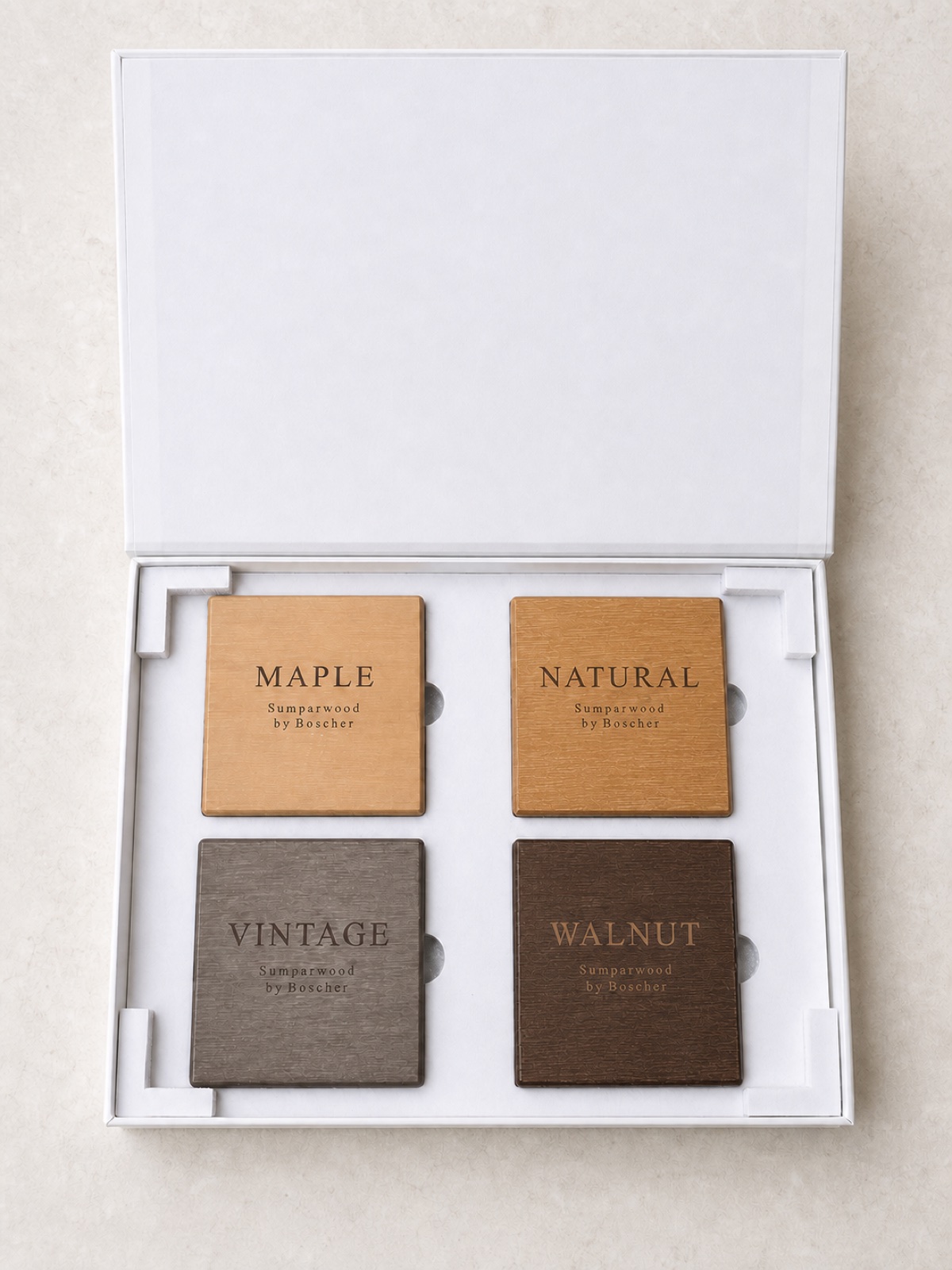
For Sumparwood, the material conversation can begin with a complete four-finish Sample Box, then move into the selected profile, edge, joint or controlled curved detail. The aim is not to claim that every design question has already been answered. It is to give the project team a disciplined way to ask the next one.
Primary references
Sources checked.
- ISO 4892-1:2024 — laboratory light-source exposure guidance, opened 29 August 2026.
- ISO 9227:2022 — salt-spray test methods, opened 29 August 2026.
- ISO/IEC 17025:2017 — testing and calibration laboratory competence, opened 29 August 2026; ISO records the edition as confirmed in 2023.
- ASTM D1729-22 — visual appraisal of colour differences, opened 29 August 2026; ASTM lists it as active.
- BS EN 581-2:2026 — mechanical safety for outdoor seating, opened 29 August 2026; BSI lists it as current.