Process notes / Coffee-table packaging
A Round Table, A Square Carton
The form inside. The space around it.
Read the study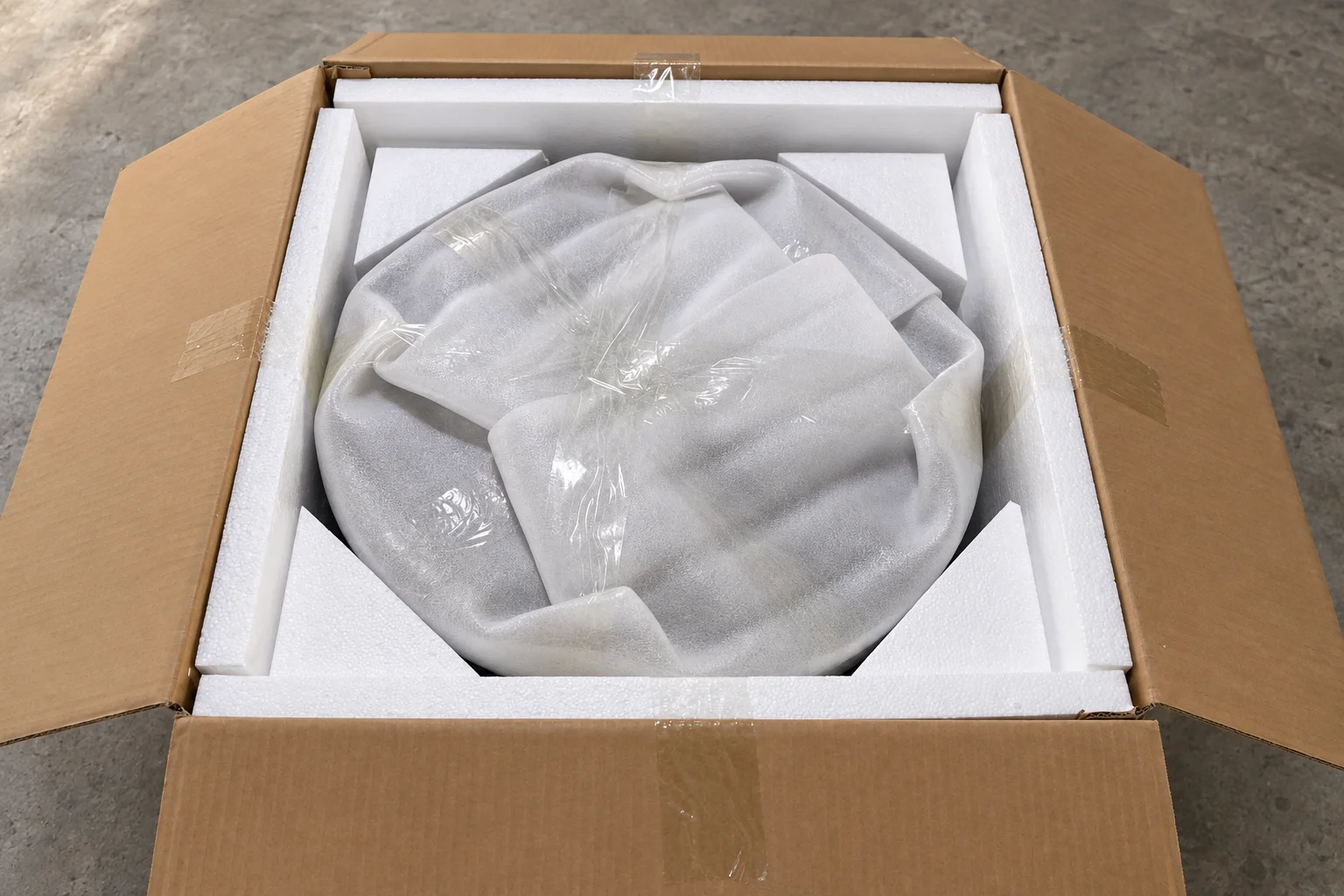
An observed arrangement
A wrapped coffee table sits within a lined carton. The contrast between a round object and a square container opens a small, practical study of packaging.
Based on supplied workshop references. This is a visual process note, not a documented development history or a transport-performance claim.
Packaging observations
The table comes first
The subject is a coffee table, identified by Sam from the supplied packaging photographs. In the packed view, wrapping conceals its surface and most of its construction. What remains legible is the rounded outline and its relationship to the square interior around it.
That outline is the starting point for this study. We are looking at the arrangement around the table, not trying to reconstruct an unseen model from the wrapping. There is no named client, delivery destination or claimed transit result attached to these views.
The distinction keeps the reading precise. A visible curve can tell us where the object sits in the composition. It cannot tell us the table’s weight, finish, construction or the protection required for a particular transport route.
Packaging observations
Read the empty interior
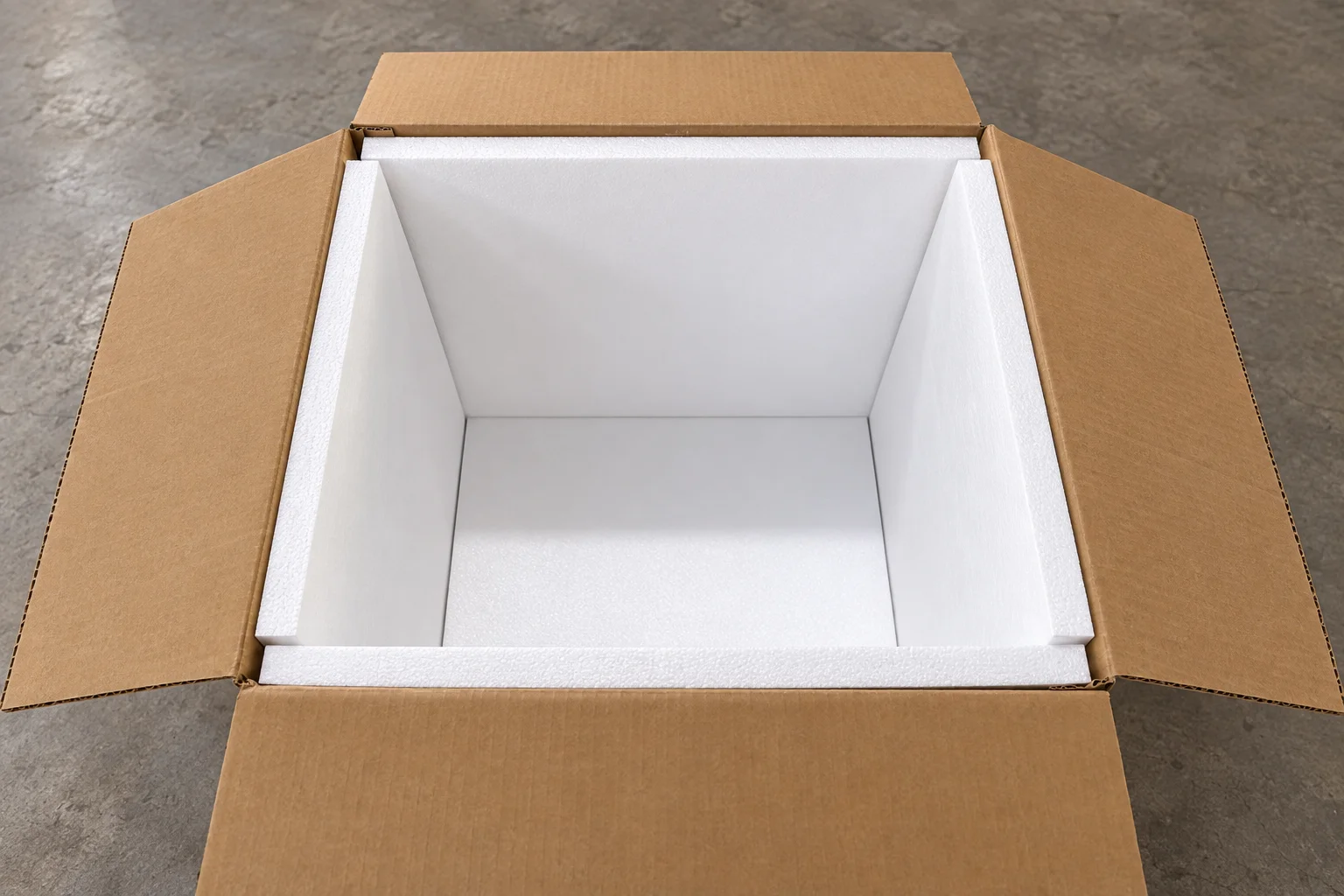
The empty-carton reference shows white panels along the sides and across the base. The panel edges make the interior easy to read. Before the wrapped form occupies the centre, the relationship between the container and its lining is visible.
This view separates two things that can become visually confused in a packed photograph: the outer carton and the pieces placed within it. It is useful to keep an empty view beside a loaded one when discussing a packing arrangement. Each answers a different question.
The photograph does not identify the white material’s chemistry, density or specified thickness. Here it is described simply as lining. Those specifications belong in a packing record, not in an inference from colour or texture.
Packaging observations
A curve beside straight walls
In the packed reference, the round form meets a different geometry. Straight carton walls surround a curved perimeter. White pieces occupy the corner areas between them, while folded wrapping and transparent film remain visible over the table.
The corner pieces give this view its particular character. They make the space around the curve visible. That placement can be described without claiming a measured restraint force, a tested impact rating or a proven shipping outcome.
The folds also matter as part of the record. They show that the object is concealed rather than exposed for a product photograph. Removing the wrapping digitally, or inventing a finish underneath it, would change the subject of the study.
Packaging observations
What closure hides
A further supplied reference shows a white panel across the top of an open carton. The interior becomes largely hidden. It is a useful contrast with the open views: once covered, the arrangement beneath is no longer available to inspect in a photograph.
These references are read as views of packaging, not as a verified chronology of one unit moving through a production line. Their dates and continuity have not been established. We therefore do not label them as numbered manufacturing steps.
The editorial images on this page are refined illustrations based on two of those workshop references. Their role is to clarify the visible arrangement. They are not unedited inspection photographs, dispatch records or evidence of validated protective performance.
Packaging observations
Take the question to the next table
The useful observation is simple: furniture and its surrounding package need to be read together. An empty carton shows the interior. A packed view shows what occupies it. A covered view reminds us which details will disappear at closure.
For a different table, the starting questions would be specific to that object. Which surfaces are exposed? Which parts project beyond the main outline? What is separately packed? Which details need to remain visible in the record? These are questions for a review, not a universal packing prescription.
The next conversation should bring the actual furniture reference and the proposed packing arrangement together. Dimensions, material specifications and any required validation can then be discussed against the intended item rather than assumed from this example.